What Is TPO Roofing? Complete Guide to Thermoplastic Roofing Systems
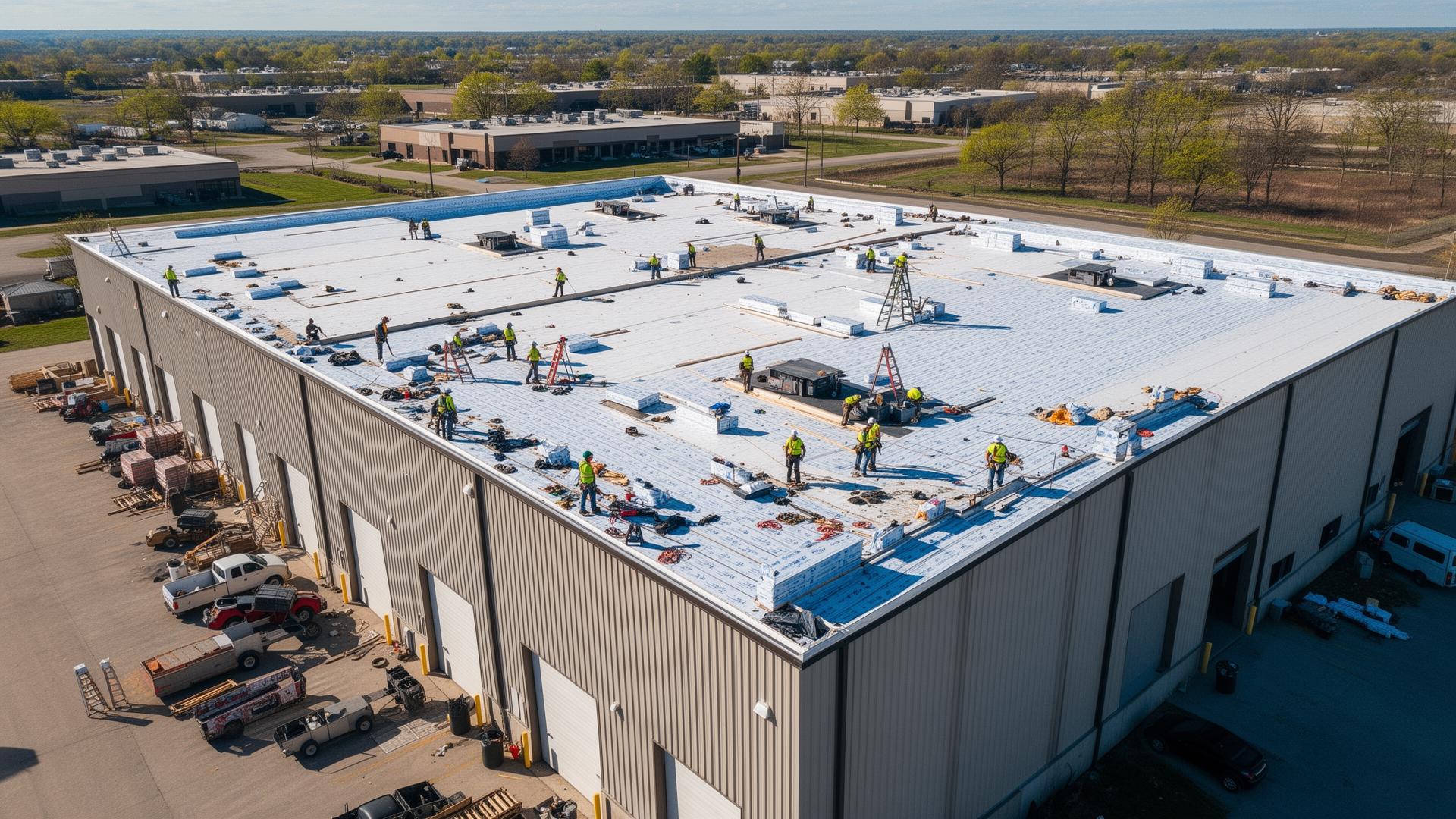
TPO (Thermoplastic Polyolefin) roofing has emerged as the dominant choice for commercial and industrial flat roofing applications across the United States. This comprehensive guide covers everything building owners, facility managers, and property investors need to know about TPO roofing systems.
What Is TPO Roofing?
TPO roofing is a single-ply roofing membrane made from a blend of polypropylene and ethylene-propylene rubber polymers. This thermoplastic material is manufactured in sheets that are welded together using heat to create a seamless, waterproof roofing surface.
Key Characteristics:: - Single-ply membrane (typically 45-80 mil thickness) - Heat-welded seams for superior waterproofing - White or light-colored surface for energy efficiency - Highly reflective (reduces cooling costs) - Resistant to UV radiation, ozone, and chemical exposure
TPO was developed in the early 1990s as an alternative to PVC and EPDM roofing, offering advantages of both materials. Today, it represents the fastest-growing segment of the commercial roofing market, with widespread adoption by commercial building owners across Texas, California, Florida, and nationwide.
TPO vs. Other Flat Roofing Materials
Understanding how TPO compares to alternatives helps building owners make informed decisions:
TPO vs. EPDM
EPDM (Ethylene Propylene Diene Monomer):: - Black membrane absorbs heat - Adhesive or ballasted attachment - Longer track record (since 1960s) - Generally lower material cost
TPO Advantages Over EPDM:: - Superior heat reflectivity (reduces cooling costs) - Stronger heat-welded seams - Better puncture resistance - Growing contractor expertise
TPO vs. PVC
PVC (Polyvinyl Chloride):: - Excellent chemical resistance - Proven long-term performance - Higher material cost than TPO - Contains plasticizers (environmental concern)
TPO Advantages Over PVC:: - More environmentally friendly manufacturing - Lower material cost - Similar performance characteristics - No plasticizer migration over time
TPO vs. Modified Bitumen
Modified Bitumen:: - Multi-layer built-up system - Torch-applied or cold-applied options - Heavy and labor-intensive - Traditional commercial choice
TPO Advantages Over Modified Bitumen:: - Lighter weight (less structural stress) - Faster installation - Better reflectivity - Lower long-term maintenance
TPO vs. Built-Up Roofing (BUR)
Built-Up Roofing:: - Multiple layers of tar and gravel - Proven over 100+ years - Requires significant maintenance - Declining market share
TPO Advantages Over BUR:: - Superior energy performance - Easier leak detection and repair - Faster installation - Lower lifecycle cost
TPO Roofing Benefits
Energy Efficiency
TPO's white reflective surface significantly reduces cooling costs:
Energy Performance:: - Reflects up to 80% of solar radiation - Reduces rooftop temperatures by 50-60°F - Qualifies for ENERGY STAR certification - Contributes to LEED building certification
For buildings in hot climates like Phoenix, Houston, Las Vegas, and Miami, TPO can reduce annual cooling costs by 10-30%.
Durability and Lifespan
Quality TPO systems provide reliable long-term performance:
Durability Features:: - Excellent UV resistance - Strong puncture resistance (with proper thickness) - Flexible at low temperatures - Resistant to many chemicals and pollutants
Expected Lifespan:: - Quality installations: 20-30 years - Well-maintained systems: 25+ years - Budget installations: 15-20 years
Installation Advantages
TPO offers several installation benefits:
Installation Features:: - Large sheets reduce seam frequency - Heat-welded seams faster than adhesive methods - Lighter weight than built-up systems - Can be installed over existing roofing (in some cases)
These advantages translate to faster project completion and reduced labor costs compared to traditional commercial roofing systems.
Chemical Resistance
TPO resists many substances that damage other roofing materials:
Resistance Properties:: - Grease and oils (restaurant exhaust) - Bacterial growth and mold - Algae and plant roots - Common industrial chemicals
This resistance makes TPO ideal for restaurants, manufacturing facilities, and buildings near industrial areas.
TPO Roofing Costs
Understanding TPO costs helps with project budgeting:
Material Costs
TPO Membrane Pricing (per square foot):: | Thickness | Material Cost | Notes | |-----------|---------------|-------| | 45 mil | $0.50-0.75 | Budget option | | 60 mil | $0.75-1.25 | Standard residential/light commercial | | 80 mil | $1.00-1.75 | Heavy-duty commercial |
Installed Costs
Total Installation Cost (per square foot):: - Economy: $4-6 (minimum spec, basic warranty) - Standard: $6-9 (quality materials, comprehensive warranty) - Premium: $9-14 (enhanced insulation, extended warranty)
Cost Factors
Several variables affect TPO roofing costs:
Primary Factors:: - Membrane thickness selection - Insulation requirements - Attachment method (mechanical vs. adhesive) - Roof access and complexity - Regional labor rates - Time of year (demand fluctuations)
Additional Costs:: - Tear-off of existing roofing: $1-3/sq. ft. - Deck repairs: Variable - Enhanced insulation: $1-4/sq. ft. - Warranty upgrades: $0.25-1.00/sq. ft.
For buildings in Chicago, Detroit, Minneapolis, and other northern cities, enhanced insulation adds significant value through energy savings.
Cost Comparison
10,000 sq. ft. Commercial Roof (Total Project):: | System | Installed Cost | 20-Year Cost* | |--------|----------------|---------------| | TPO | $60,000-90,000 | $80,000-120,000 | | EPDM | $50,000-75,000 | $85,000-130,000 | | PVC | $70,000-100,000 | $90,000-130,000 | | Mod. Bit. | $55,000-85,000 | $95,000-150,000 |
*Includes estimated maintenance and repairs
TPO Installation Methods
Mechanically Attached Systems
Fasteners and plates secure the membrane to the roof deck:
Advantages:: - Fastest installation method - Works over most substrates - Lower labor cost - Excellent wind uplift resistance
Considerations:: - Visible fastener plates under membrane - Requires solid substrate - More potential penetration points
Mechanically attached systems dominate in wind-prone areas of Florida, Texas, and Oklahoma.
Fully Adhered Systems
Adhesive bonds the membrane to the substrate:
Advantages:: - Smooth, uniform appearance - No thermal bridging at fasteners - Excellent for irregular substrates - Superior wind performance at edges
Considerations:: - Higher labor and material cost - Weather-dependent installation - Substrate preparation critical
Ballasted Systems
Gravel or pavers hold the membrane in place:
Advantages:: - Lowest installation cost - Protects membrane from UV and impacts - Easy to install and repair
Considerations:: - Requires structural capacity for weight - Leak detection more difficult - Not suitable for sloped roofs
TPO Seam Technology
Heat-welded seams represent TPO's strongest advantage:
Hot-Air Welding Process
Process Steps:: 1. Automatic welding machine positions over seam 2. Hot air (450-500°F) heats membrane edges 3. Pressure rollers fuse materials together 4. Weld cools to form permanent bond
Weld Characteristics:: - Stronger than membrane itself - Uniform, consistent quality - Weather-resistant immediately after cooling - Easily tested for quality verification
Quality Control
Professional installation includes seam verification:
Testing Methods:: - Seam probing (standard practice) - Cut sampling (destructive testing) - Visual inspection for uniformity - Electronic leak detection (optional)
Proper welding technique is critical—always verify your contractor uses trained, certified installers.
TPO Roof Maintenance
While low-maintenance, TPO systems benefit from regular attention:
Inspection Schedule
Quarterly:: - Visual inspection from ground level - Check drainage points for blockages - Verify roof drains are clear
Annually:: - Professional roof inspection - Detailed seam examination - Penetration flashing evaluation - Membrane condition assessment
After Severe Weather:: - Inspect for storm damage - Check for impact damage or debris - Verify flashings remain intact - Document any damage for insurance
Common Maintenance Tasks
Routine Care:: - Remove debris and vegetation - Clean roof drains and gutters - Trim overhanging branches - Maintain HVAC equipment supports
Periodic Repairs:: - Patch small punctures or damage - Re-weld lifted seams - Seal flashings as needed - Address ponding water issues
Extending TPO Lifespan
Maximize your TPO investment:
Best Practices:: - Schedule bi-annual professional inspections - Address issues promptly before they escalate - Maintain proper drainage - Protect membrane from unnecessary foot traffic - Keep maintenance records for warranty compliance
TPO Roofing Warranties
Understanding warranty coverage protects your investment:
Manufacturer Warranties
Standard Coverage Options:: - 10-Year: Basic protection, limited coverage - 15-Year: Standard commercial specification - 20-Year: Enhanced coverage, thicker membranes - 25-30 Year: Premium systems, full coverage
Warranty Types
Material Only:: - Covers manufacturing defects - Does not cover labor for repairs - Lower cost, less protection
Labor and Material:: - Covers defects and installation issues - Manufacturer repairs or reimburses - Industry standard for quality projects
No Dollar Limit (NDL):: - Full replacement without depreciation - Premium warranty option - Highest level of protection
Warranty Considerations
Important Factors:: - Contractor certification requirements - Regular inspection requirements - Proper maintenance obligations - Transfer provisions for property sales
TPO for Different Building Types
Retail Buildings
Shopping centers and retail spaces benefit from TPO: - Reduced cooling costs for large footprints - Excellent drainage design options - Easy HVAC penetration details
Industrial Facilities
Warehouses and manufacturing buildings: - Chemical resistance for industrial environments - Accommodates heavy equipment loads - Low-maintenance requirements
Office Buildings
Commercial office properties: - Energy efficiency for sustainability goals - Clean, professional appearance - LEED contribution potential
Multi-Family Housing
Apartment complexes and condominiums: - Cost-effective for large roof areas - Long-term budget predictability - Minimal disruption to residents during installation
Regional Considerations
TPO performance varies by climate:
Hot/Sunny Climates
[Arizona](/state/arizona), [Texas](/state/texas), [Nevada](/state/nevada), [Florida](/state/florida):: - Maximum energy savings from reflectivity - UV resistance critical - Consider 60-80 mil thickness for longevity
Cold Climates
[Michigan](/state/michigan), [Minnesota](/state/minnesota), [Wisconsin](/state/wisconsin):: - TPO remains flexible at low temperatures - Enhanced insulation maximizes benefits - Proper drainage prevents ice dam issues
Coastal Areas
[Florida Coast](/city/miami-florida), [Texas Gulf](/city/houston-texas), [California](/city/los-angeles-california):: - Salt air resistance important - Wind uplift requirements critical - Consider fully-adhered or mechanically attached systems
Choosing a TPO Contractor
Selecting the right contractor ensures quality installation:
Contractor Qualifications
Verify:: - Manufacturer certification for your chosen TPO brand - Commercial roofing license and insurance - Local references and completed projects - Experienced crew (not subcontracted)
Questions to Ask
- How many TPO projects have you completed?
- What manufacturer certifications do you hold?
- Who will actually perform the installation?
- What quality control measures do you use?
- What warranty do you provide on workmanship?
Connect with qualified commercial roofing contractors in your area for consultations and estimates.
TPO Roofing: The Bottom Line
TPO roofing has earned its dominant position in the commercial roofing market through a compelling combination of energy efficiency, durability, and cost-effectiveness. For building owners in Dallas, Chicago, Atlanta, and across the nation, TPO offers a smart investment that delivers reliable performance for 20-30 years.
Key Takeaways:: - TPO excels for flat and low-slope commercial roofs - Heat-welded seams provide superior waterproofing - Energy savings offset higher material costs - Proper installation quality is critical - Regular maintenance extends system life
Whether you're constructing a new facility, planning a roof replacement, or evaluating options for an existing building, TPO deserves serious consideration. The combination of proven performance, competitive pricing, and energy efficiency makes it the right choice for countless commercial applications.
For expert guidance on your commercial roofing project, connect with certified TPO contractors who can assess your specific needs and provide tailored recommendations.