Flat Roof Materials Explained: TPO, EPDM, PVC, and Modified Bitumen
Flat roofing presents unique challenges that require specialized materials designed to perform on low-slope and no-slope surfaces. Unlike steep-slope roofing where gravity quickly sheds water, flat roofs must create complete waterproof membranes that withstand pooling water, thermal stress, and UV exposure. This guide explores the leading flat roof materials to help you make an informed decision for your commercial or residential flat roof project.
Understanding Flat Roof Requirements
Before comparing materials, it's essential to understand what makes flat roofing different from conventional steep-slope applications.
Unique Challenges
Water Ponding:: Flat roofs inevitably experience water ponding during and after rain events. Materials must resist prolonged water exposure without degradation.
Thermal Movement:: Large flat roof surfaces experience significant expansion and contraction. Materials must accommodate thermal movement without splitting or separating.
UV Exposure:: Without the angle that deflects some solar radiation, flat roofs experience intense UV exposure. Material formulations must resist UV degradation.
Foot Traffic:: Flat roofs often require maintenance access for HVAC equipment, drainage, and other systems. Materials must withstand regular foot traffic.
Penetrations:: HVAC units, exhaust vents, skylights, and other penetrations create potential leak points requiring careful detailing.
Minimum Slope Requirements
"Flat" roofs actually require slight slope for drainage: - Minimum: 1/4" per foot (1/4:12) - Recommended: 1/2" per foot or greater - Building codes specify minimum requirements
Completely flat installations create chronic ponding problems regardless of material quality.
TPO (Thermoplastic Polyolefin) Roofing
TPO has become the most popular flat roofing membrane, offering excellent performance at competitive costs.
Composition and Manufacturing
TPO is a single-ply membrane composed of polypropylene and ethylene-propylene rubber polymers. The membrane is manufactured in sheets (typically 6.5' to 12' wide) that are heat-welded together during installation.
TPO Thickness Options
40 mil:: Economy option suitable for protected applications with limited foot traffic.
60 mil:: Standard choice for most commercial and residential applications. Balances cost and durability.
80 mil:: Premium option for high-traffic areas, harsh climates, and extended warranty requirements.
Advantages of TPO
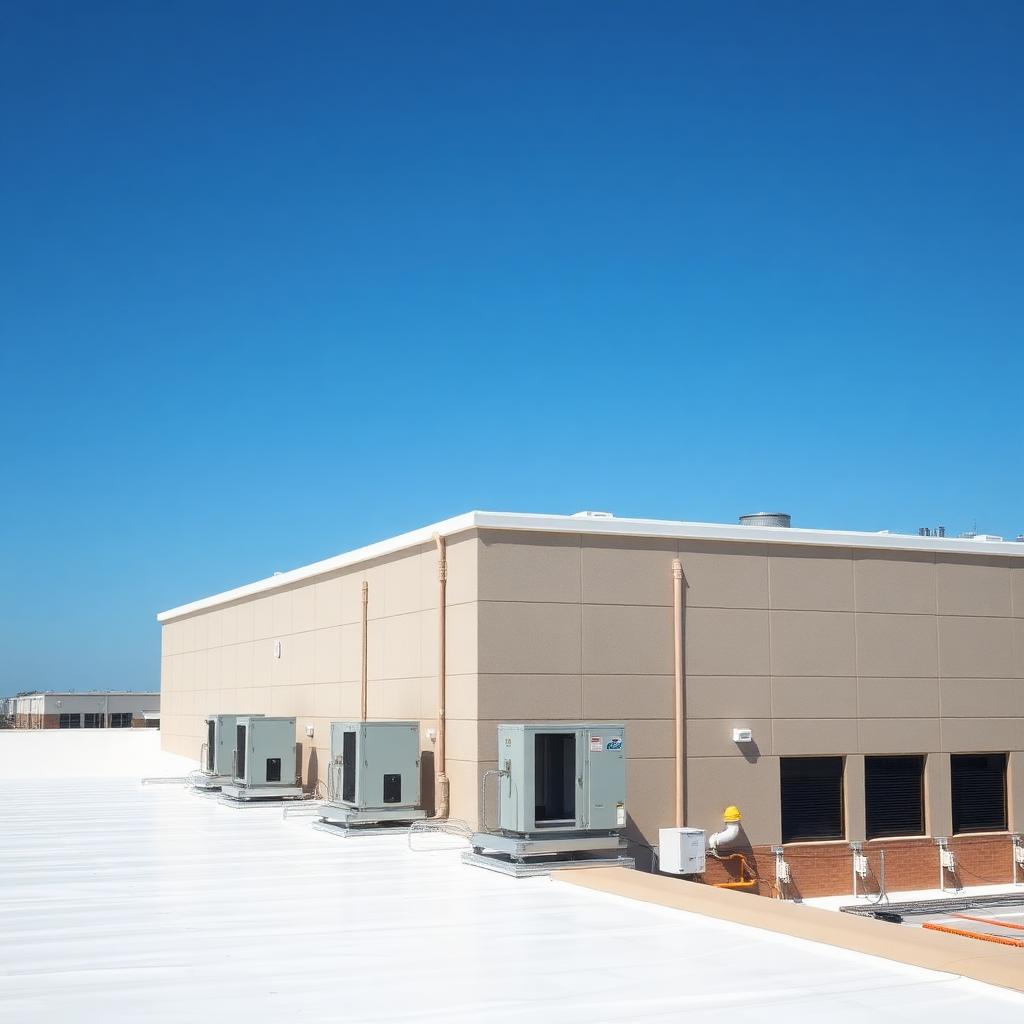
Energy Efficiency:: White TPO achieves excellent solar reflectivity, reducing cooling loads significantly. Cool roof properties make TPO ideal for warm climates seeking energy savings.
Cost-Effective:: TPO typically costs less than PVC while offering similar performance. Material and installation savings make TPO the budget-friendly single-ply choice.
Easy Installation:: Lightweight membranes and heat-welded seams allow efficient installation. Hot-air welding creates seams stronger than the membrane itself.
Chemical Resistance:: TPO resists grease, dirt, and most chemicals encountered on commercial roofs. Good choice for restaurant and industrial applications.
Flexibility:: TPO remains flexible at low temperatures, performing well in cold climates without becoming brittle.
Disadvantages of TPO
Shorter Track Record:: TPO entered the market in the 1990s—younger than EPDM or PVC. Long-term performance data is still accumulating.
Formulation Variations:: Different manufacturers use varying formulations. Quality and longevity may differ between brands.
Heat Limitations:: While TPO handles normal rooftop temperatures well, prolonged exposure near exhausts or heat sources can cause problems.
TPO Cost Range
| Thickness | Material Cost/Sq | Installed Cost/Sq |
|---|---|---|
| 40 mil | $80-$120 | $350-$500 |
| 60 mil | $120-$180 | $450-$650 |
| 80 mil | $180-$250 | $600-$850 |
EPDM (Ethylene Propylene Diene Monomer) Roofing
EPDM has protected flat roofs for over 50 years, establishing an extensive performance track record.
Composition and Manufacturing
EPDM is a synthetic rubber membrane made from ethylene, propylene, and a small amount of diene monomer. Available in black or white, sheets typically range from 7.5' to 50' wide.
EPDM Thickness Options
45 mil:: Minimum specification suitable for protected applications.
60 mil:: Standard commercial specification for balanced cost and durability.
90 mil:: Premium option for maximum durability and warranty coverage.
Installation Methods
Ballasted:: Membrane laid loose over insulation, held in place by gravel or pavers. Simple installation but adds weight and complicates maintenance.
Fully Adhered:: Membrane glued to insulation or substrate. Creates smooth surface, suitable for foot traffic areas.
Mechanically Attached:: Membrane secured with plates and fasteners at seams. Economical installation for suitable substrates.
Advantages of EPDM
Proven Performance:: 50+ year track record demonstrates reliable long-term performance. Many original 1970s installations remain serviceable.
Extreme Durability:: EPDM handles temperature extremes exceptionally well—from -40°F to 300°F without degradation.
Flexibility:: Rubber membrane accommodates building movement and thermal cycling without cracking.
Easy Repairs:: Simple patching and seam repairs extend roof life. Property owners can often handle minor repairs themselves.
Long Warranty Options:: Extended warranties to 30+ years available from major manufacturers.
Disadvantages of EPDM
Seam Vulnerability:: Traditional adhesive seams are the weak point. Seam failures account for most EPDM leaks. (Tape seams and heat welding have improved this.)
Black Absorbs Heat:: Traditional black EPDM absorbs solar heat, increasing cooling loads. White EPDM is available but less common.
Appearance:: Utilitarian appearance may not suit visible flat roof applications.
Puncture Sensitivity:: Thinner EPDM can puncture from dropped tools or debris impact.
EPDM Cost Range
| Thickness | Material Cost/Sq | Installed Cost/Sq |
|---|---|---|
| 45 mil | $70-$110 | $300-$450 |
| 60 mil | $100-$150 | $400-$600 |
| 90 mil | $150-$220 | $550-$800 |
PVC (Polyvinyl Chloride) Roofing
PVC roofing membranes offer premium performance, particularly where chemical resistance and longevity matter most.
Composition and Manufacturing
PVC roofing membranes consist of polyvinyl chloride polymer layers reinforced with polyester or fiberglass scrim. Membranes are heat-welded during installation.
PVC Construction Types
Non-Reinforced:: Homogeneous membrane without reinforcement. Suitable for specific flashing applications.
Polyester Reinforced:: Most common type, offering good dimensional stability and tear resistance.
Fiberglass Reinforced:: Enhanced dimensional stability for applications with greater stress.
Advantages of PVC
Superior Chemical Resistance:: PVC handles oils, fats, and chemicals better than alternatives. Ideal for restaurants, food processing, and industrial applications.
Excellent Fire Resistance:: PVC achieves superior fire ratings without additional treatments. Self-extinguishing properties enhance safety.
Strong Welded Seams:: Hot-air welded seams create bonds stronger than the membrane material. Seam reliability is excellent.
Reflective Properties:: White PVC provides excellent solar reflectivity for cooling energy savings.
Long Track Record:: PVC roofing has performed successfully since the 1960s. Extensive long-term data confirms durability.
Disadvantages of PVC
Higher Cost:: PVC typically costs 20-30% more than TPO for comparable specifications.
Plasticizer Migration:: PVC flexibility depends on plasticizers that can migrate over time, potentially causing shrinkage or cracking in lower-quality products.
Cold Weather Concerns:: PVC may become less flexible in extreme cold, though modern formulations have improved cold-weather performance.
Compatibility Issues:: PVC may react with asphalt, polystyrene insulation, and certain flashings. Proper substrate preparation and compatible materials are essential.
PVC Cost Range
| Thickness | Material Cost/Sq | Installed Cost/Sq |
|---|---|---|
| 45 mil | $120-$180 | $450-$650 |
| 60 mil | $180-$260 | $600-$850 |
| 80 mil | $250-$350 | $750-$1,050 |
Modified Bitumen Roofing
Modified bitumen combines traditional built-up roofing with modern polymer technology for enhanced performance.
Composition Types
SBS (Styrene-Butadiene-Styrene):: Rubber-modified asphalt with excellent flexibility and cold-weather performance. Preferred for colder climates.
APP (Atactic Polypropylene):: Plastic-modified asphalt with superior heat and UV resistance. Preferred for hot climates.
Installation Methods
Torch-Applied:: Traditional method using propane torch to adhere membrane. Effective but requires fire safety precautions.
Hot-Mopped:: Membrane set in hot asphalt. Familiar to experienced roofers, effective adhesion.
Cold-Applied:: Adhesive or self-adhering membranes without open flame. Safer installation, increasingly popular.
Advantages of Modified Bitumen
Multi-Layer Protection:: Systems typically include multiple plies for redundant waterproofing.
Familiar Technology:: Experienced contractors understand application methods. Wide availability of qualified installers.
Flexible System Design:: Multiple base sheets, cap sheets, and coating options allow customized specifications.
Good Performance Record:: 40+ years of proven performance in commercial applications.
Visible Inspection:: Damage is often visible, making maintenance inspections straightforward.
Disadvantages of Modified Bitumen
Fire Risk During Installation:: Torch-applied systems require careful fire safety protocols. Some jurisdictions restrict torching on occupied buildings.
Heavier Weight:: Multi-ply systems weigh more than single-ply alternatives, requiring structural consideration.
More Labor-Intensive:: Installation requires more labor than single-ply systems, potentially increasing costs.
Limited Color Options:: Primarily available in black or gray. Reflective coatings can be added but add cost.
Modified Bitumen Cost Range
| System Type | Material Cost/Sq | Installed Cost/Sq |
|---|---|---|
| 2-Ply System | $100-$160 | $400-$600 |
| 3-Ply System | $150-$220 | $550-$800 |
| Premium 3-Ply | $200-$300 | $700-$1,000 |
Comparing Flat Roof Materials
Performance Comparison
| Factor | TPO | EPDM | PVC | Mod-Bit |
|---|---|---|---|---|
| Lifespan | 20-30 yrs | 25-40 yrs | 25-35 yrs | 20-30 yrs |
| UV Resistance | Excellent | Good | Excellent | Good |
| Chemical Resistance | Good | Fair | Excellent | Good |
| Cold Flexibility | Excellent | Excellent | Good | Excellent (SBS) |
| Heat Resistance | Good | Excellent | Good | Excellent (APP) |
| Seam Strength | Excellent | Good | Excellent | Good |
Application Recommendations
TPO Best For:: - Budget-conscious projects requiring reflective roofing - General commercial and residential flat roofs - Energy efficiency priorities
EPDM Best For:: - Extreme temperature variations - Long-term proven performance requirements - Budget-focused projects in moderate climates
PVC Best For:: - Restaurant and food service facilities - Chemical exposure environments - Maximum fire resistance requirements
Modified Bitumen Best For:: - Traditional contractor preference - Complex penetrations and details - Heavy foot traffic areas
Installation Considerations
Proper installation determines long-term flat roof performance regardless of material selection.
Critical Installation Elements
Substrate Preparation:: Clean, dry, properly attached substrate essential for all systems.
Insulation Selection:: Compatible insulation required—polyiso, EPS, or mineral wool depending on membrane type.
Seam Quality:: Seam failures cause most flat roof leaks. Proper seaming technique and verification are critical.
Flashing Details:: Penetrations, edges, and transitions require careful detailing using compatible materials.
Drainage:: Verify adequate slope and drainage before installation. Add tapered insulation if needed.
Contractor Selection
Given flat roofing's specialized nature, contractor selection is crucial:
Qualifications to Verify:: - Manufacturer certification for specific membrane - Minimum 5 years flat roofing experience - Portfolio of similar completed projects - Proper licensing and insurance - References from flat roof customers
Connect with qualified flat roof contractors in your area for professional assessments and proposals.
Conclusion
Selecting the appropriate flat roof material requires balancing performance requirements, budget constraints, and application-specific needs. TPO offers the best value for general applications, EPDM provides proven long-term durability, PVC excels where chemical resistance matters, and modified bitumen delivers traditional multi-ply protection.
Consult with experienced flat roofing professionals who can assess your specific situation, recommend appropriate systems, and provide quality installation that maximizes your flat roof investment.