How to Clean Solar Panels on Roof
Solar panels are a significant investment in your home's energy future, and keeping them clean is essential for maintaining optimal performance. Dirty panels can lose 15 to 25 percent of their energy production, meaning higher electricity bills and longer payback periods. This comprehensive guide covers everything homeowners need to know about safely and effectively cleaning rooftop solar panels.
Understanding Why Solar Panel Cleaning Matters
Before climbing onto your roof, it is important to understand exactly why cleaning matters and when it is necessary. Solar panels generate electricity when sunlight hits the photovoltaic cells. Any obstruction between the sun and those cells reduces power output.
Common soiling agents include dust and pollen that accumulate gradually, bird droppings that create concentrated shade spots, tree sap and leaf debris from overhanging branches, pollution and industrial fallout in urban areas, salt spray in coastal locations, and hard water deposits from irrigation sprinklers. The impact of soiling varies significantly by location. Desert regions like Arizona and Nevada experience heavy dust accumulation, while coastal areas contend with salt deposits. Urban locations face pollution buildup, and rural areas may have more bird and agricultural debris.
Studies show that dirty solar panels typically lose 15 to 25 percent of their rated output, though losses can reach 30 percent or more in extreme cases. For a typical 8-kilowatt residential system, this translates to hundreds of dollars in lost energy production annually.
Safety First: Essential Precautions
Cleaning solar panels involves working at height on potentially slippery surfaces, making safety absolutely paramount. Before attempting any roof work, honestly assess whether you can do this safely.
Never work on a wet roof, as surfaces become extremely slippery when wet. Solar panels themselves are especially slick when water or cleaning solution is applied. Even experienced contractors exercise extreme caution on wet rooftop surfaces.
Use proper fall protection equipment including a safety harness secured to an appropriate anchor point if working on steep or high roofs. Consider the height from which you are working and the consequences of a fall. Falls from roofs result in thousands of serious injuries annually.
Work with a partner who can stabilize ladders, hand up equipment, and call for help if something goes wrong. Never work on a roof alone.
Check weather conditions before starting. Avoid working on hot days when panel surfaces can exceed 150 degrees Fahrenheit, potentially causing burns and making water evaporate too quickly to clean effectively. Early morning is often ideal, when panels are cool and dew may have softened debris.
If your roof is steep, very high, or if you have any doubts about your ability to work safely, hire a professional cleaning service. The cost is modest compared to the potential consequences of a fall.
Equipment and Cleaning Solutions
Having the right equipment makes the job easier and reduces risk of damaging your panels or yourself. Gather everything before climbing onto the roof to minimize trips up and down.
Essential equipment includes a soft brush or sponge on an extension pole, which allows you to stay on safer parts of the roof or even clean from the ground if panels are accessible. Choose brushes specifically designed for solar panels or use very soft synthetic bristles that will not scratch the glass surface.
Use a garden hose with a spray nozzle for rinsing. A standard hose provides adequate pressure for most cleaning situations. Avoid high-pressure washers, as excessive pressure can damage panels, loosen seals, or force water into electrical connections.
For cleaning solution, plain water works well for routine maintenance. If panels are heavily soiled, add a small amount of mild dish soap to your water. Avoid abrasive cleaners, solvents, or anything containing ammonia, which can damage the anti-reflective coating on panels.
A squeegee with a soft rubber blade helps remove water and cleaning solution for a streak-free finish. Extension poles allow you to reach across larger arrays without walking on them.
Step-by-Step Cleaning Process
Follow this systematic approach for safe, effective solar panel cleaning. Always work during cool morning hours when possible, and never clean panels that are hot from sun exposure.
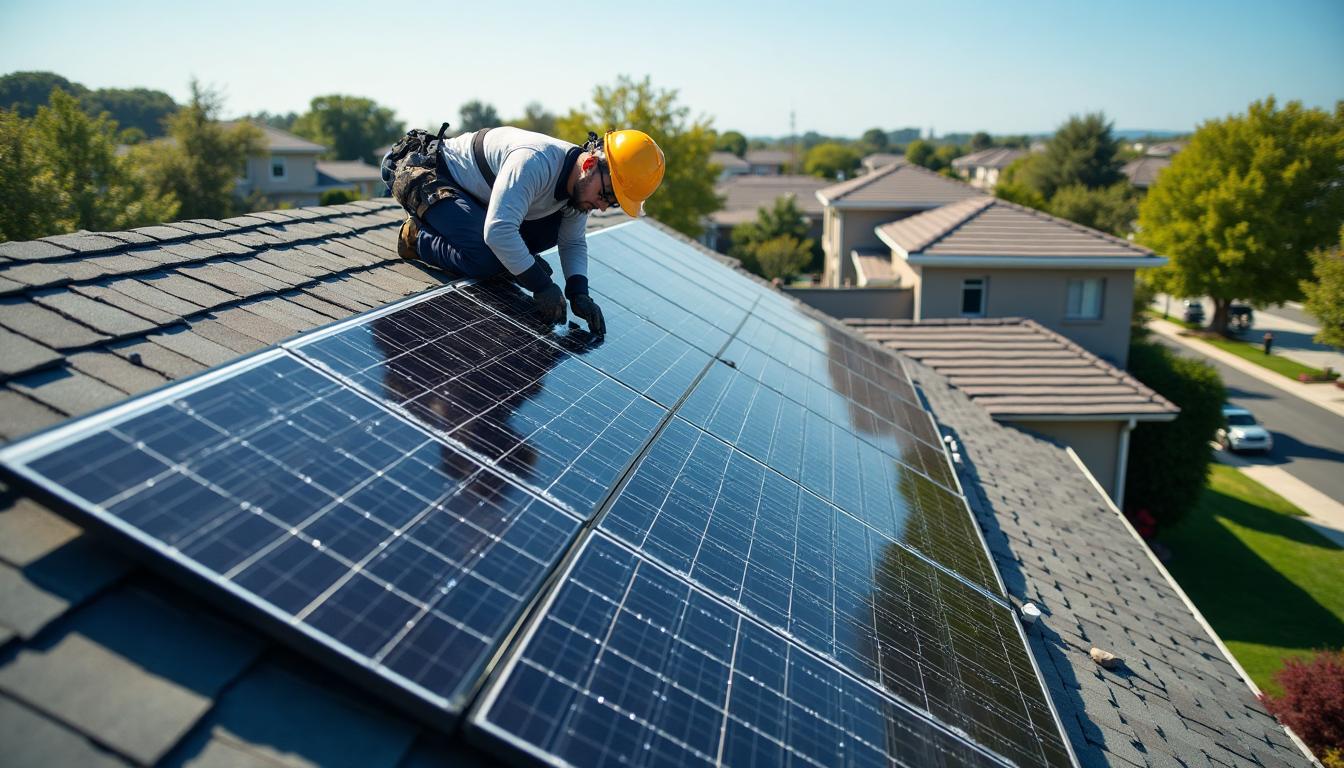
First, remove loose debris by gently brushing away leaves, twigs, and other loose material with your soft brush. Work from the top of the array downward so debris falls away from cleaned areas. Be gentle around panel edges and frames to avoid damaging seals.
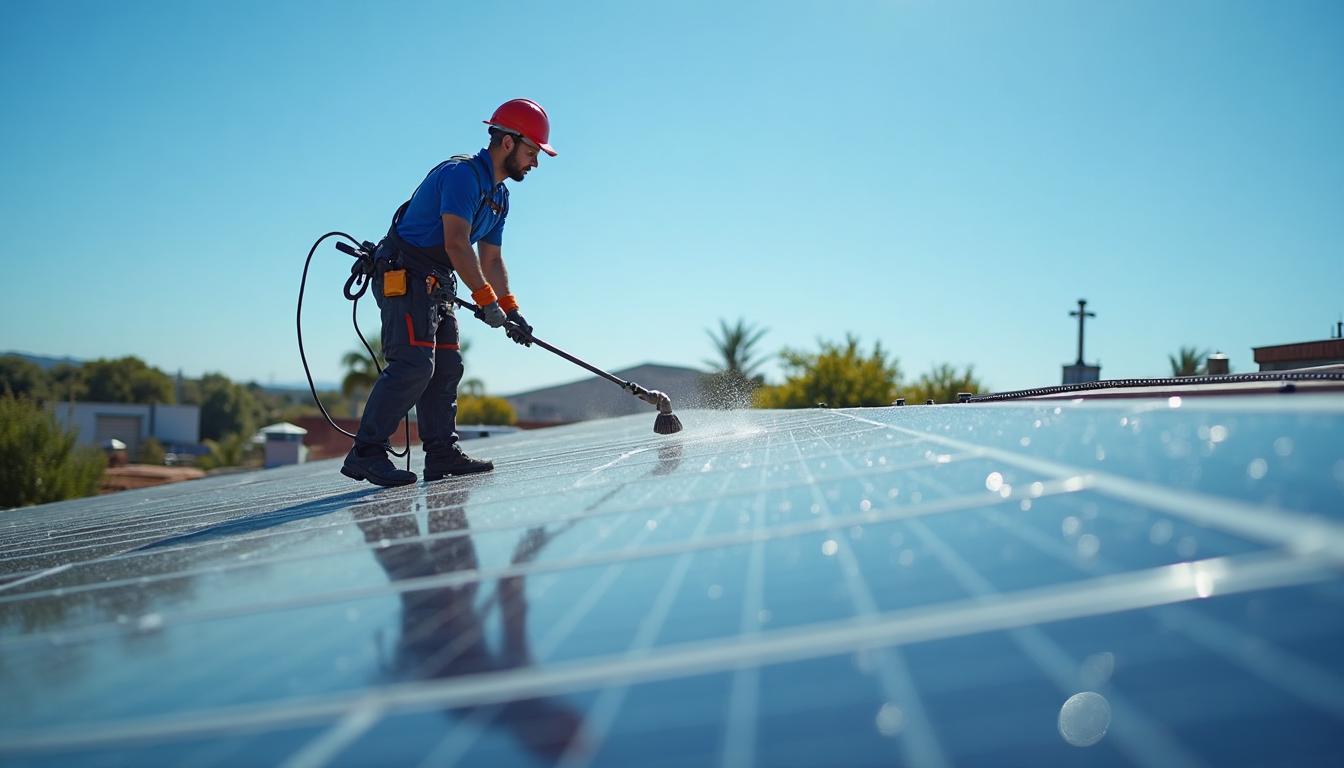
Rinse the entire array with plain water from your hose. This removes dust and loose dirt while wetting remaining debris for easier removal. Start at the top and work down, letting gravity help carry dirty water away.
For stubborn spots like bird droppings or tree sap, apply your mild soap solution and let it sit for a few minutes to soften the deposit. Never scrape or use abrasive tools on panel surfaces, as this can permanently damage the glass or anti-reflective coating.
Use your soft brush to gently scrub the entire panel surface, paying extra attention to areas with visible soiling. Work in sections, keeping the surface wet to prevent soap from drying and leaving residue.
Rinse thoroughly with clean water to remove all soap residue. Soap left on panels can leave spots that actually reduce performance more than the original dirt.
Use your squeegee to remove excess water if desired, working from top to bottom in overlapping strokes. This prevents water spots from mineral deposits in hard water areas.
Inspect your work from the ground, looking for any missed spots or areas that need additional attention.
Cleaning From the Ground
Many homeowners can effectively clean their solar panels without ever stepping onto the roof, which is by far the safest approach. Several techniques make ground-level cleaning practical.
Extension poles with soft brush attachments can reach rooftop panels from the ground or from a stable ladder resting against the eaves. Commercial poles extend to 24 feet or more, reaching most residential installations.
Garden hose spray can remove light soiling from the ground if your water pressure is adequate. A standard nozzle with good pressure can reach second-story roofs effectively.
Specialized solar panel cleaning kits designed for ground-level use include extension poles, soft brushes, and spray attachments that make cleaning accessible and safe.
If your panels are accessible from the ground, this approach should be your default method. Reserve rooftop cleaning for situations where ground access is truly insufficient.
Frequency and Timing of Cleaning
How often you should clean your solar panels depends on your specific circumstances. There is no universal answer, but several factors guide your maintenance schedule.
Location significantly influences cleaning frequency. Dusty or agricultural areas may require monthly cleaning. Urban locations with pollution might need quarterly attention. Coastal areas benefit from regular salt removal. Desert regions accumulate dust quickly between rains.
Weather patterns affect cleaning needs as well. Regions with regular rainfall often need less frequent cleaning as rain provides natural washing. However, rain followed by dust storms leaves panels dirtier than before.
Monitor your system's performance through your inverter or monitoring app. A sudden drop in production during sunny weather often indicates soiling that is affecting output. Some modern systems can even alert you when cleaning is likely needed.
Seasonal timing matters too. Clean panels in late winter or early spring to maximize production during high-sun months. Fall cleaning removes accumulated summer grime before winter's lower sun angles make every bit of production count.
Professional Cleaning Services
Hiring professionals makes sense in many situations and eliminates safety concerns entirely. Professional solar panel cleaning typically costs between $100 and $300 for residential systems, varying by system size, roof access difficulty, and local market rates.
Consider professional cleaning if your roof is steep, high, or otherwise dangerous to access, if you lack appropriate safety equipment, if panels are heavily soiled with stubborn deposits, if your system is large enough that DIY cleaning becomes impractical, or if warranty requirements specify professional maintenance.
Professional cleaners have proper safety equipment, specialized tools, and experience that allows them to work efficiently and safely. Many offer maintenance contracts that include regular cleaning, inspections, and performance monitoring.
When selecting a cleaning service, verify they have experience specifically with solar panels, carry appropriate insurance, and use methods approved by panel manufacturers. Ask about their safety protocols and what equipment they use.
Avoiding Common Mistakes
Several common mistakes can damage panels or reduce their performance. Understanding what to avoid is as important as knowing what to do.
Never use abrasive materials including rough brushes, scouring pads, or abrasive cleaners. The glass on solar panels has an anti-reflective coating that scratches easily and cannot be repaired.
Avoid harsh chemicals including ammonia-based cleaners, solvents, and strong detergents. These can damage seals, coatings, and electrical connections.
Do not use pressure washers. The high pressure can force water under seals, damage anti-reflective coatings, and potentially crack glass.
Never clean hot panels. Spraying cold water on panels heated to 150 degrees or more by sun exposure can cause thermal shock that cracks the glass. Clean in early morning or on overcast days.
Do not walk on panels. Even if panels can technically support weight, walking on them risks microcracks that reduce performance and lifespan. Also, walking on wet panels is extremely dangerous.
Maximizing the Benefits of Clean Panels
Regular cleaning is one component of comprehensive solar system maintenance. Combine cleaning with other practices to maximize your investment.
Regular monitoring helps you understand your system's performance patterns and identify when cleaning or other maintenance is needed. Most modern inverters provide monitoring apps that track daily, monthly, and annual production.
Periodic professional inspections catch issues that cleaning alone cannot address. Have a qualified solar technician inspect your system annually, checking electrical connections, mounting hardware, and panel condition.
Keep surrounding vegetation trimmed to reduce debris accumulation and shading. Trees that overhang panels not only drop debris but can also shade cells, reducing production disproportionately.
Consider the relationship between your roof and your panels. Regular roof maintenance prevents problems that could affect your solar installation. If you're considering solar installation on a metal roof, read our guide on putting solar panels on metal roofs for specific considerations.
Conclusion
Clean solar panels operate at peak efficiency, maximizing your energy production and accelerating your return on investment. Whether you clean panels yourself or hire professionals, regular maintenance is essential for optimal system performance.
Prioritize safety above all else. A fall from a roof can result in life-changing injuries or worse. If you have any doubts about your ability to work safely at height, hire professionals. The cost is minimal compared to the risks of DIY rooftop work.
With regular cleaning and basic maintenance, your solar panels will continue producing clean energy for decades, providing both environmental benefits and ongoing savings on your electricity bills. Establish a cleaning routine that matches your specific conditions, and enjoy the full benefits of your solar investment.