Roof Drainage Solutions: How to Prevent Water Damage in 2026
Why Roof Drainage Is Your First Line of Defense
Water is the #1 enemy of every building, and your roof drainage system is the frontline defense. Poor drainage leads to foundation erosion, basement flooding, siding damage, landscape destruction, and—most critically—roof structural damage from ponding water. In the Pacific Northwest and Northeast, where annual rainfall can exceed 40–60 inches, effective drainage isn't optional—it's essential for building survival.
In 2026, with extreme weather events becoming more frequent and intense, upgrading your roof drainage system is one of the smartest investments you can make.
Types of Roof Drainage Systems
1. External Gutter Systems
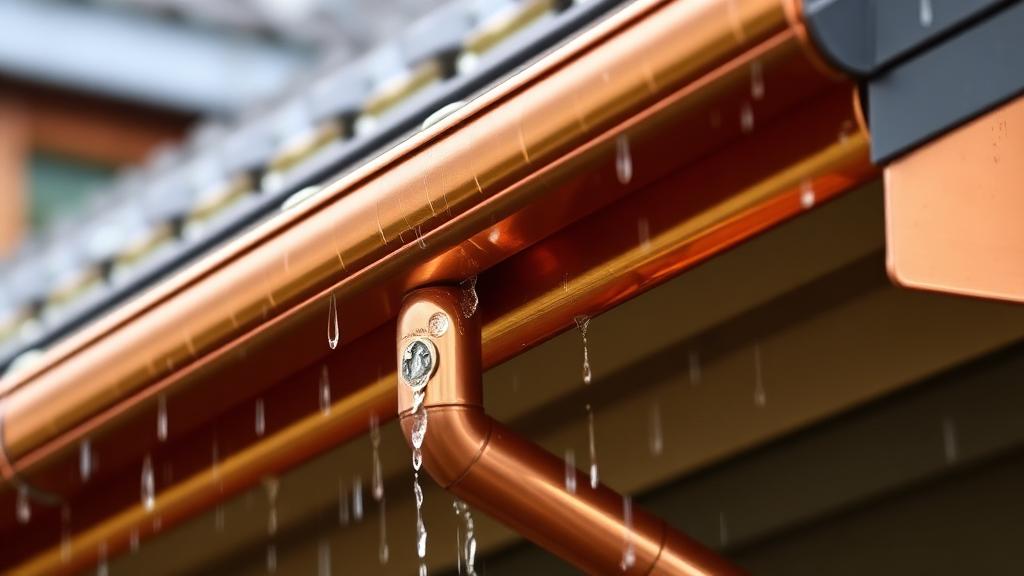
The most common residential drainage solution, gutters collect water at the roof edge and channel it to downspouts.
Types of Gutters:
K-Style (Ogee) Gutters:: - Most popular residential style in the US - Capacity: 5-inch holds approximately 1.2 gallons per foot; 6-inch holds approximately 2.0 gallons per foot - Available in aluminum, copper, steel, vinyl, and zinc - Cost installed: $6–$15 per linear foot (aluminum); $25–$40 per linear foot (copper)
Half-Round Gutters:: - Traditional style popular on historic homes and high-end properties - Slightly less capacity than K-style but easier to clean - Available in copper, aluminum, and galvanized steel - Cost installed: $8–$18 per linear foot (aluminum); $30–$50 per linear foot (copper)
Box Gutters:: - Built into the roof structure, common on commercial and older residential buildings - Highest capacity of any gutter type - Requires professional installation and maintenance - Cost: $15–$30 per linear foot
Seamless Gutters:: - Custom-fabricated on-site from continuous coil stock - No seams = no seam leaks (the #1 gutter failure point) - Available in 27+ colors to match any exterior - Cost installed: $8–$15 per linear foot
2. Internal Roof Drains
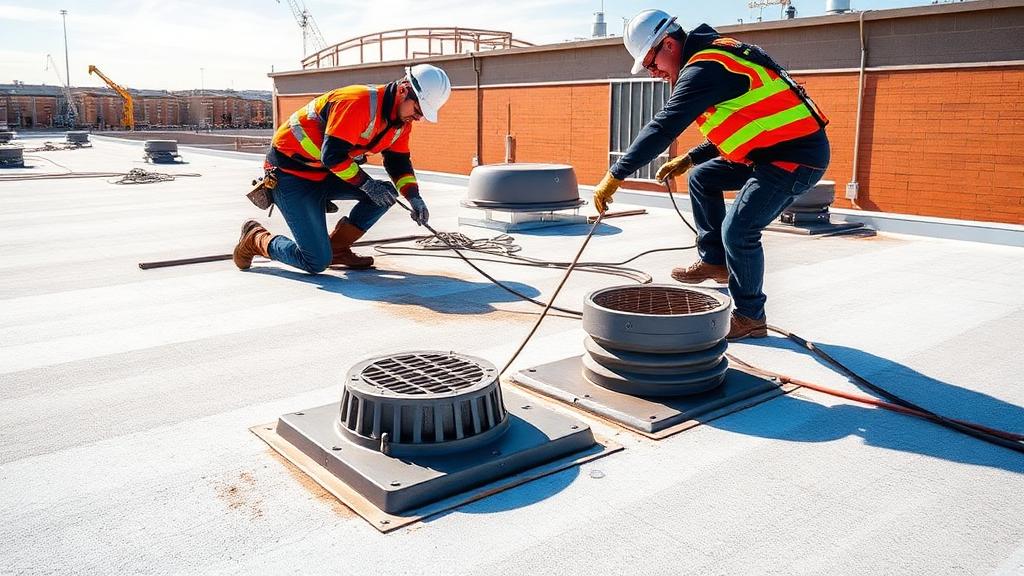
Common on commercial flat roofs, internal drains collect water from low points on the roof surface and channel it through pipes inside the building.
Components:: - Drain bowl with strainer dome - Clamping ring securing the membrane to the drain body - Interior piping (typically 4-inch PVC or cast iron) - Connection to storm sewer or detention system
Advantages:: - No exterior pipes subject to freezing - Higher flow capacity than scuppers - Aesthetically invisible - Can incorporate heating elements for freeze protection
Cost:: $1,500–$3,500 per drain (installed)
3. Scuppers and Conductor Heads
Scuppers are openings in the parapet wall of a flat roof that allow water to drain off the roof edge. Conductor heads (also called leader heads) are decorative collection boxes that channel water from scuppers to downspouts.
Advantages:: - Simple, reliable, and low-maintenance - No moving parts to fail - Highly visible for maintenance inspection - Serve as emergency overflow drains when primary drains are blocked
Cost:: $500–$1,500 per scupper (installed)
4. Gutter Guard Systems
Gutter guards prevent debris from entering and clogging gutter systems, reducing maintenance and improving performance.
Types and Costs:
| Guard Type | Cost/linear ft | Effectiveness | Maintenance |
|---|---|---|---|
| Mesh/screen | $3–$6 | Good (blocks leaves) | Annual cleaning |
| Micro-mesh | $8–$15 | Excellent (blocks pine needles) | Bi-annual cleaning |
| Reverse curve | $6–$12 | Good (heavy rain may overshoot) | Annual inspection |
| Foam insert | $2–$4 | Fair (degrades in 3–5 years) | Replacement needed |
| Brush style | $3–$5 | Fair (small debris accumulates) | Annual cleaning |
Sizing Your Drainage System
Calculating Roof Drainage Requirements
Proper sizing prevents overflow during heavy rainfall. The calculation considers:
- Roof area contributing to each gutter run
- Rainfall intensity for your region (measured in inches per hour)
- Roof slope (steeper roofs shed water faster)
Quick Sizing Guide:
| Roof Area per Gutter Run | Recommended Gutter Size | Downspout Size | Downspout Spacing |
|---|---|---|---|
| Under 600 sq ft | 5-inch K-style | 2x3 inch | Every 35 feet |
| 600–1,000 sq ft | 5-inch K-style | 3x4 inch | Every 35 feet |
| 1,000–1,400 sq ft | 6-inch K-style | 3x4 inch | Every 30 feet |
| Over 1,400 sq ft | 6-inch K-style | 4x5 inch | Every 25 feet |
For high-rainfall areas (Seattle, Portland, Boston), size up one gutter size from the chart above.
Downspout Discharge Solutions
Where water goes after leaving the downspout is just as important as collecting it:
Below-Grade Drainage:: - Underground pipes directing water to storm sewer, dry well, or daylight outlet - Most effective but most expensive: $15–$30 per linear foot - Requires proper slope (1/8 inch per foot minimum)
Splash Blocks:: - Simple, affordable redirection at ground level - Cost: $5–$20 each - Minimum 4-foot extension from foundation
Flexible Downspout Extensions:: - Roll-out extensions that deploy during rain - Cost: $10–$30 each - Extend water 4–6 feet from foundation
Rain Barrels and Cisterns:: - Capture rainwater for garden use - 55-gallon barrel cost: $50–$150 - Must include overflow connection to prevent foundation flooding
Maintenance Schedule for Maximum Performance
Monthly Tasks - Visual inspection of gutters from ground level - Check downspout discharge areas for erosion - Verify splash blocks and extensions are in position
Quarterly Tasks - Clean gutters of accumulated debris (or verify guards are working) - Flush downspouts with garden hose to check for clogs - Inspect gutter slope—water should move toward downspouts
Bi-Annual Tasks (Spring and Fall) - Professional gutter cleaning if no guards installed - Check all hangers and fasteners for security - Inspect gutter seams for separation or leaks - Verify proper gutter slope (1/4 inch per 10 feet toward downspouts) - Check for signs of water damage at fascia, soffit, and foundation
Annual Tasks - Complete drainage system assessment by a professional - Repair or replace damaged sections - Evaluate capacity—has tree growth increased debris load? - Assess whether guard upgrades are warranted
Common Drainage Problems and Solutions
Problem: Overflowing Gutters During Heavy Rain Cause: Undersized gutters or insufficient downspouts Solution: Upgrade to 6-inch gutters and add downspouts to reduce run length. Cost: $1,500–$4,000 for a typical home.
Problem: Ice Dams Forming at Gutters Cause: Heat loss from attic melting snow; meltwater refreezes at cold gutter Solution: Improve attic ventilation and insulation; install heated gutter cables as supplemental protection. Cost: $500–$2,000 for heat cables; $2,000–$5,000 for ventilation improvement.
Problem: Water Pooling Near Foundation Cause: Inadequate downspout discharge or negative grading Solution: Extend downspouts 6+ feet from foundation; regrade soil to slope away at 1 inch per foot for the first 6 feet. Cost: $500–$3,000 depending on scope.
Problem: Gutter Pulling Away from Fascia Cause: Failed hangers, rotten fascia wood, or ice/debris weight Solution: Replace fascia board if rotten ($10–$20 per linear foot), install new heavy-duty hidden hangers every 24 inches ($2–$5 each). Cost: $500–$2,000.
Investment Summary
| System | Cost Range (Typical Home) | Lifespan | Annual Maintenance Cost |
|---|---|---|---|
| Aluminum seamless gutters | $1,200–$2,500 | 20–30 years | $150–$300 |
| Copper gutters | $4,000–$8,000 | 50+ years | $100–$200 |
| Gutter guards (micro-mesh) | $1,500–$3,000 | 15–25 years | $50–$100 |
| Underground drainage | $2,000–$6,000 | 30–50 years | $0–$100 |
| Internal drains (commercial) | $3,000–$7,000 per drain | 25–40 years | $200–$500 |
Conclusion
Effective roof drainage protects every component of your building—from the roof itself to the foundation. In high-rainfall regions like the Pacific Northwest and Northeast, investing in properly sized, well-maintained drainage systems prevents tens of thousands of dollars in water damage over your building's lifetime. Don't wait for a basement flood or foundation crack to take action—assess and upgrade your drainage system today.
*Need help with roof drainage installation or repair? Find qualified roofing and gutter contractors in your area.*