Roof Replacement Contingency Planning: Control Tear-Off Surprises and Change Orders
A roof replacement can have a well-defined scope and still uncover conditions nobody could confirm before removing the old roofing. Deteriorated decking, concealed flashing problems, and unexpected roof layers can change the work after the project starts.
The answer is not simply to set aside extra money. A useful contingency plan connects each uncertainty to evidence, a pricing method, an approval process, and a safe stopping point. That gives you more control when a contractor calls with an urgent decision during tear-off.
For homeowners planning a replacement in late 2026, this guide focuses on managing those decisions rather than comparing roofing materials or reviewing basic estimate language. The goal is not a promise of zero surprises. It is to keep legitimate surprises from becoming undocumented, open-ended expenses.
Separate the Project Budget Into Three Buckets
Before scheduling work, distinguish between the agreed project, unresolved conditions, and optional improvements. Mixing them together makes it difficult to tell whether your project is actually running over budget.
The base project should cover the specified replacement under documented assumptions. This includes the agreed roofing system, removal scope, installation details, disposal, and other included services.
The contingency reserve is homeowner-controlled money for necessary work that remains uncertain. Examples include concealed deck deterioration or a connection detail that cannot be evaluated until roofing is removed. A reserve is not automatic permission for the contractor to spend it.
Optional upgrades are choices you can accept or decline without leaving the agreed roof incomplete or noncompliant. A decorative accessory or upgraded gutter system might fit here, depending on the project.
Avoid automatically treating every unexpected item as a contingency expense. If work was included in the original agreement, discovering that it takes more effort does not necessarily make it an extra. The contract and circumstances matter.
Keep financing fees and household expenses separate as well. They affect affordability even when the construction price does not change.
Build an Unknowns Register Before Signing
An unknowns register is a short list of unresolved conditions and how each will be handled. Ask your prospective contractor to help complete it during the planning stage.
For every item, record:
- What is known and what remains concealed.
- Whether an inspection can reduce the uncertainty.
- What finding would trigger additional work.
- How that work would be measured and priced.
- Who must approve it.
- Whether it could affect the schedule.
Common entries include deck condition, existing roof layers, chimney intersections, concealed fascia damage, and equipment attached to the roof.
For example, “deck condition unknown” is too broad to guide a decision. A better entry is: “Accessible attic areas show no obvious widespread deterioration, but decking beneath roofing remains unverified. Contractor will photograph unsuitable areas after tear-off and document replacement quantities before covering them.”
This does not guarantee sound decking. It establishes what the inspection could—and could not—tell you.
Use the roofing glossary if unfamiliar terms make it difficult to distinguish decking, underlayment, flashing, and structural framing.
Reduce Uncertainty With Targeted Professional Checks
Not every project needs extensive investigation. However, spending effort on a specific warning sign can be more useful than carrying a vague reserve for everything.
A qualified roofer can assess roof geometry, accessible attic conditions, visible penetrations, and previous repairs. Ask whether older records, installation photographs, or repair invoices would help establish what lies beneath the current roof.
Checks deserve particular attention when there is recurring leakage, noticeable sagging, an older addition, multiple roof transitions, or equipment that must be removed. Structural concerns may require a qualified engineer rather than a roofing assessment alone.
Attic observations have limits. Insulation, finishes, tight clearances, and concealed assemblies can hide deterioration. A dry-looking attic does not prove the roof deck is sound throughout.
Do not climb onto the roof to investigate. Share observations from the ground and accessible interior spaces, and leave roof access and intrusive testing to insured professionals. Any exploratory opening needs an agreed scope and weatherproofing plan.
If you need an evaluation before committing, start with professional roof inspection options. Ask what the inspection includes and which conditions will remain uncertain afterward.
Set Measurement Rules for Concealed Repairs
The most important preparation for hidden damage is often not a final price. It is a clear rule for turning a field discovery into a measurable charge.
Deck replacement illustrates the issue. A proposal might charge by panel, square foot, or another defined unit. Ask what that unit includes: removal, material thickness and type, cutting, fastening, labor, disposal, and applicable markup. Clarify how partial panels and irregular sections are counted.
Board decking may require a different method than sheet decking. Structural framing repairs should not be assumed to fall under a simple decking unit rate.
If the agreement includes a quantity of replacement decking, document how that included quantity is applied before additional charges begin. Also ask whether an allowance is reconciled to actual work and whether unused amounts are credited. Those terms should not be left to assumption.
For work that cannot reasonably be unit-priced, request a written pricing method and an authorization limit. Time-and-materials work should identify labor rates, material documentation, markup, and reporting expectations.
A unit rate only helps when the quantity and scope are verifiable. “Replace bad wood as needed” leaves too much unresolved.
Use a Written Change-Order Gate
A change order should explain a decision, not merely announce a higher bill. Agree on the process before materials arrive.
For each proposed addition, request:
- The finding: What condition was uncovered, and where?
- The evidence: Photos, measurements, or a relevant professional assessment.
- The reason: Why does this require work beyond the agreed scope?
- The remedy: What exactly will be repaired or replaced?
- The financial effect: Added cost, credits, and revised contract total.
- The schedule effect: Any additional time, inspection, or trade coordination.
- The authorization: Who approves, how, and when?
Digital approval can be practical, but keep it in a form both parties can retrieve. A phone conversation followed by a written summary is better than relying on memory.
Designate one homeowner decision-maker and a backup. Establish contact windows during tear-off, when discoveries are most likely.
Also define a narrow emergency-protection procedure. If a newly exposed condition requires immediate temporary weather protection, the contractor should know the authorized limits and documentation requirements. That is different from blanket permission to perform permanent additional work.
For disputes over scope or payment rights, seek advice appropriate to your state rather than relying on a generic contract template.
Plan for the Pause Before It Happens
An approval process fails if the roof is open and nobody has planned what happens while you decide.
Ask the contractor how much roofing will be removed at a time, how exposed areas will be protected, and what happens if hidden damage prevents normal progress. These are professional sequencing decisions, but homeowners should understand the consequences.
Clarify whether temporary protection associated with ordinary weather interruptions is included. Separately address protection needed during a longer pause caused by structural review, unavailable materials, or a disputed change.
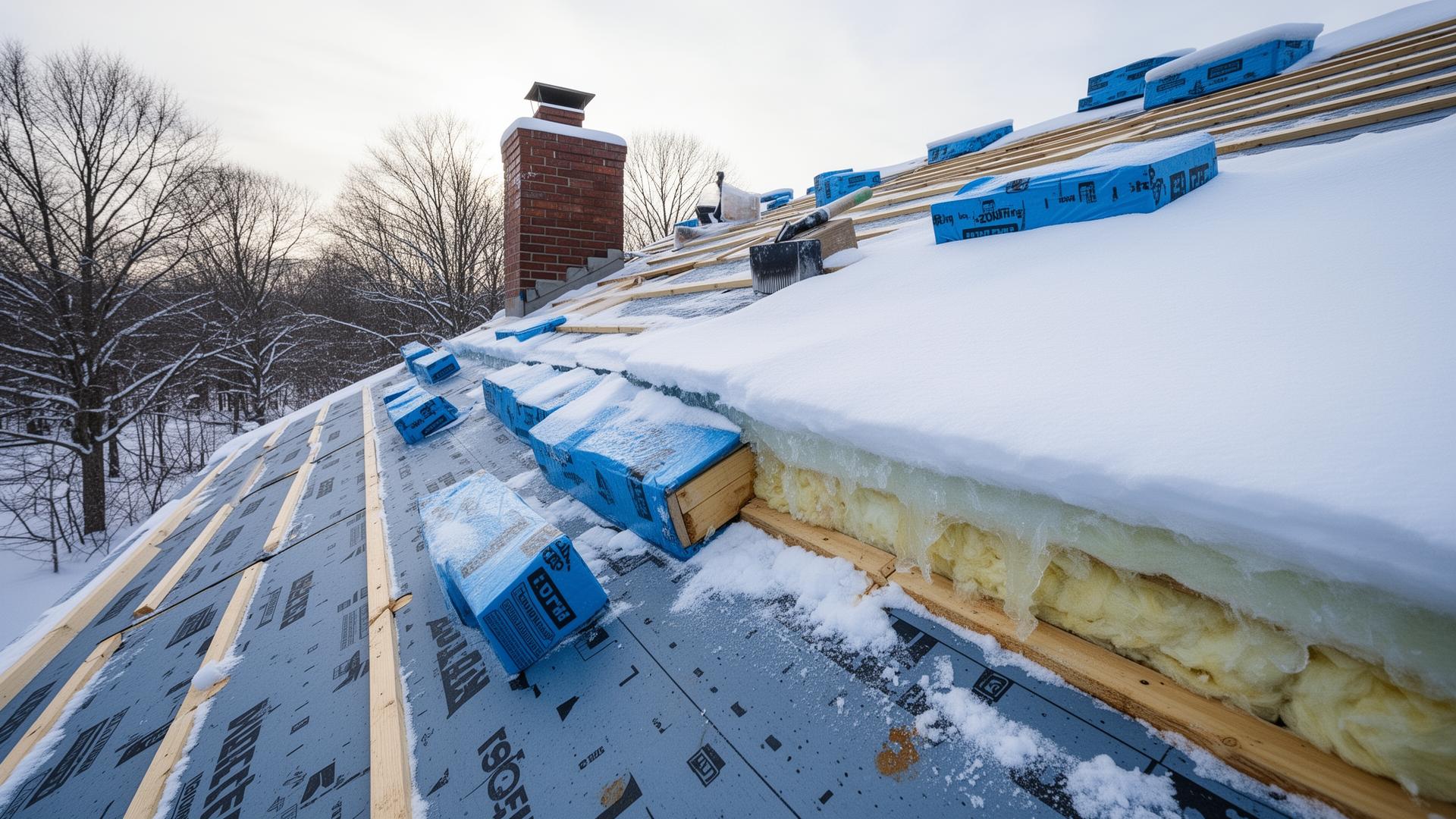
For a November project, local conditions matter. Northern locations may face short daylight, freezing temperatures, and snow. Other regions may have rainy periods or intermittent storms. Installation must follow product requirements and suitable site conditions; a calendar date alone does not determine suitability.
Ask how weather delays affect delivery, dumpster rental, equipment charges, and return visits. Do not pressure a crew to proceed in unsafe conditions to avoid a rental extension.
A safe pause may cost less than rushing into a poorly understood repair, but its responsibilities should be clear beforehand.
Identify Work at the Boundaries of the Roofing Contract
Surprise expenses often occur where roofing meets another trade. The roof itself may be clearly specified while adjacent work has no assigned owner.
Review these boundaries before scheduling:
- Solar equipment: Who handles removal, storage, reinstallation, electrical work, and coordination with existing warranties or agreements?
- Chimneys: Does the roofer handle flashing only, while a masonry professional addresses deteriorated brick or mortar?
- Mechanical equipment: Who handles rooftop equipment, refrigerant lines, electrical connections, and required service work?
- Skylights: Does the scope address only exterior integration, or also replacement units and interior finish repairs?
- Fascia and gutters: Who repairs concealed edge deterioration, resets gutters, and resolves attachment problems?
- Attic conditions: Who evaluates ventilation, insulation, exhaust routing, and moisture issues beyond the roofing scope?
Use properly licensed specialists where required. Roofers should not be expected to perform unrelated electrical or mechanical work outside their qualifications.
Ask each trade about lead times and return-trip charges. A roof crew waiting for another contractor can create schedule and protection costs even when the necessary repair is relatively limited.
Verify Local Requirements and Site Logistics
Permits, inspections, approved roof assemblies, and documentation requirements vary across U.S. jurisdictions. Wind exposure, wildfire considerations, snow conditions, energy provisions, and historic-district rules can influence the scope where applicable.
Have the contractor identify which requirements apply to your address and who obtains approvals. Confirm unclear points with the local building department. Do not assume a neighboring town follows the same process or that an old installation establishes what is acceptable now.
Homeowners association approval is separate from a building permit. If applicable, obtain necessary appearance approvals before ordering materials that may carry cancellation or restocking charges.
Site logistics also deserve written treatment. Discuss dumpster placement, driveway capacity, delivery access, street-use restrictions, landscaping protection, and whether overhead utilities affect equipment placement. Never move or work near utility lines yourself.
Ask which fees are included and which depend on circumstances. Potential variables include permit revisions, equipment extensions, special access arrangements, and disposal requirements for unexpected materials.
For broad regional planning, explore state roofing resources, then verify project-specific details locally.
Size the Reserve Around Plausible Scenarios
There is no single contingency percentage that fits every roof. A straightforward replacement with good records is different from an older home with several additions and recurring leaks.
Ask the contractor to outline three scenarios without presenting them as predictions:
- Limited concealed repair: Isolated deterioration handled under agreed unit rates.
- Expanded concealed repair: More extensive decking or edge work, with additional labor and disposal.
- Major scope interruption: Structural concerns or another condition requiring a specialist and revised sequencing.
For each scenario, identify the pricing method, likely scheduling consequences, and your decision point. You do not need to assume the worst will happen, but you should know what you would do if it does.
Separate necessary repairs from elective upgrades when allocating the reserve. Avoid spending the reserve on appearance changes before tear-off uncertainties are resolved.
If insurance is involved, distinguish the contractor’s charges from amounts the insurer has actually approved. Do not assume a supplement, code-related expense, or concealed condition will be covered. Policy terms and claim facts control.
Likewise, understand financing approval limits, funding timing, and any cost of increasing the financed amount before work starts.
Practical Checklist: Before Tear-Off and Final Payment
Use this checklist alongside the broader homeowner preparation checklist.
Before tear-off
- Verify contractor licensing where required and appropriate insurance.
- Separate base scope, allowances, exclusions, and optional work.
- List unresolved conditions and available inspection findings.
- Agree on concealed-repair units, included quantities, and documentation.
- Establish written change approval and emergency-protection limits.
- Assign a homeowner decision-maker and backup.
- Confirm permits, trade coordination, and material availability.
- Address weather pauses, access, rentals, and protection responsibilities.
- Keep contingency funds accessible without treating them as preapproved spending.
Before the final contractual payment milestone
- Reconcile every approved change against the final invoice.
- Match charged quantities to supporting records.
- Confirm applicable allowance credits and omitted-work credits.
- Resolve the agreed punch list and cleanup responsibilities.
- Obtain required inspection documentation and warranty information.
- Request appropriate payment or lien-related documentation under local practice and law.
- Retain the contract, photos, approvals, and invoices together.
Follow your contract and applicable law regarding payment timing. If a dispute develops, document it promptly and obtain appropriate advice rather than improvising a payment strategy.
FAQ
Can a roofer guarantee there will be no additional charges?
Some contractors offer fixed pricing under defined assumptions, but concealed conditions still require careful contract treatment. Ask which risks the contractor accepts and which remain excluded. A promise of “no surprises” is less useful than specific written terms.
Should I approve all decking replacement before work starts?
You can approve a defined included quantity or a limited authorization, but unlimited approval removes an important control. Agree on evidence, measurement, pricing, and a threshold requiring additional written permission. Necessary decking repairs should not be skipped merely to preserve the original total.
What if the contractor finds damage while I am unavailable?
Use a designated backup and a documented temporary-protection procedure. The agreement should explain what limited protective action is authorized and what permanent work requires approval. Avoid leaving the crew to guess while the roof is exposed.
Is an allowance the same as contingency money?
No. An allowance is a contract budgeting mechanism for specified work or materials, with reconciliation governed by the agreement. A contingency reserve is money you retain for uncertainty. Neither should be treated as automatically earned by the contractor.
Should I choose the proposal with the lowest contingency estimate?
Not on that basis alone. A low estimate may reflect fewer uncertainties, limited investigation, or optimistic assumptions. Compare how contractors identify risk and document changes. The strongest plan is one you can verify and manage—not simply the one with the smallest projected extra expense.