Roof Ventilation Guide for Miami Homeowners: Beat the Heat and Humidity in 2026
Miami's tropical climate presents unique challenges for residential roofing systems. With average summer temperatures in the 90s, humidity levels regularly exceeding 80%, and intense UV exposure year-round, proper roof ventilation isn't just recommended—it's essential for protecting your home, reducing energy costs, and extending the life of your roofing system. This comprehensive 2026 guide covers everything Miami homeowners need to know about roof ventilation.
Why Roof Ventilation Matters in Miami
The Heat Factor During Miami's summer months, an unventilated attic can reach temperatures of 150-170°F. This extreme heat: - Forces your AC system to work 25-40% harder - Degrades shingle materials from the underside, reducing lifespan by 5-10 years - Warps roof decking and structural components - Increases indoor temperatures, especially on second floors - Dramatically increases electricity costs
The Humidity Factor Miami's average relative humidity of 73% (higher during summer) creates additional problems in poorly ventilated attics: - Condensation formation on cooler surfaces, leading to wood rot - Mold and mildew growth in attic spaces (remediation costs $2,000-$6,000+) - Insulation degradation as moisture reduces R-value effectiveness - Structural damage to trusses, rafters, and decking from persistent moisture - Indoor air quality issues as mold spores circulate through HVAC systems
The Combined Effect In Miami's climate, heat and humidity work together to create a particularly hostile environment for unventilated roofs. Proper ventilation addresses both issues simultaneously by continuously circulating fresh air through the attic space.
How Roof Ventilation Works
The Stack Effect (Natural Ventilation) The most common ventilation method relies on natural convection: 1. Intake vents (at the eaves/soffits) allow cool outside air to enter the attic 2. Hot air rises naturally toward the roof peak 3. Exhaust vents (at the ridge or near the peak) allow hot, moist air to escape 4. Continuous cycle maintains temperatures closer to outdoor ambient levels
Key Principle: Balance Effective ventilation requires balanced intake and exhaust: - Too much exhaust, not enough intake: Creates negative pressure that can pull conditioned air from your living space into the attic - Too much intake, not enough exhaust: Reduces airflow efficiency - Ideal ratio: 50% intake / 50% exhaust (by net free area)
Types of Roof Ventilation for Miami Homes
Intake Ventilation
Continuous Soffit Vents: - Best for Miami: Provides maximum intake airflow - Cost: $3-$6 per linear foot - How it works: Perforated aluminum strips installed along the entire soffit length - Miami advantage: Prevents rain-driven moisture from entering (when properly screened)
Individual Soffit Vents: - Good for retrofits: Can be added to existing soffits - Cost: $5-$15 per vent - How it works: Round or rectangular vents cut into existing soffit panels - Limitation: Provides less total intake area than continuous vents
Exhaust Ventilation
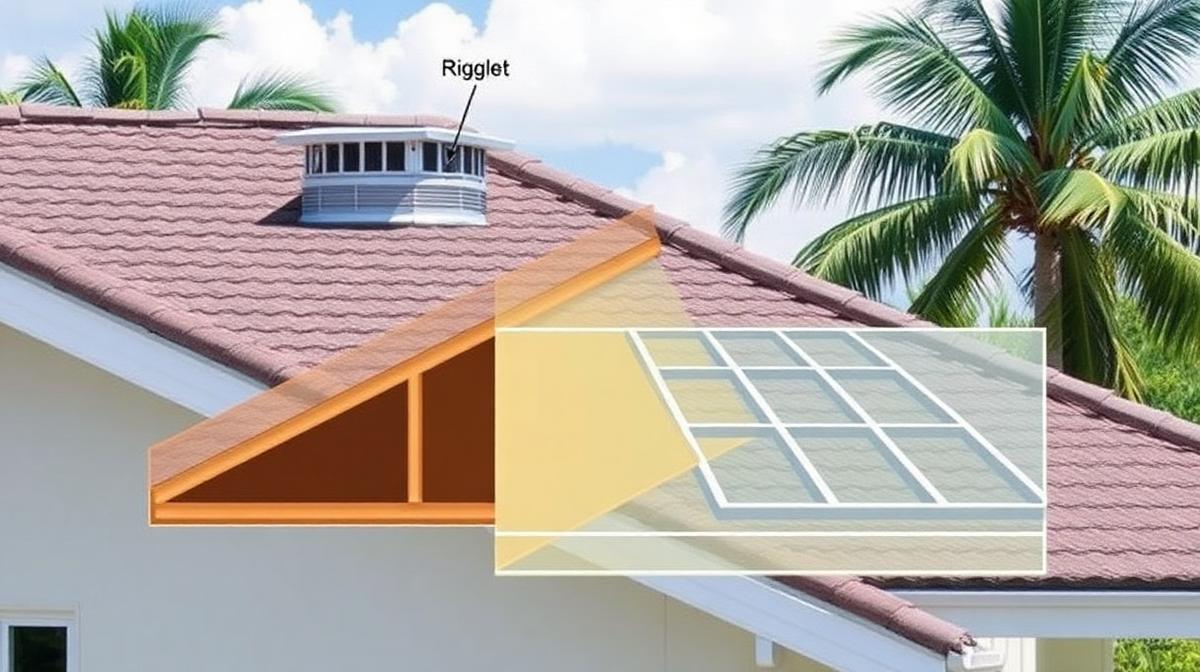
Ridge Vents: - Best overall for Miami: Low-profile, efficient, and hurricane-resistant - Cost: $4-$8 per linear foot - How it works: Continuous vent along the roof ridge, covered by ridge cap shingles - Miami advantage: External baffle design prevents rain infiltration during storms - Wind rating: Properly installed ridge vents withstand 110+ mph winds
Powered Attic Ventilators (PAVs): - Good for severe heat: Active extraction of hot air - Cost: $300-$600 per unit installed - How it works: Electric or solar-powered fans mounted on the roof or gable - Miami advantage: Aggressively removes heat during peak summer hours - Consideration: Solar-powered models eliminate electricity costs
Solar-Powered Attic Fans: - Eco-friendly option: Popular in Miami's sustainability-focused communities - Cost: $400-$800 per unit installed - How it works: Built-in solar panel powers the fan during peak sunlight hours - Miami advantage: Maximum airflow when you need it most (sunny, hot days) - Annual savings: $50-$150 in reduced cooling costs per unit
Turbine Vents (Whirlybirds): - Budget option: Wind-powered exhaust - Cost: $50-$150 per unit installed - How it works: Wind spins the turbine, pulling hot air from the attic - Miami limitation: Can be damaged in hurricane-force winds; must be hurricane-rated
Gable Vents - Supplemental ventilation: Not recommended as primary ventilation in Miami - Cost: $50-$200 per vent - Miami concern: Can allow wind-driven rain during tropical storms - Recommendation: Use louver-style with closable dampers for storm protection
Miami Ventilation Requirements and Building Codes
Florida Building Code Requirements - Minimum ventilation ratio: 1:150 (1 sq ft of net free ventilation area per 150 sq ft of attic floor area) - Reduced ratio: 1:300 allowed when balanced intake/exhaust is achieved with vapor barrier - Hurricane zone requirements: All vents must meet wind-driven rain infiltration standards - Miami-Dade NOA: Ventilation products must have Miami-Dade County Notice of Acceptance for high-velocity hurricane zone installation
Calculating Your Ventilation Needs Example for a 2,000 sq ft attic: - At 1:150 ratio: 2,000 ÷ 150 = 13.3 sq ft of net free ventilation area needed - Split equally: ~6.7 sq ft intake + ~6.7 sq ft exhaust - At 1:300 ratio (with balanced system): ~3.3 sq ft each
Signs Your Miami Home Has Poor Ventilation
Exterior Signs - Shingle curling or buckling (especially on south-facing slopes) - Premature shingle aging (roof looks older than its actual age) - Rust stains on metal roof components - Visible mold or algae growth (beyond normal Miami levels) - Ice dam formation (rare in Miami but indicates severe ventilation issues)
Interior Signs - Hot upper floors (10-15°F warmer than ground level) - Musty odors in attic or upper rooms - Visible mold in attic spaces - Peeling paint on exterior soffits or fascia - Excessive AC runtime during summer months - High electricity bills despite normal usage patterns
Attic Inspection Signs - Wet or damp insulation - Condensation on rafters or roof decking - Dark staining on wood surfaces (indicating moisture damage) - Rusty nails protruding through roof decking - Sagging or warped decking
Cost of Ventilation Improvements in Miami (2026)
| Improvement | Cost Range |
|---|---|
| Add Continuous Soffit Vents | $500 – $1,500 |
| Install Ridge Vent (full length) | $400 – $1,200 |
| Solar Attic Fan (per unit) | $400 – $800 |
| Powered Attic Ventilator | $300 – $600 |
| Complete Ventilation System | $1,500 – $4,000 |
| Attic Insulation Upgrade | $1,500 – $3,500 |
| Mold Remediation (if needed) | $2,000 – $6,000+ |
Energy Savings from Proper Ventilation in Miami
Direct Cooling Savings - Reduced attic temperature: From 160°F+ to 100-110°F - AC load reduction: 15-25% during peak summer months - Annual electricity savings: $300-$900 for average Miami home - HVAC system lifespan extension: 2-5 years
Indirect Savings - Roofing material longevity: 3-8 additional years of roof life - Prevented mold remediation: $2,000-$6,000 avoided - Structural repair prevention: Thousands in avoided wood rot repairs - Insurance benefits: Some insurers offer discounts for proper ventilation
Hurricane Considerations for Miami Ventilation
Storm-Ready Ventilation Products All ventilation products installed in Miami-Dade County must: - Have Miami-Dade County NOA (Notice of Acceptance) - Meet TAS 100, 201, and 203 testing standards - Withstand wind-driven rain at hurricane velocities - Be properly installed per manufacturer specifications
Storm Preparation for Ventilation Systems - Before hurricane season: Inspect all vents for damage or debris blockage - During storm warning: Close any operable gable vents or louvers - After storms: Inspect for wind or debris damage to ventilation components - Annual maintenance: Clean and verify proper operation of all ventilation elements
Finding a Miami Ventilation Specialist
When choosing a Miami roofing contractor for ventilation work: - Verify Florida State Certified Roofing Contractor license - Confirm experience with Miami-Dade hurricane zone requirements - Ask about NOA-approved ventilation products - Request energy savings estimates based on your home's specifics - Check references from Miami-area ventilation projects
Protect your Miami home from heat, humidity, and high energy bills—get free quotes from qualified Miami roofing professionals today.