Utah Residential Roofing Guide: Materials for Mountain and Valley Homes
Utah roofing faces diverse challenges from the states varied geography. From the Salt Lake Valley to Park City mountain communities, Utah homes require materials suited to local conditions. This guide explores roofing options for Utah climate.
Understanding Utah Climate Challenges
Utah encompasses multiple climate zones with different roofing requirements. The Wasatch Front experiences temperature extremes from summer highs above 100 degrees to winter lows below zero. Mountain communities face heavy snow loads and extended freezing periods.
High altitude throughout much of Utah means intense UV radiation that degrades roofing materials faster than lower elevations. The dry climate reduces moisture-related problems but creates challenges from temperature-induced expansion and contraction.
Temperature swings of 30-40 degrees within single days are common in Utah. These rapid changes stress roofing materials through constant expansion and contraction cycles.
Best Materials for Utah Conditions
Metal Roofing: Metal excels in Utah conditions. It sheds snow readily, handles temperature swings, and resists UV degradation. Metal is increasingly popular for both mountain and valley Utah homes.
Architectural Shingles: Quality architectural shingles provide good value for Utah valley homes. Choose products rated for temperature extremes and UV exposure. Impact-resistant options provide additional protection.
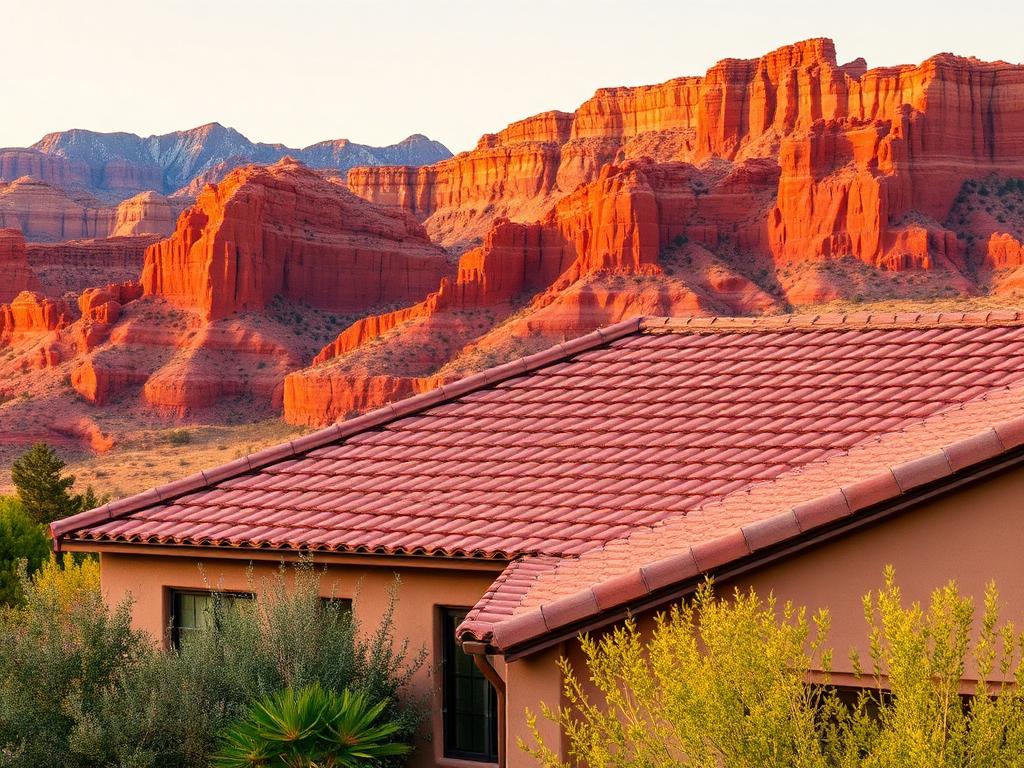
Tile Roofing: Concrete and clay tiles handle Utah conditions well. Their thermal mass moderates temperature swings. Tile adds distinctive southwestern aesthetics to Utah homes.
Synthetic Slate and Shake: Modern synthetic materials provide traditional aesthetics with improved performance. Lighter weight than natural materials reduces structural requirements.
Snow Load Considerations
Mountain properties must address snow load in roofing design. Utah building codes specify minimum roof load requirements based on elevation and snowfall patterns. Proper structural design prevents snow-related damage.
Metal roofing sheds snow readily, reducing accumulation. Snow guards control snow release to prevent dangerous avalanches. Proper snow management protects both the roof and people below.
UV Protection
Utah altitude intensifies UV exposure. Choose materials specifically rated for high UV environments. Reflective coatings and UV-resistant formulations extend material life.
Metal roofing with factory-applied finishes resists UV degradation effectively. Asphalt shingles should include UV stabilizers in their formulation for Utah service.
Working with Utah Contractors
Utah licenses contractors through the Division of Occupational and Professional Licensing. Verify license status before hiring. Contractors should have experience with local conditions including mountain installations.
Conclusion
Utah roofing requires materials suited to temperature extremes and UV exposure. Proper material selection and installation provide lasting protection for Utah homes.
Ready to find qualified Utah contractors? Browse verified Utah roofers experienced with local conditions.