Cool Roof Coatings in Arizona: Energy Savings and Installation Guide
Cool roof coatings offer Arizona property owners an effective strategy for reducing cooling costs and extending roof life. These specialized coatings reflect solar radiation and release absorbed heat efficiently, keeping roof surfaces dramatically cooler than conventional materials. In a state where air conditioning can account for 50% or more of summer electricity bills, cool roof coatings provide meaningful economic benefits.
How Cool Roof Coatings Work
Cool roof coatings function through two complementary mechanisms. Solar reflectance measures the percentage of incoming sunlight that bounces away from the roof surface. Thermal emittance measures how efficiently the coating releases absorbed heat back to the atmosphere.
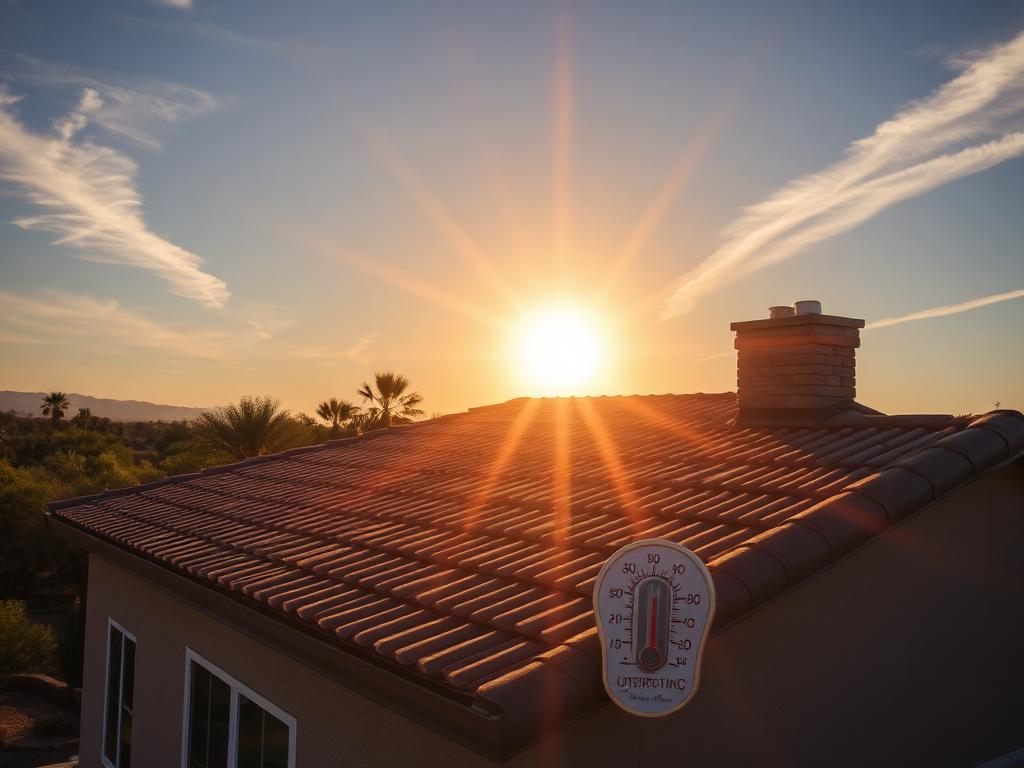
Standard dark roofing materials may reflect only 5-15% of solar radiation and have low thermal emittance. This combination causes roof surfaces to absorb and retain heat, with temperatures reaching 160-180 degrees Fahrenheit during Arizona summers. Cool roof coatings can reflect 80-90% of solar radiation while maintaining high thermal emittance, reducing surface temperatures by 50-70 degrees.
The temperature reduction provides multiple benefits. Lower roof temperatures reduce heat transfer into buildings, decreasing air conditioning workload. Reduced thermal stress extends the life of underlying roofing materials. Cooler attic temperatures improve HVAC efficiency when equipment is located in attic spaces.
Types of Cool Roof Coatings
Several coating technologies are available for Arizona applications. Each has characteristics suited to specific roofing substrates and performance requirements.
Acrylic Coatings: Water-based acrylic coatings offer good performance at economical cost. They adhere well to most substrates and provide effective solar reflection. Standard acrylics may require more frequent reapplication in Arizona conditions, typically every 5-7 years. Enhanced formulations offer extended service life.
Silicone Coatings: Silicone coatings provide excellent ponding water resistance, making them ideal for flat roofs with drainage challenges. They maintain flexibility in extreme temperatures and resist UV degradation well. Higher material cost is offset by longer service intervals, typically 10-15 years in Arizona.
Polyurethane Coatings: These coatings offer excellent durability and impact resistance. Aromatic formulations cost less but may yellow over time without affecting performance. Aliphatic formulations maintain color stability but cost more. Service life typically runs 10-15 years with proper application.
Elastomeric Coatings: Thick elastomeric coatings bridge minor cracks and provide waterproofing in addition to reflective properties. Multiple-coat applications create substantial membrane protection. They work well over aging built-up roofs and modified bitumen systems.
Substrate Considerations
Cool roof coatings can be applied to various existing roof types, but substrate condition significantly affects performance and longevity.
Metal Roofing: Factory-coated metal offers the best long-term performance, but field-applied coatings can restore reflectivity to faded or aged metal roofs. Proper surface preparation including cleaning and priming ensures coating adhesion. Rust treatment is essential before coating galvanized or steel roofing.
Built-Up Roofing: Traditional built-up roofs with gravel surfacing require gravel removal or embedding before coating application. Smooth-surfaced built-up roofs accept coatings directly after cleaning. Coating extends the service life of aging built-up systems significantly.
Modified Bitumen: Modified bitumen membranes accept cool coatings well. Coatings protect against UV degradation that limits modified bitumen life in Arizona. White granule-surfaced modified bitumen can be enhanced with additional coating for maximum reflectivity.
Single-Ply Membranes: Aging EPDM, TPO, and PVC membranes can be restored with compatible coatings. Compatibility testing is essential as some coating formulations do not adhere well to all membrane types. Coating can extend membrane life 10-15 years.
Spray Foam: Polyurethane spray foam requires protective coating from initial installation. Coating renewal at 10-15 year intervals maintains protection and reflectivity. Arizona sun degrades unprotected spray foam rapidly.
Application Requirements
Successful cool roof coating application requires proper surface preparation, appropriate conditions, and correct application technique. Cutting corners on any element compromises performance and longevity.
Surface Preparation: Roofs must be clean, dry, and structurally sound before coating. Pressure washing removes dirt, debris, and loose materials. Repairs to cracks, splits, and failed seams must be completed before coating. Primer application may be required depending on substrate and coating type.
Weather Conditions: Arizona weather generally favors coating application, but timing matters. Avoid application during monsoon season when afternoon storms threaten. Early morning application allows curing before peak heat. Most coatings require 24-48 hours cure time before exposure to rain.
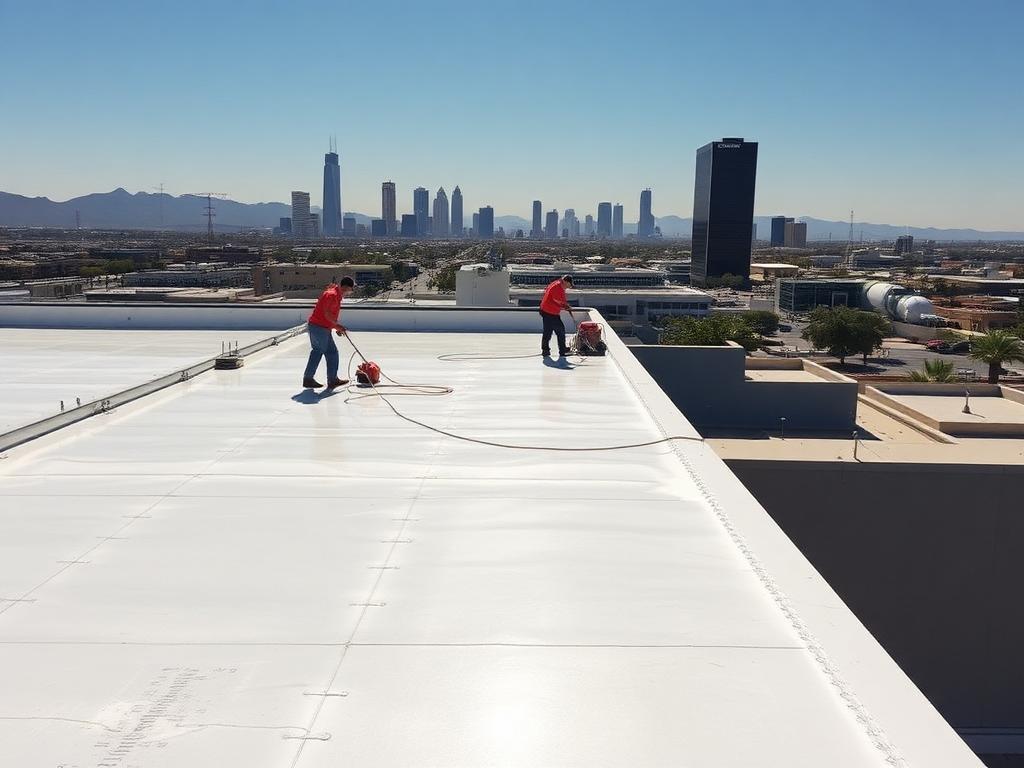
Application Technique: Spray, roller, and brush application methods each suit different situations. Spray application provides fastest coverage and most uniform thickness. Roller application works well for smaller areas and detail work. Multiple thin coats typically outperform single thick applications.
Thickness Requirements: Coating performance depends on achieving specified thickness. Manufacturer specifications indicate minimum dry film thickness, typically measured in mils. Inadequate thickness reduces performance and shortens service life. Quality contractors measure thickness during application.
Energy Savings Analysis
Cool roof coatings provide measurable energy savings in Arizona buildings. The magnitude of savings depends on building characteristics, cooling system efficiency, and baseline roof condition.
Studies by Lawrence Berkeley National Laboratory and Arizona State University document 10-30% cooling cost reductions from cool roof coatings. Single-story buildings with large roof areas relative to floor area benefit most. Multi-story buildings see proportionally smaller percentage savings.
Peak demand reduction often provides savings beyond simple energy reduction. Arizona utilities charge premium rates during afternoon peak hours when cool roofs provide maximum benefit. Time-of-use rate structures amplify the economic value of reduced afternoon cooling loads.
Simple payback periods for cool roof coatings typically range from 2-5 years depending on building characteristics and coating costs. Extended roof life provides additional economic value beyond energy savings.
Utility Rebates and Incentives
Arizona utilities and municipalities offer various incentives for cool roof installations. Programs change periodically, so verify current offerings before planning projects.
Salt River Project and Arizona Public Service both have offered rebates for qualifying cool roof projects. Commercial buildings often receive larger incentives than residential properties. Program requirements typically specify minimum solar reflectance values.
Some Arizona municipalities incorporate cool roof requirements into building codes or offer expedited permitting for qualifying projects. Phoenix, Scottsdale, and Tucson have all implemented cool roof policies at various levels.
Contractor Selection
Cool roof coating application requires specialized skills and equipment. General roofing contractors may lack experience with coating systems. Verify specific coating experience when selecting contractors.
Look for manufacturer certification from coating suppliers. Certified applicators receive training on proper techniques and have established relationships with technical support. Certification often provides enhanced warranty coverage.
Request references from similar projects completed 3-5 years ago. Verify that coatings performed as expected over time. Recent references cannot confirm long-term performance claims.
Maintenance Requirements
Cool roof coatings require periodic maintenance to maintain performance. Annual inspection identifies developing problems before they cause coating failure.
Cleaning maintains reflectivity that diminishes as dirt and debris accumulate. Low-pressure washing removes most contamination. Avoid high-pressure washing that can damage coating surfaces.
Touch-up application addresses localized wear, especially around roof traffic areas and mechanical equipment. Maintaining coating integrity prevents moisture infiltration that causes substrate damage.
Plan for complete recoating at intervals specified by the coating manufacturer. Recoating before failure is easier and less expensive than addressing degraded conditions.
Conclusion
Cool roof coatings provide Arizona property owners with an effective tool for managing building temperatures and energy costs. Proper material selection, surface preparation, and application technique ensure long-term performance. The combination of energy savings, extended roof life, and utility incentives makes cool roof coatings an attractive investment for Arizona buildings.
Ready to explore cool roof options? Connect with certified Arizona coating contractors experienced in reflective coating applications.