Commercial Flat Roof Systems: Complete Guide to TPO, PVC, and EPDM Membranes
Commercial flat roofs represent one of the most significant investments building owners make in their properties. Unlike residential roofing where asphalt shingles dominate, commercial flat roofs require specialized membrane systems designed to handle unique challenges including large surface areas, heavy HVAC equipment, and strict drainage requirements. This comprehensive guide explores the three most popular commercial flat roof systems to help you make an informed decision for your building.
Understanding Commercial Flat Roof Requirements
Before diving into specific materials, it is essential to understand what makes commercial roofing different from residential applications. Commercial roofs face unique challenges that residential roofs do not encounter.
Scale and Complexity:: Commercial roofs can span tens of thousands of square feet, making material efficiency and installation speed critical factors. Large-scale installations require different techniques and equipment than smaller residential projects. The sheer size of commercial roofs means that even small inefficiencies in materials or installation can translate to significant cost differences.
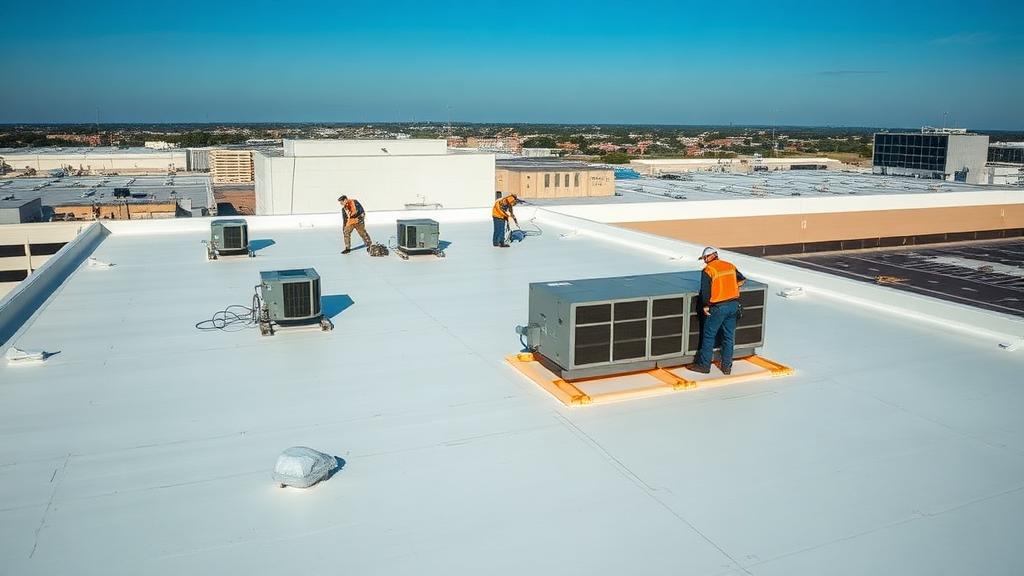
Equipment Loads:: HVAC systems, solar panels, satellite dishes, and other rooftop equipment create concentrated loads and penetration points that require careful planning. Unlike residential roofs where equipment is minimal, commercial buildings often have extensive rooftop installations that must be integrated into the roofing system without compromising weatherproofing.
Accessibility:: Commercial roofs often require regular maintenance access, making walkway paths and roof traffic patterns important design considerations. Building maintenance teams need safe, durable access routes to rooftop equipment without damaging the roofing membrane.
Code Requirements:: Commercial buildings face stricter fire codes, energy efficiency requirements, and structural specifications than residential properties. Understanding local building codes is essential when selecting a commercial roofing system that meets all regulatory requirements.
TPO Roofing: The Modern Standard
Thermoplastic Polyolefin (TPO) has become the dominant commercial roofing material over the past two decades, now accounting for over 40% of new commercial flat roof installations. Understanding why TPO achieved this market leadership helps evaluate whether it is right for your building.
TPO Composition and Properties
TPO is a single-ply membrane composed of polypropylene and ethylene-propylene rubber. This combination provides flexibility, durability, and excellent weathering characteristics. The membrane is typically reinforced with polyester or fiberglass scrim for added strength and dimensional stability.
Standard Specifications:: - Thickness options: 45 mil, 60 mil, 80 mil - Roll widths: 6 feet, 8 feet, 10 feet, 12 feet - Roll lengths: Up to 100 feet - Colors: White, gray, tan (white most popular for energy efficiency)
The white reflective surface of TPO contributes significantly to building energy efficiency by reflecting solar radiation rather than absorbing it. This reduces cooling costs during hot months and can help buildings meet energy efficiency requirements for LEED certification and similar programs.
TPO Installation Methods
TPO can be installed using three primary methods, each with advantages for different situations:
Fully Adhered:: The membrane is glued directly to the substrate using adhesive. This method provides excellent wind uplift resistance and is common in high-wind regions. Fully adhered systems work well over irregular substrates and allow for creative designs around obstacles.
Mechanically Attached:: Metal plates and screws secure the membrane to the roof deck, with seams welded over the fasteners. This faster installation method reduces labor costs and works well on smooth substrates. Mechanical attachment is popular for new construction where speed matters.
Ballasted:: Gravel or pavers hold the membrane in place without fasteners or adhesive. While this method has lowest installation cost, it adds significant weight requiring structural evaluation. Ballasted systems also make leak detection more challenging.
TPO Advantages and Limitations
Advantages:: - Excellent energy efficiency with reflective surface - Strong heat-welded seams create watertight connections - Resistant to UV, ozone, and chemical exposure - Cost-effective compared to PVC - Recyclable at end of life
Limitations:: - Shorter track record than EPDM (approximately 25 years of use) - Seam welding requires skilled installers - White surface shows dirt and requires periodic cleaning - Some concern about formulation consistency across manufacturers
PVC Roofing: Premium Performance
Polyvinyl Chloride (PVC) roofing has been used in commercial applications for over 50 years, providing the longest track record of any single-ply membrane system. While more expensive than TPO, PVC offers performance advantages in specific applications.
PVC Composition and Properties
PVC roofing consists of polyvinyl chloride with plasticizers for flexibility, UV stabilizers for weathering resistance, and reinforcement for strength. The material is inherently fire-resistant and provides excellent chemical resistance.
Key Characteristics:: - Self-extinguishing (will not support combustion) - Resistant to chemicals, oils, and grease - Strong hot-air welded seams - Available in various colors and textures - Thickness typically 50-80 mil
PVC stands out in restaurant and food processing applications where grease and animal fats can damage other roofing materials. The chemical resistance also makes PVC ideal for manufacturing facilities where industrial contaminants may contact the roof.
When to Choose PVC
PVC justifies its premium cost in these scenarios:
Food Service Buildings:: Restaurant exhaust systems release grease-laden air that settles on rooftops. PVC resists grease degradation while other membranes can soften and fail.
Chemical Exposure:: Industrial facilities with chemical storage, processing, or emissions benefit from PVC chemical resistance.
Fire Code Requirements:: Buildings with stringent fire codes may require PVC self-extinguishing properties.
Long-Term Ownership:: If you plan to own the building for 25+ years, PVC proven longevity may justify higher initial cost.
EPDM Roofing: Time-Tested Reliability
Ethylene Propylene Diene Monomer (EPDM) has been the commercial roofing workhorse for over 60 years. This synthetic rubber membrane has an unmatched track record of performance and remains a popular choice, particularly for buildings where cost matters more than aesthetics.
EPDM Composition and Characteristics
EPDM is a thermoset rubber compound that vulcanizes (cures) after manufacture, creating a stable material that does not soften with heat. This property differentiates EPDM from thermoplastic membranes like TPO and PVC.
Standard Specifications:: - Thickness: 45 mil, 60 mil, 90 mil - Colors: Black (standard), white (premium) - Installation: Fully adhered, mechanically attached, or ballasted
The black color that makes EPDM less energy-efficient in warm climates becomes an advantage in cold climates where solar heat gain reduces heating costs. Building owners should consider their climate when choosing between black EPDM and white reflective membranes.
EPDM Seaming Methods
Unlike TPO and PVC that use heat welding, EPDM seams are created using adhesive tape or liquid adhesive. This difference has implications for installation and long-term performance.
Seam Tape:: Pre-manufactured tape is applied to overlapping membrane edges, creating a bond between sheets. Tape seams are quick to install but may be less durable than welded seams over time.
Liquid Adhesive:: Two-part adhesive is applied to seam areas and allowed to cure, creating a chemical bond. Liquid seams can be more labor-intensive but may provide better long-term performance.
The seaming method is a significant consideration when evaluating EPDM against thermoplastic alternatives. While EPDM membranes themselves have excellent longevity, seam performance determines overall system durability.
Cost Comparison and ROI Analysis
Understanding total cost of ownership helps make informed decisions beyond initial installation prices. Commercial roofing costs vary significantly based on location, building characteristics, and market conditions.
Approximate Installed Costs (per square foot):: - TPO: $5.50 - $9.00 - PVC: $7.00 - $12.00 - EPDM: $4.50 - $8.00
However, initial cost represents only part of the financial picture. Consider these factors in your ROI calculation:
Energy Savings:: White TPO and PVC membranes can reduce cooling costs by 10-30% compared to black EPDM. In warm climates, these savings compound over the roof lifespan.
Maintenance Costs:: All systems require regular maintenance, but seam repairs and membrane patches vary in complexity and cost between systems.
Expected Lifespan:: - TPO: 20-30 years - PVC: 25-35 years - EPDM: 25-30 years
Warranty Value:: Manufacturer warranties range from 10 to 30 years depending on system selection and installation method. Longer warranties have value if the manufacturer remains financially stable.
Selecting the Right System for Your Building
No single roofing system is best for all applications. Consider these factors when making your decision:
Climate:: - Hot climates: TPO or PVC (white reflective) - Cold climates: EPDM (black) or white membranes - Extreme weather: Fully adhered TPO or PVC
Building Use:: - Restaurants/food processing: PVC - Warehouses: EPDM or TPO - Offices: TPO or PVC - Industrial: PVC
Budget:: - Limited budget: EPDM - Balanced budget: TPO - Performance priority: PVC
Sustainability Goals:: - Energy efficiency: White TPO or PVC - Recyclability: TPO - Proven longevity: PVC
Working with Commercial Roofing Contractors
Proper installation is as important as material selection. Commercial roofing requires specialized skills and equipment that residential roofers may not possess.
Contractor Qualifications to Verify:: - Manufacturer certification for your chosen system - Commercial roofing experience (minimum 5 years) - Proper licensing and insurance - References from similar projects - Written warranties on workmanship
Find qualified commercial roofing contractors in your area who specialize in the roofing system you have selected. A skilled installer can maximize the performance and lifespan of any commercial roofing system.
Conclusion
Choosing between TPO, PVC, and EPDM requires careful analysis of your building requirements, budget, and long-term plans. Each system offers distinct advantages that make it the right choice for specific applications. Work with qualified commercial roofing professionals to evaluate your building and receive customized recommendations based on your unique situation.