Commercial Roof Maintenance Programs: Preventive Care to Maximize Roof Lifespan

Commercial roof maintenance is one of the most cost-effective investments building owners can make, yet it remains one of the most neglected aspects of property management. Studies consistently show that proactive roof maintenance extends roof lifespan by 25-50% while reducing total ownership costs. This comprehensive guide explains how to develop and implement effective commercial roof maintenance programs that protect your investment.
The Business Case for Roof Maintenance
Before diving into maintenance procedures, understanding the financial impact of maintenance versus neglect helps justify investment in proper care programs.
Maintenance ROI Statistics:: Industry data reveals compelling economics for roof maintenance investment. Reactive roof management (fixing problems as they occur) costs 5-10 times more than proactive maintenance over a 20-year period. Emergency repairs cost 2-3 times more than scheduled repairs. Premature roof replacement due to neglect wastes 30-50% of potential roof lifespan.
The National Roofing Contractors Association estimates that proper maintenance programs extend commercial roof life by an average of 10 years. For a roof with a replacement cost of $500,000, this extension represents $50,000 in annual value preservation.
Hidden Costs of Neglect:: Roof leaks cause damage that extends far beyond roofing repair costs. Interior damage to ceilings, walls, flooring, and contents multiplies the financial impact. Business interruption during emergency repairs affects operations and customer relationships. Mold remediation following chronic leaks can exceed the cost of roof replacement.
These hidden costs often dwarf the direct repair expenses, making maintenance investment even more compelling when the complete financial picture is considered.
Components of an Effective Maintenance Program
Successful commercial roof maintenance programs incorporate several essential elements that work together to protect the roofing investment.
Regular Inspections
Systematic inspections form the foundation of any maintenance program. Visual examination by trained personnel identifies developing problems before they cause damage or require expensive repairs.
Inspection Frequency:: Most commercial roofs require inspection at least twice annually, typically in spring and fall. Additional inspections should follow severe weather events. High-value buildings or those with sensitive contents may warrant quarterly inspections.
Inspector Qualifications:: Roof inspections require knowledge of commercial roofing systems and common failure modes. Options include in-house maintenance staff with proper training, roofing contractors with inspection experience, or third-party roof consultants. Each approach has advantages depending on building portfolio size and in-house capabilities.
Inspection Documentation:: Thorough documentation creates value beyond the inspection itself. Detailed reports with photographs establish baseline conditions, track changes over time, and support warranty claims or insurance claims when needed. Digital documentation systems facilitate comparison across inspections and buildings.
Preventive Maintenance Tasks
Regular maintenance tasks address minor issues before they escalate and keep roofing systems functioning properly. The specific tasks depend on roofing type but several categories apply broadly.
Drainage Maintenance:: Proper drainage is essential for all commercial roofs. Clogged drains cause ponding water that accelerates membrane deterioration and creates structural stress. Regular cleaning of drains, scuppers, and gutters should occur monthly during leaf-drop season and after storms.
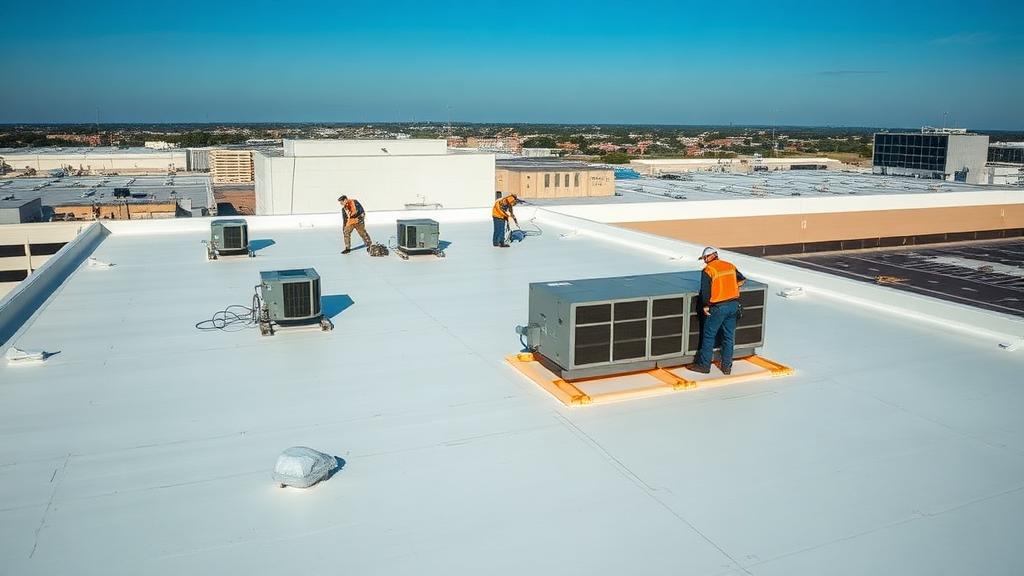
Debris Removal:: Accumulated debris traps moisture, promotes biological growth, and can puncture membranes during wind events. Regular removal of leaves, branches, trash, and other debris maintains clean roof surfaces. Pay particular attention to areas around HVAC equipment where debris accumulates.
Sealant Maintenance:: Sealants at penetrations, flashings, and terminations have limited lifespans and require periodic renewal. Inspect sealants annually and reseal as needed before failures cause leaks. Use compatible sealants recommended by the membrane manufacturer.
Vegetation Control:: Plants growing in accumulated debris or cracks indicate moisture and can cause progressive damage. Remove vegetation promptly and address the conditions enabling growth. Consider biocide treatments for roofs prone to moss or algae growth.
Repair Protocols
Despite best maintenance efforts, repairs will occasionally be necessary. Establishing repair protocols ensures prompt, proper response to identified problems.
Repair Prioritization:: Not all roof problems require immediate action. Effective maintenance programs categorize findings by urgency: - Emergency: Active leaks or conditions causing immediate damage - Priority: Problems likely to cause leaks or damage soon - Routine: Issues to address during scheduled maintenance - Monitor: Conditions to watch during future inspections
Contractor Relationships:: Establishing relationships with qualified roofing contractors before emergencies occur ensures prompt response when needed. Some building owners maintain service agreements with preferred contractors; others maintain approved vendor lists. Either approach is preferable to searching for contractors during an emergency.
Quality Assurance:: Completed repairs should be inspected to verify proper workmanship. Document repairs with photographs and note materials used. This documentation supports warranty compliance and provides history for future inspections.
Common Commercial Roof Problems
Understanding typical failure modes helps focus inspection efforts and maintenance activities on the most critical areas.
Membrane Issues
Commercial membrane roofs (TPO, PVC, EPDM) share common failure patterns that inspectors should recognize.
Seam Failures:: Seams are the most vulnerable point in membrane roofing systems. Heat-welded seams in TPO and PVC can fail due to improper installation, thermal stress, or membrane shrinkage. Adhesive seams in EPDM may separate as adhesives age. Inspect seams carefully during each inspection and reseal any areas showing separation.
Membrane Shrinkage:: EPDM and some older TPO formulations shrink over time, pulling membranes away from edges and penetrations. Shrinkage stress can also split seams. Watch for tight membranes, pulling at flashings, or ridging in field areas indicating shrinkage issues.
Physical Damage:: Foot traffic, dropped tools, and HVAC service activities cause punctures and tears. Establish roof access protocols that minimize traffic and protect membranes. Use walkway pads in high-traffic areas and around equipment requiring regular service.
Flashing Problems
Flashings at penetrations, edges, and transitions are common leak sources on commercial roofs. Complex flashing details and the variety of materials used in flashing construction create multiple failure modes.
Metal Flashing Issues:: Metal flashings can separate from substrates, develop open joints, or corrode. Check fastening, caulk joints, and coating condition during inspections.
Membrane Flashing Issues:: Membrane flashings bonded to walls or curbs may separate due to building movement, membrane shrinkage, or adhesive failure. Examine membrane-to-wall transitions carefully.
Counter Flashing Issues:: Counter flashings installed in wall reglets often require sealant to complete weatherproofing. This sealant requires periodic maintenance and can allow leaks when it fails.
Drainage Deficiencies
Poor drainage accelerates roof deterioration and can cause structural problems. Drainage systems require regular attention to maintain function.
Ponding Water:: Standing water 48 hours after rain indicates drainage problems. Ponding accelerates membrane deterioration, attracts mosquitoes, and adds structural load. Investigate causes including slope deficiencies, blocked drains, or settled deck areas.
Blocked Components:: Debris-clogged drains, scuppers, and gutters prevent water evacuation. Regular cleaning is essential; consider installing drain guards to reduce maintenance frequency while maintaining flow capacity.
System Capacity:: Undersized drainage systems may not handle intense storms, causing temporary overloading. If ponding occurs during storms but clears quickly, the system may be inadequate for current conditions. Climate change is increasing storm intensity in many regions, making previously adequate systems insufficient.
Implementing a Maintenance Program
Moving from concept to implementation requires systematic planning and ongoing commitment. These steps help establish effective programs.
Baseline Assessment
Before establishing maintenance routines, understand current roof conditions through comprehensive assessment.
Document Existing Conditions:: Photograph the entire roof including all flashings, penetrations, and details. Note the roof system type, age, and known history. Identify previous repairs and any warranty coverage.
Prioritize Immediate Needs:: Address any existing problems requiring repair before beginning preventive maintenance. Establishing maintenance on a roof with unaddressed problems wastes resources.
Develop Roof Plans:: Create or obtain drawings showing roof areas, drainage patterns, equipment locations, and flashing details. These plans guide inspections and document conditions.
Budget and Resources
Adequate resources must be committed to sustain maintenance programs over time.
Maintenance Budgeting:: Industry guidelines suggest allocating 1-2% of roof replacement cost annually for maintenance. A roof with $500,000 replacement value should have a $5,000-10,000 annual maintenance budget. This covers inspections, routine maintenance, and minor repairs.
Reserve Funding:: Beyond annual maintenance, establish reserves for major repairs and eventual replacement. Typical reserve recommendations are 10-15% of replacement cost by the time a roof reaches mid-life. Proper maintenance extends the period before replacement funds are needed.
Program Documentation
Written procedures and records create accountability and continuity as personnel change.
Written Procedures:: Document inspection procedures, maintenance tasks, and repair protocols. Include schedules, responsible parties, and quality standards. Written procedures ensure consistent performance regardless of who executes the program.
Record Keeping:: Maintain comprehensive records of inspections, repairs, and maintenance activities. Digital systems with photograph capability facilitate documentation. Retain records for the life of the roof to support warranty claims and provide history for future owners.
Working with Roofing Professionals
Most building owners lack the expertise or resources for comprehensive in-house roof maintenance. Professional roofing contractors and consultants provide valuable services.
Maintenance Contracts
Service contracts with roofing contractors provide regular inspections and maintenance at predictable costs. Contract options range from basic inspection programs to comprehensive maintenance agreements.
Contract Elements:: - Inspection frequency and scope - Included maintenance tasks - Repair authorization limits - Response time requirements - Emergency service provisions - Reporting requirements
Evaluate contractors based on commercial roofing experience, references, and manufacturer relationships. Finding qualified commercial roofers with maintenance program experience ensures professional service.
Roof Consultants
Independent roof consultants provide objective assessments without conflict of interest. Consultants are particularly valuable for portfolio owners, complex buildings, or disputed conditions.
Consultant Services:: - Condition assessments - Maintenance program development - Repair specification and oversight - Replacement planning - Dispute resolution
Conclusion
Commercial roof maintenance programs protect significant building investments while reducing total ownership costs. The modest investment in regular inspections and preventive maintenance pays returns through extended roof life, reduced repair costs, and avoided business interruption. Establish your maintenance program today to begin capturing these benefits.