Commercial Metal Roofing: Benefits, Types, and Installation Guide for Business Owners
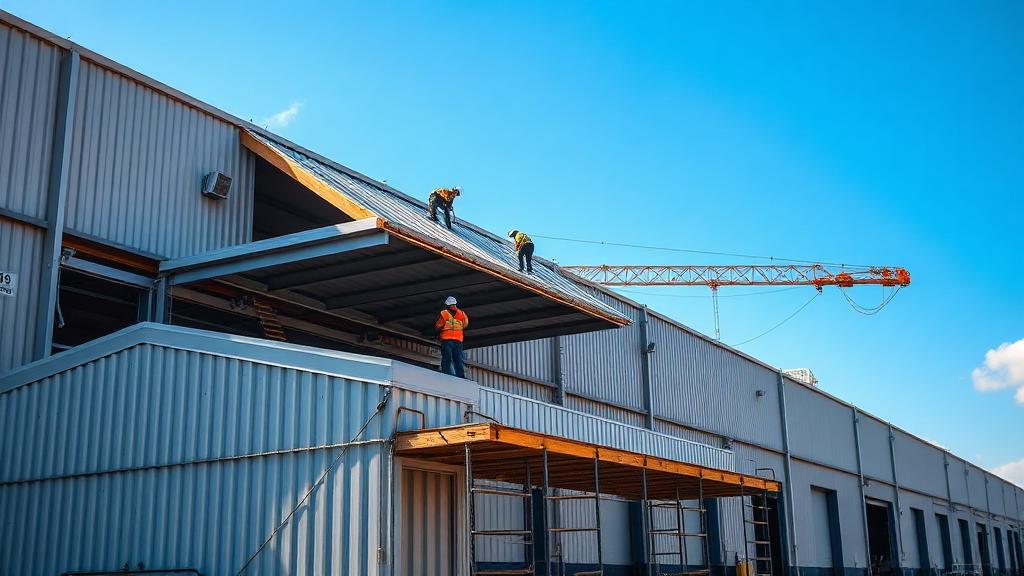
Commercial metal roofing represents one of the fastest-growing segments in the roofing industry, with building owners increasingly recognizing the long-term value proposition of metal systems. While traditional membrane roofing dominates the flat roof market, metal roofing offers compelling advantages for sloped commercial applications and is even gaining ground in low-slope configurations. This comprehensive guide explores commercial metal roofing options to help business owners make informed decisions.
The Rise of Commercial Metal Roofing
Metal roofing has evolved significantly from the corrugated barn roofs of the past. Modern commercial metal roofing systems combine advanced materials, precision engineering, and innovative installation methods to deliver performance that rivals or exceeds traditional roofing materials.
Market Growth Drivers:: The commercial metal roofing market is growing at approximately 4% annually, driven by several factors. Building owners are increasingly focused on total cost of ownership rather than just initial price. Metal roofing 40-50 year lifespan, combined with low maintenance requirements, delivers excellent long-term value that appeals to sophisticated property investors.
Energy efficiency has become a major driver as utility costs rise and sustainability requirements become more stringent. Cool metal roofing systems with reflective coatings can reduce cooling costs by 10-25%, helping buildings meet energy code requirements and qualify for green building certifications.
Insurance companies have also contributed to metal roofing growth by offering premium discounts for buildings with fire-resistant, impact-resistant metal roofs. In regions prone to severe weather, insurance savings can significantly offset higher initial costs.
Types of Commercial Metal Roofing Systems
Commercial metal roofing encompasses several distinct system types, each designed for specific applications and performance requirements.
Standing Seam Metal Roofing
Standing seam systems are the premium choice for commercial applications, featuring raised interlocking seams that rise above the flat panel surface. This design provides superior weather protection by keeping fasteners concealed and eliminating penetrations through the metal panels.
Key Features:: - Concealed fasteners eliminate leak points - Interlocking seams provide excellent weather tightness - Clean architectural appearance - Allows thermal movement without stress - Available in various metals and colors
Standing seam panels are typically formed on-site using portable roll-forming equipment, allowing custom panel lengths that span from ridge to eave without horizontal seams. This continuous panel design minimizes potential leak points and creates a sleek, modern appearance that enhances building aesthetics.
Seam Heights:: - 1 inch: Standard commercial applications - 1.5 inches: Enhanced performance in high-wind regions - 2 inches: Maximum weather protection and structural spanning
The seam engagement method also varies between systems. Snap-lock seams are faster to install, while mechanically seamed systems provide superior wind uplift resistance. Building location and design requirements determine the appropriate seam type.
Corrugated Metal Roofing
Corrugated metal roofing offers a cost-effective solution for warehouses, agricultural buildings, and industrial facilities where function matters more than aesthetics. The corrugated pattern provides strength and rigidity while using less material than flat panels.
Applications:: - Warehouses and distribution centers - Manufacturing facilities - Agricultural buildings - Equipment shelters - Temporary structures
Modern corrugated metal uses through-fastened installation with exposed screws. While this creates potential leak points, quality installation with proper washer compression and sealant minimizes risk. Corrugated systems are significantly less expensive than standing seam, making them appropriate for budget-conscious projects.
Metal Panel Systems
Architectural metal panel systems fill the gap between basic corrugated and premium standing seam, offering enhanced aesthetics at moderate cost. These systems use various panel profiles with either exposed or concealed fasteners.
Common Panel Profiles:: - R-panel (exposed fastener) - U-panel (exposed fastener) - Snap-lock panels (concealed fastener) - Batten seam panels (concealed fastener)
Panel selection depends on aesthetic requirements, budget constraints, and performance specifications. Working with experienced commercial roofers helps identify the best system for each application.
Metal Roofing Material Options
Commercial metal roofing is available in several metal types, each offering different characteristics and price points.
Steel Roofing
Steel dominates the commercial metal roofing market due to its favorable combination of strength, cost, and availability. Commercial steel roofing is typically galvanized or galvalume coated to prevent corrosion.
Galvanized Steel:: Zinc coating provides corrosion protection through barrier protection and galvanic action. The zinc layer sacrificially corrodes to protect the underlying steel. Galvanized steel is cost-effective for inland applications with minimal corrosive exposure.
Galvalume Steel:: Aluminum-zinc alloy coating provides superior corrosion resistance compared to pure zinc galvanizing. Galvalume is preferred for coastal applications and areas with industrial pollution or corrosive exposure.
Steel Gauges:: - 26 gauge: Light commercial applications - 24 gauge: Standard commercial - 22 gauge: Heavy commercial and industrial - 20 gauge: Maximum durability
Aluminum Roofing
Aluminum offers natural corrosion resistance without coatings, making it ideal for coastal and corrosive environments. While more expensive than steel, aluminum weighs approximately 40% less, reducing structural requirements.
Aluminum Advantages:: - Excellent corrosion resistance - Lightweight reduces structural loads - Does not rust or require painting - Highly recyclable - Long lifespan (50+ years)
Aluminum thermal expansion rate exceeds steel, requiring careful panel design and attachment methods to accommodate movement. Experienced installers understand these requirements and specify appropriate systems for each application.
Copper and Zinc
These premium metals are used primarily for architectural applications where aesthetics justify significant cost premiums. Both develop natural patinas that enhance appearance over time while providing exceptional longevity.
Copper:: Develops distinctive green patina over 20-30 years. Lifespan exceeds 100 years. Premium cost limits use to high-end commercial and institutional buildings.
Zinc:: Develops gray patina. Self-healing properties reseal minor scratches. Popular in European architecture, gaining ground in North American commercial projects.
Energy Efficiency and Sustainability
Metal roofing contributes to building energy efficiency through reflectivity, emissivity, and thermal performance characteristics that complement other building envelope components.
Cool Metal Roofing
Factory-applied reflective coatings transform metal roofing into high-performance cool roof systems. These coatings reflect solar radiation while emitting absorbed heat, reducing building cooling loads.
Performance Metrics:: - Solar Reflectance Index (SRI): 25-90 depending on color - Initial solar reflectance: Up to 0.70 for white/light colors - Thermal emittance: 0.85-0.90 typical
Dark colors can also achieve cool roof performance with specially formulated infrared-reflective pigments. These coatings appear as standard colors but reflect invisible infrared radiation that comprises most solar energy.
Recyclability and Sustainable Materials
Metal roofing leads the industry in sustainability credentials. Steel roofing typically contains 25-35% recycled content, while aluminum often exceeds 90% recycled content. At end of life, metal roofing is 100% recyclable, unlike asphalt shingles that largely end up in landfills.
This recyclability increasingly matters to building owners seeking LEED certification or similar sustainability credentials. Metal roofing can contribute points in multiple categories including recycled content, regional materials, and building reuse.
Cost Analysis and ROI
Commercial metal roofing costs more upfront than most alternatives but delivers superior long-term value through extended lifespan, reduced maintenance, and energy savings.
Approximate Installed Costs:: - Corrugated metal: $4-8 per square foot - R-panel systems: $6-10 per square foot - Standing seam: $10-18 per square foot - Copper/zinc: $25-50+ per square foot
When evaluating costs, consider the complete ownership picture including replacement cycles. A metal roof lasting 50 years costs less over time than three asphalt installations lasting 15-20 years each.
ROI Factors:: - Energy savings: 10-25% cooling cost reduction - Insurance discounts: 5-35% in some regions - Maintenance reduction: Minimal compared to other systems - Tax incentives: Available for cool roof installations - Property value: Metal roofs enhance resale value
Installation Considerations
Proper installation is critical for commercial metal roofing performance. Unlike some roofing systems where installation errors are obvious, metal roofing problems may not appear until years later when expansion/contraction, fastener issues, or flashing failures cause leaks.
Critical Installation Factors:
Substrate Preparation:: Metal roofing requires proper substrate preparation including appropriate underlayment, vapor barriers, and thermal insulation. Building design must account for condensation potential in the metal panel assembly.
Thermal Movement:: Metal expands and contracts significantly with temperature changes. Panel attachment must allow movement while maintaining weather tightness. Fixed clips, sliding clips, and panel lengths must be coordinated to prevent stress and buckling.
Fastener Selection:: Exposed fastener systems require proper screw selection with correct washer materials and installation torque. Over-driven fasteners crush washers and cause leaks; under-driven fasteners allow water penetration.
Flashing Details:: Transitions, penetrations, and terminations require carefully designed flashing components. Many metal roof failures occur at these details rather than in field panels. Quality installation dedicates appropriate time and materials to flashings.
Maintenance and Long-Term Care
Metal roofing requires minimal maintenance compared to other commercial roofing systems, but regular inspection and maintenance extends lifespan and catches problems early.
Annual Maintenance Tasks:: - Inspect fasteners for backing out or corrosion - Check sealants at penetrations and transitions - Clean debris from valleys and gutters - Examine coating condition - Look for scratches or damage requiring touch-up
Periodic Maintenance:: - Recoat exposed fasteners (every 10-15 years) - Touch up scratches and chips - Reseal penetrations as sealants age - Clean chalking from painted surfaces
Metal roofing maintenance costs are typically 50-75% less than membrane or built-up roofing systems over the life of the roof.
Selecting a Commercial Metal Roofing Contractor
Metal roofing installation requires specialized skills and equipment that many general roofing contractors do not possess. Selecting qualified installers protects your investment and ensures proper performance.
Contractor Qualifications:: - Manufacturer certification for your chosen system - Documented commercial metal roofing experience - Proper equipment for panel forming and installation - References from completed commercial projects - Understanding of commercial building codes
Find qualified commercial metal roofing contractors through manufacturer referral programs or industry associations. Verify credentials and inspect completed projects before making your selection.
Conclusion
Commercial metal roofing offers compelling advantages for building owners seeking long-term value, energy efficiency, and minimal maintenance. The higher initial investment pays dividends over the extended lifespan through reduced lifecycle costs and enhanced building performance. Work with qualified contractors to select the right metal roofing system for your commercial building requirements.