Commercial Roof Inspection Guide: What to Expect and Why It Matters
Regular professional inspections are fundamental to commercial roof management. Inspections identify problems before they cause damage, maintain warranty compliance, and provide data for budgeting and planning. Understanding what inspections involve helps building owners maximize their value.
Why Regular Inspections Matter
Inspections provide multiple benefits beyond finding problems.
Early Problem Detection: Small issues identified during inspections are repaired before causing extensive damage. A loose flashing is an easy fix; the water damage from months of undetected leaking is not.
Warranty Compliance: Most commercial roof warranties require documented inspections. Failure to maintain inspection records can void coverage.
Budget Planning: Inspection reports document roof condition and anticipated repair needs, enabling accurate budgeting.
Extended Roof Life: Proactive maintenance guided by regular inspections can extend roof life by 25-50% versus reactive-only approaches.
Liability Management: Documented inspections demonstrate reasonable care if issues lead to claims.
Inspection Frequency Recommendations
Inspection schedules should match roof conditions and exposure.
Minimum Standard: Semi-annual inspections (spring and fall) catch damage from winter and summer stress periods.
After Significant Weather: Inspect after major storms, hail events, or unusual weather regardless of scheduled timing.
High-Traffic Roofs: Roofs accessed frequently for equipment maintenance may need quarterly inspections.
Aging Roofs: Roofs past mid-life benefit from more frequent inspection to catch accelerating deterioration.
Post-Repair Verification: Inspect after significant repairs to verify quality and catch any remaining issues.
What Professional Inspectors Evaluate
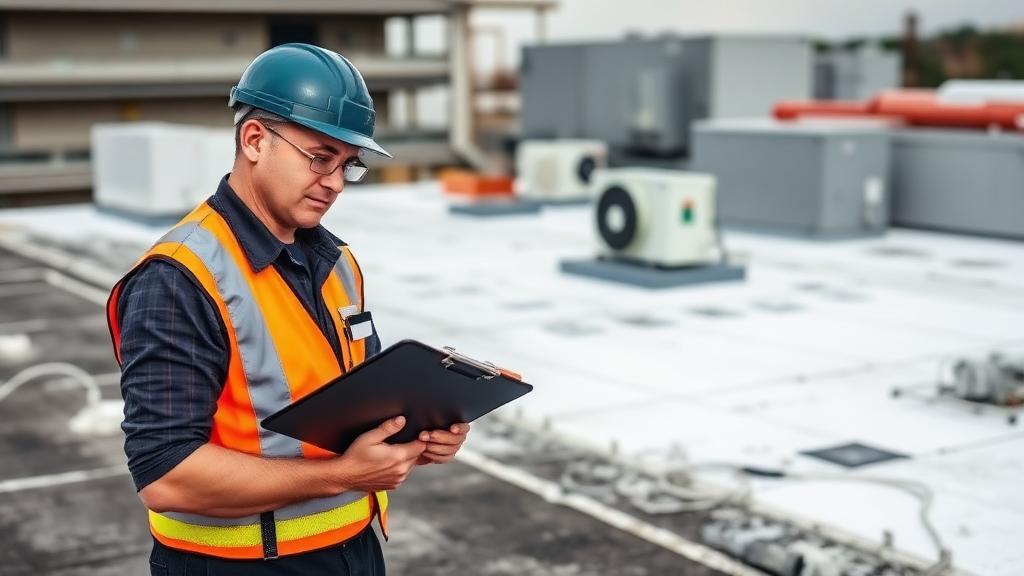
Comprehensive inspections cover all roof system components.
Membrane/Surface Condition: - Overall membrane condition and remaining life assessment - Punctures, tears, or cuts in membrane - Blistering, ridging, or bubbling - Seam condition and adhesion - Evidence of foot traffic damage - Surface contamination or debris
Flashing Systems: - Wall flashing condition and attachment - Penetration flashings (pipes, curbs, equipment supports) - Edge metal and terminations - Expansion joint covers - Pitch pan and sealant conditions
Drainage: - Drain bowl and strainer condition - Scupper condition and flow capacity - Gutter and downspout condition - Evidence of ponding water - Secondary/overflow drain functionality
Penetrations and Equipment: - HVAC unit conditions and supports - Pipe and conduit penetration sealing - Antenna and satellite mounts - Skylight condition - Access hatch sealing
Edge Conditions: - Parapet condition and cap flashing - Edge metal security and condition - Coping condition - Sealant joints
Types of Commercial Roof Inspections
Different inspection types serve different purposes.
Visual Inspection: Standard walkover inspection evaluating visible conditions. Most common inspection type.
Moisture Survey: Uses infrared thermography or nuclear detection to identify trapped moisture in roof assemblies.
Core Sampling: Physical samples cut from the roof provide direct evidence of layer conditions and moisture presence.
Warranty Inspection: Manufacturer representatives may inspect to verify compliance with warranty maintenance requirements.
Pre-Purchase Inspection: Thorough evaluation for property transactions, often including moisture surveys and remaining life estimates.
Inspection Documentation
Proper documentation maximizes inspection value.
Written Reports: Professional inspections should include detailed written reports describing findings.
Photographs: Extensive photo documentation shows current conditions and supports warranty claims.
Condition Ratings: Many inspectors use standardized rating systems to communicate overall and component conditions.
Recommendations: Reports should include prioritized repair recommendations.
Comparison to Previous: Tracking changes from previous inspections identifies deterioration trends.
Selecting an Inspector
Qualified inspectors provide more valuable assessments.
Roofing Expertise: Inspectors should have commercial roofing backgrounds, not general building inspection only.
System Knowledge: Ensure familiarity with your specific roof type (TPO, EPDM, BUR, metal, etc.).
Independence: Third-party consultants provide unbiased assessments. Contractor inspections may be influenced by sales interests.
Certifications: RRC (Registered Roof Consultant), RRO (Registered Roof Observer), or similar credentials indicate professional standards.
Insurance and References: Verify professional liability insurance and check references from similar clients.
Cost Expectations
Inspection costs vary based on scope and building size.
Basic Visual Inspection: $200-$500 for typical commercial buildings.
Comprehensive Inspection with Report: $400-$1,000 depending on building size and complexity.
Infrared Moisture Survey: $500-$1,500 additional depending on roof size.
Core Sampling: $300-$600 additional for multiple samples with laboratory analysis.
Using Inspection Results
Maximize value from inspection investments.
Prioritize Repairs: Address urgent items promptly; schedule less critical items appropriately.
Budget Accurately: Use condition assessments and repair estimates for capital planning.
Track Trends: Compare inspections over time to identify accelerating deterioration.
Plan Replacement: Inspections help predict replacement timing for budget preparation.
Support Warranty Claims: Documented inspections and repairs support warranty claims if issues arise.
Conclusion
Regular professional inspections are essential investments in commercial roof management. They identify problems early, maintain warranty compliance, and provide data for informed decision-making. Establish a consistent inspection program appropriate to your roof conditions and ownership objectives.
Find commercial roofing professionals for inspection services.