Commercial Roof Inspection: What Building Owners Need to Know
Commercial roof inspections are essential for protecting building investments and planning maintenance and capital expenditure budgets. Unlike residential roofs where problems may affect a single family, commercial roof failures can impact tenants, inventory, operations, and substantial property value. Understanding the inspection process helps building owners maximize the value of these assessments.
Why Commercial Roof Inspections Matter
Commercial roofs face unique challenges that make regular inspection essential.
Investment Protection: Commercial buildings represent significant investments. Roofing systems protecting these assets must be monitored to ensure they continue functioning properly.
Tenant and Occupant Safety: Roof failures can create safety hazards for building occupants. Inspections identify problems before they become dangerous.
Business Continuity: Roof leaks and failures disrupt business operations. For warehouses, data centers, and retail operations, even minor water intrusion can cause substantial damage and downtime.
Budget Planning: Inspections provide the condition information needed to plan maintenance budgets and anticipate capital expenditure for eventual replacement.
Insurance and Warranty Compliance: Many commercial insurance policies and roofing warranties require documented regular inspections. Failure to inspect may void coverage.
Inspection Frequency Guidelines
Different situations call for different inspection schedules.
Routine Inspections: Most commercial roofs should be inspected at least twice annually, typically in spring and fall. These seasonal inspections identify problems from winter weather and prepare roofs for upcoming seasons.
Post-Event Inspections: After significant weather events including major storms, hail, and high winds, prompt inspection identifies damage while insurance claims are timely and before secondary damage develops.
New Roof Commissioning: New roofs should be inspected before warranty expiration and periodically during the warranty period to identify any defects for warranty claim.
Roof Age Factor: Older roofs approaching expected lifespan warrant more frequent inspection. Annual or even quarterly inspections may be appropriate for aged systems.
Building Type Considerations: Critical facilities like data centers, hospitals, and manufacturing facilities with sensitive equipment may warrant more frequent monitoring than general office or warehouse space.
What Inspectors Examine
Comprehensive commercial roof inspections assess multiple components and conditions.
Membrane Condition: For single-ply roofs (TPO, PVC, EPDM), inspectors examine membrane integrity, seam condition, and any punctures, cuts, or deterioration. For built-up and modified bitumen roofs, they assess surface condition, granule coverage, and any cracking or blistering.
Flashing Systems: All penetrations, edges, and transitions where the roof membrane meets walls, equipment, drains, and other elements receive careful examination. Flashing failures are the most common source of commercial roof leaks.
Drainage Assessment: Commercial roofs must drain properly to prevent ponding water. Inspectors check drains, scuppers, and gutters for blockage and proper function. Ponding water accelerates deterioration and adds structural load.
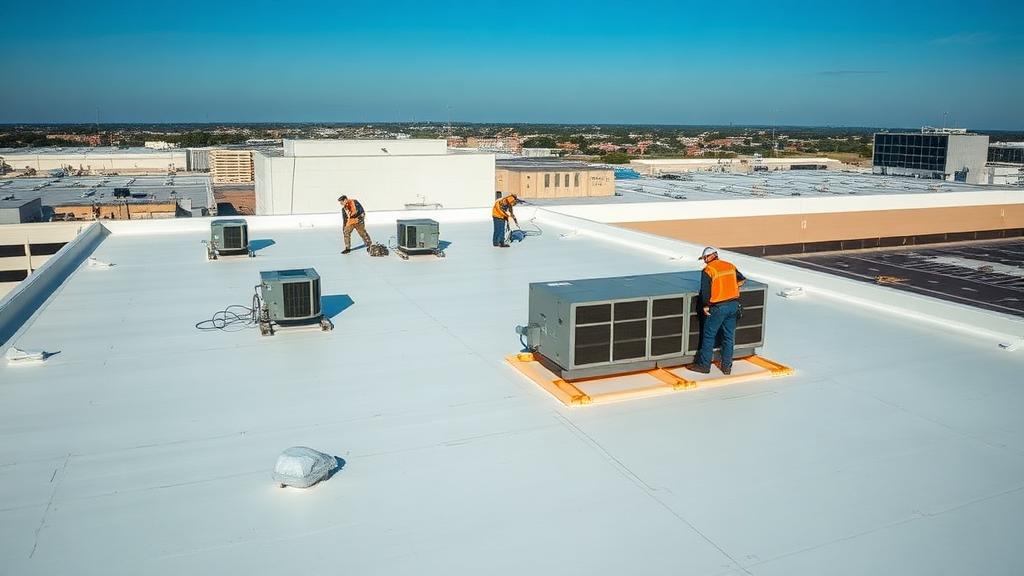
Penetration Integrity: HVAC units, exhaust fans, pipes, conduits, and other penetrations each create potential leak points. Seals, curbs, and flashing at all penetrations are examined.
Equipment Damage: Rooftop equipment and service traffic can damage roofing systems. Inspectors look for damage around equipment and along traffic paths.
Structural Assessment: Signs of structural issues including sagging, ponding, and unusual deflection are noted. These may indicate problems beyond the roofing system itself.
Interior Assessment: Where accessible, inspectors may examine the underside of the roof deck for staining, mold, or other evidence of moisture intrusion.
Inspection Types and Methods
Different inspection approaches serve different purposes.
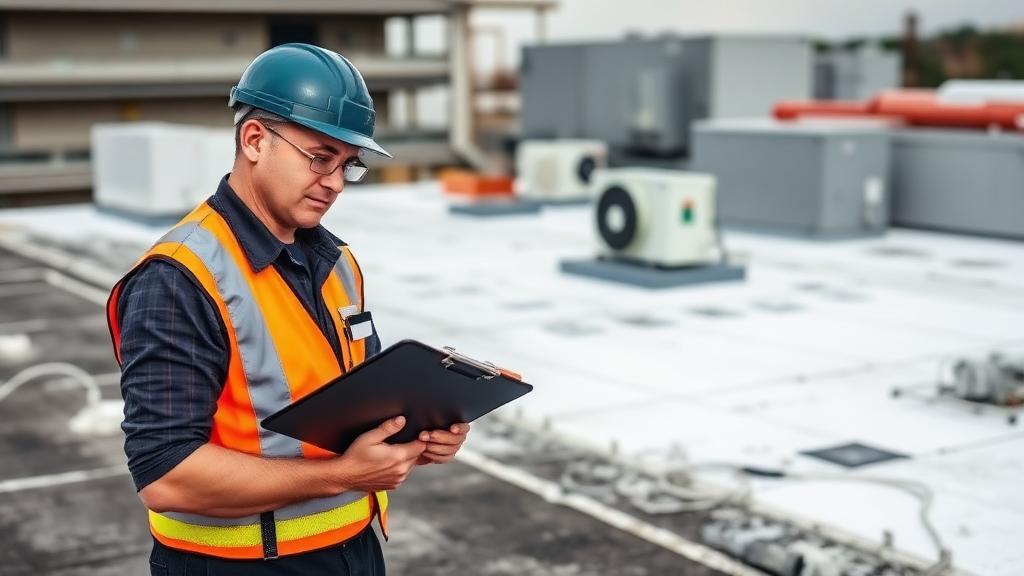
Visual Inspection: The most common approach involves trained inspectors physically walking the roof and visually examining all components. This identifies obvious problems and conditions.
Core Samples: For built-up and modified bitumen roofs, core samples reveal the condition of layers not visible from the surface. Cores show moisture content, material condition, and proper layer adhesion.
Infrared Thermography: Thermal imaging cameras can identify moisture trapped beneath roof surfaces that is not visible. Wet insulation has different thermal properties than dry, showing up on thermal images.
Electronic Leak Detection: Various electronic methods can identify breaches in roof membranes. These are particularly useful for finding small leaks that are difficult to locate visually.
Drone Inspection: Unmanned aerial vehicles with high-resolution cameras can document large roof areas efficiently and access areas that are difficult or dangerous to reach physically.
Preparing for Inspection
Building owners can maximize inspection value with proper preparation.
Provide Access: Ensure inspectors can access the roof safely. Identify the best access points and ensure any locked areas can be opened.
Share History: Provide inspectors with roof history including age, previous repairs, known problem areas, and any documentation from installation or previous inspections.
Note Concerns: If you have observed leaks, ponding, or other concerns, share these with inspectors so they pay particular attention to these areas.
Coordinate with Operations: If rooftop equipment will be running during inspection, coordinate to ensure inspector safety. Some equipment may need temporary shutdown for safe access.
Weather Considerations: Schedule inspections for suitable weather. Some assessment methods require specific conditions. Avoid scheduling during or immediately after rain when roofs are unsafe.
Understanding Inspection Reports
Inspection findings should be documented in clear reports.
Condition Assessment: Reports should provide overall condition assessment, often using rating scales or categories like Good, Fair, Poor, and Critical.
Specific Findings: Each problem identified should be described with location, severity, and recommended action. Photos should document findings.
Priority Classification: Findings should be prioritized. Not everything needs immediate attention, but some conditions require urgent response.
Remaining Life Estimate: Based on condition, inspectors may estimate remaining useful life for planning purposes. This estimate helps with capital planning.
Budget Recommendations: Many inspection reports include cost estimates for recommended repairs and maintenance, helping with budget planning.
Acting on Inspection Findings
Inspection value only comes through appropriate response to findings.
Address Critical Issues Promptly: Problems rated as urgent or critical need immediate attention. Delays in addressing active leaks or safety hazards compound damage and liability.
Plan Major Repairs: Non-critical but significant findings should be scheduled for repair within reasonable timeframes before they become emergencies.
Budget for Replacement: When inspections indicate a roof is approaching end of life, begin budgeting for replacement rather than continuing expensive repairs on a failing system.
Document Everything: Maintain records of all inspections, findings, and responses. This documentation supports warranty claims, insurance claims, and property transactions.
Selecting Inspection Providers
Choose inspection providers carefully for reliable assessments.
Qualifications: Look for inspectors with relevant certifications such as RRC (Registered Roof Consultant) or RRO (Registered Roof Observer). These credentials indicate specialized training.
Independence: Consider whether you want inspection from your existing roofing contractor or an independent consultant. Contractors may have conflicts of interest, while consultants provide independent assessment.
Specialization: Commercial roofing differs significantly from residential. Ensure inspectors have commercial experience with your specific roof types.
Insurance and Liability: Verify inspectors carry appropriate professional liability and general liability coverage.
Cost Considerations
Inspection costs vary based on building size, roof complexity, and assessment methods.
Basic Visual Inspection: For typical commercial buildings, visual inspection costs range from a few hundred to a few thousand dollars depending on size and access complexity.
Advanced Methods: Infrared surveys, core sampling, and electronic testing add costs but provide information not available from visual inspection alone.
Value Perspective: Compare inspection costs to potential damage from undetected problems. A few thousand dollars for inspection can prevent tens of thousands in damage from leaks or premature roof failure.
Conclusion
Commercial roof inspections are essential components of building asset management. Regular inspection identifies problems early when repairs are less expensive, extends roof life through proactive maintenance, supports budget planning, and protects building occupants and operations. Invest in quality inspections and respond appropriately to findings to maximize the return on your roofing system investment.
Connect with qualified commercial roofing professionals in your area for inspection services.