Commercial Roof Maintenance Programs: Best Practices for Building Owners
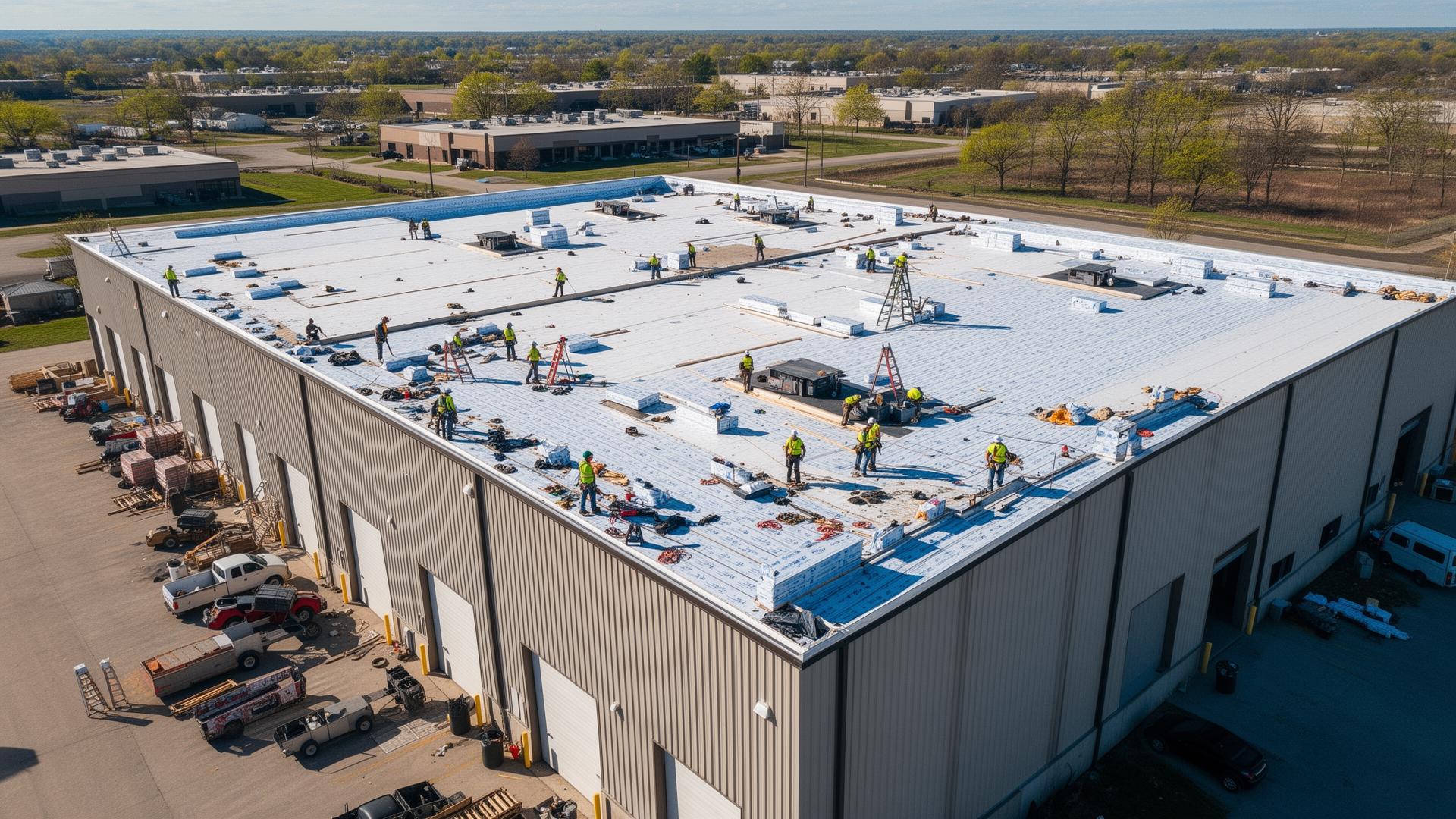
Proactive maintenance is the most cost-effective approach to commercial roof management. Well-maintained roofs last longer, experience fewer emergency repairs, and protect building contents more reliably. This guide helps building owners and property managers develop effective maintenance programs.
The Cost of Neglect
Understanding consequences of deferred maintenance motivates proactive approaches.
Accelerated Deterioration: Minor issues become major problems. A small membrane puncture becomes a saturated insulation situation.
Emergency Repair Premiums: After-hours emergency repairs cost significantly more than scheduled maintenance.
Interior Damage: Leaks damage inventory, equipment, finishes, and can disrupt business operations.
Shortened Roof Life: Neglected roofs may last half as long as maintained roofs of identical specification.
Voided Warranties: Many manufacturer warranties require documented maintenance for validity.
Components of Effective Programs
Comprehensive maintenance addresses multiple elements.
Regular Inspections: Scheduled inspections identify problems before they cause damage. Semi-annual inspections (spring and fall) catch issues from winter and summer stress periods.
Post-Storm Inspections: After significant weather events, inspect for damage even if no leaks are apparent.
Preventive Maintenance: Address identified issues promptly. Clear drains, reseal flashings, repair minor membrane damage before problems escalate.
Documentation: Maintain records of inspections, repairs, and any issues noted. This history supports warranty claims and helps track roof condition trends.
Budget Allocation: Set aside funds specifically for roof maintenance rather than treating every repair as an unexpected expense.
Inspection Checklist
Systematic inspections should cover all roof components.
Membrane/Surface Condition: - Check for punctures, tears, or cuts - Look for blistering, bubbling, or ridging - Inspect seams for separation or failure - Note any ponding water locations - Check for debris accumulation
Flashings and Penetrations: - Examine all wall flashings for separation or deterioration - Check penetration boots and seals - Inspect curb flashings around equipment - Look for sealant failure at terminations
Drainage Systems: - Clear drains of debris - Check drain bowls for damage - Verify scupper function - Ensure gutters are attached and flowing
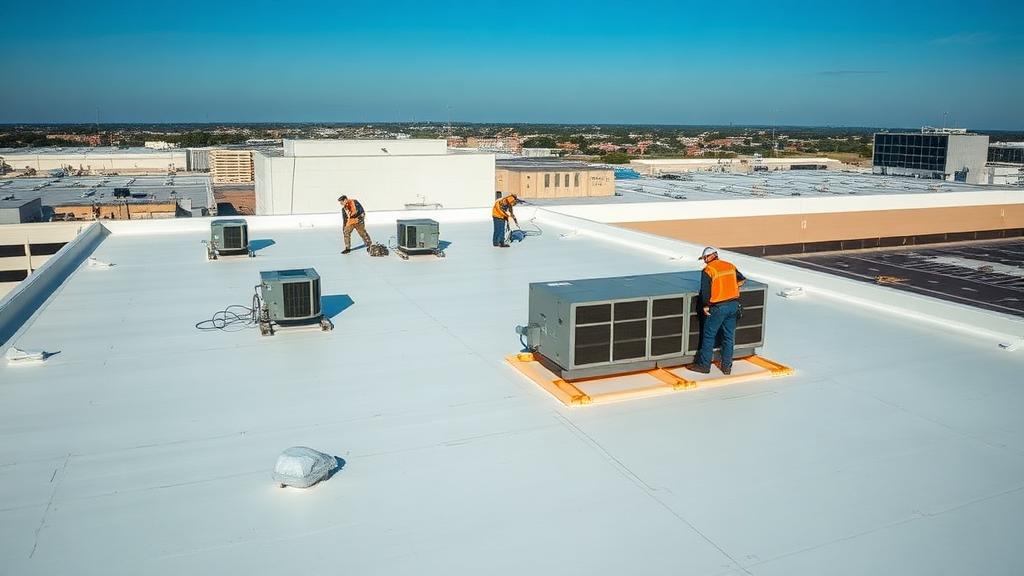
Equipment and Penetrations: - Check HVAC unit supports and pads - Inspect pitch pans for proper fill level - Verify antenna and satellite mounts are secure
Edge Details: - Examine edge metal for damage or displacement - Check parapet cap condition - Verify edge terminations remain sealed
Seasonal Considerations
Maintenance timing should align with seasonal challenges.
Spring Inspection: - Assess winter damage from snow, ice, and thermal cycling - Clear accumulated debris before heavy rain season - Verify drains are functional before storm season
Pre-Winter Preparation: - Complete any needed repairs before cold weather - Ensure drains are clear for winter precipitation - Address any membrane issues before thermal contraction stress
In-House vs. Contract Maintenance
Decide who performs maintenance based on capability and scale.
In-House Maintenance Suitable For: - Basic drain clearing and debris removal - Visual inspections between professional visits - Immediate leak response and temporary measures
Contract Maintenance Appropriate For: - Detailed technical inspections - Membrane repairs and seam work - Flashing repairs and replacement - Annual maintenance programs
Hybrid Approach: Many organizations combine in-house basic maintenance with contracted technical services.
Developing Service Contracts
Effective maintenance contracts specify expectations clearly.
Scope Definition: Clearly specify what is included: number of inspections, types of repairs covered, response times for emergencies.
Pricing Structure: Understand whether pricing covers only inspections with repairs billed separately, or includes certain repair types.
Response Requirements: Specify expected response times for both routine issues and emergencies.
Reporting Requirements: Require written reports with photos documenting conditions and any repairs performed.
Warranty Implications: Ensure maintenance programs meet manufacturer requirements for warranty validity.
Extending Roof Life Through Maintenance
Proactive maintenance pays dividends in extended roof life.
Typical Outcomes: Well-maintained roofs often exceed expected lifespan by 25-50%. A 20-year roof with excellent maintenance may perform 30+ years.
Coating Programs: Periodic reflective coating application extends membrane life and improves energy efficiency. Many membranes can be recoated rather than replaced.
Reinforcement: Identified weak spots can be reinforced before failure occurs.
Technology in Roof Management
Modern tools enhance maintenance effectiveness.
Thermal Imaging: Infrared scans identify wet insulation invisible to visual inspection.
Drone Inspections: Drones access large or difficult roofs safely and efficiently.
Electronic Leak Detection: Pinpoints membrane breaches precisely.
Asset Management Software: Tracks maintenance history, schedules inspections, and manages documentation.
Budget Planning
Anticipate maintenance costs for financial planning.
Rule of Thumb: Budget 1-2% of roof replacement value annually for maintenance. A $200,000 roof should have $2,000-$4,000 annual maintenance budget.
Reserve Funds: Beyond annual maintenance, build reserves for eventual replacement or major repairs.
Cost Tracking: Track actual costs against budget to refine future projections.
Conclusion
Proactive maintenance is the most cost-effective commercial roof management strategy. Regular inspections, prompt repairs, and systematic documentation extend roof life, prevent costly emergencies, and protect building contents. Developing and following a maintenance program represents an investment that pays returns throughout the roof's extended lifespan.
Find commercial roofing contractors for maintenance program development.