Commercial Roofing Options: Comparing Systems for Your Building
Selecting the right roofing system is one of the most important decisions building owners make. Commercial roofing systems vary significantly in cost, longevity, maintenance requirements, and performance characteristics. Understanding these differences helps you make informed decisions aligned with your building needs and budget.
TPO (Thermoplastic Polyolefin) Roofing
TPO has become the most popular commercial roofing choice in recent years.
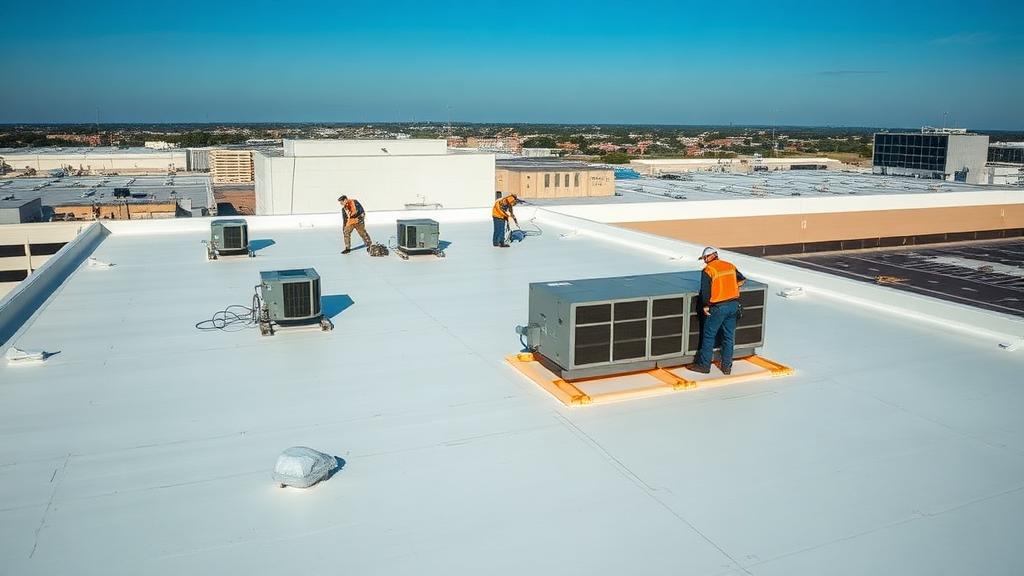
What It Is: TPO is a single-ply membrane typically 45 to 80 mils thick, installed in large sheets that are heat-welded at seams. Most TPO is white or light-colored for reflectivity.
Cost Range: TPO installation typically costs $5.00 to $10.00 per square foot depending on membrane thickness, insulation, and building complexity.
Expected Lifespan: Quality TPO installations last 20 to 30 years with proper maintenance.
Advantages: Excellent energy efficiency from reflective surface reduces cooling costs. Heat-welded seams create strong, waterproof connections. Good resistance to chemical exposure, oils, and punctures. Cost-effective compared to premium alternatives.
Disadvantages: As a relatively newer technology, very long-term performance data is limited. Quality varies between manufacturers and formulations. Heat welding requires trained installers with proper equipment.
Best For: TPO excels on buildings where energy efficiency, moderate cost, and proven performance are priorities. It suits most commercial applications in most climates.
EPDM (Ethylene Propylene Diene Monomer) Roofing
EPDM is the most time-tested single-ply membrane with decades of performance history.
What It Is: EPDM is a synthetic rubber membrane typically 45 to 90 mils thick. It comes in large sheets that can cover significant areas with minimal seams. Most EPDM is black, though white options exist.
Cost Range: EPDM installation typically costs $4.00 to $8.00 per square foot, making it among the most economical commercial options.
Expected Lifespan: Well-maintained EPDM roofs routinely last 25 to 30 years or longer.
Advantages: Proven track record with over 50 years of commercial use. Excellent resistance to UV radiation and weathering. Flexible even in cold temperatures for cold-climate performance. Lower cost than most alternatives.
Disadvantages: Black surface absorbs heat, increasing cooling loads. Seams use adhesives or tape rather than heat welding, which some consider less reliable. Susceptibility to puncture requires traffic management.
Best For: EPDM is excellent for buildings where initial cost is a primary concern, in northern climates where heat absorption is less problematic, and for warehouses and industrial buildings with minimal foot traffic.
PVC (Polyvinyl Chloride) Roofing
PVC offers premium performance, particularly in challenging environments.
What It Is: PVC is a single-ply membrane reinforced with polyester or fiberglass. Like TPO, seams are heat-welded. Most PVC is white or light-colored.
Cost Range: PVC installation typically costs $6.00 to $12.00 per square foot, higher than TPO and EPDM.
Expected Lifespan: Quality PVC roofs last 25 to 35 years with proper maintenance.
Advantages: Superior chemical resistance makes PVC ideal for restaurants, laboratories, and manufacturing where grease and chemicals are present. Strong heat-welded seams. Excellent fire resistance. Energy-efficient reflective surface.
Disadvantages: Higher cost than TPO and EPDM. Some formulations can become brittle in extreme cold. Plasticizer migration over time can affect long-term flexibility.
Best For: PVC is the preferred choice for restaurants, food processing facilities, chemical plants, and any building where chemical exposure is a concern. It also suits healthcare facilities and other applications requiring excellent fire resistance.
Modified Bitumen Roofing
Modified bitumen combines traditional asphalt roofing with modern performance enhancements.
What It Is: Modified bitumen consists of asphalt modified with rubber or plastic polymers for improved performance. It comes in rolls that are torched, cold-applied, or self-adhered in overlapping layers.
Cost Range: Modified bitumen installation typically costs $5.00 to $10.00 per square foot depending on installation method and number of layers.
Expected Lifespan: Modified bitumen roofs typically last 20 to 30 years with proper maintenance.
Advantages: Multiple layers provide redundancy against leaks. Familiar technology for contractors trained on traditional roofing. Good puncture resistance protects against traffic damage. Repaired relatively easily when damage occurs.
Disadvantages: Multiple seams in overlapping layers create more potential leak points than single-ply sheet goods. Torch application creates fire risk during installation. Darker surfaces absorb heat unless reflective coatings are applied.
Best For: Modified bitumen suits buildings with regular rooftop traffic, where puncture resistance is important, and where maintenance staff familiar with traditional roofing methods will service the system.
Built-Up Roofing (BUR)
Built-up roofing is the original flat roof system still serving many buildings.
What It Is: BUR consists of multiple layers of bitumen and reinforcing fabric, typically covered with gravel or a cap sheet. Three to five layers are common.
Cost Range: BUR installation typically costs $4.00 to $9.00 per square foot depending on layer count and configuration.
Expected Lifespan: Quality BUR installations can last 20 to 40 years.
Advantages: Proven technology with over 100 years of use. Multiple layers provide redundancy. Gravel surfacing provides UV protection, fire resistance, and walkability. Excellent resistance to foot traffic.
Disadvantages: Heavier than single-ply systems, requiring structural verification. Hot asphalt installation creates fumes and fire risk. Finding leaks can be difficult in multi-layer assemblies.
Best For: BUR remains suitable for buildings requiring extremely durable, traffic-resistant surfaces and where proven, traditional technology is preferred.
Metal Roofing
Metal roofing offers exceptional longevity for commercial applications.
What It Is: Commercial metal roofing typically uses standing seam systems with interlocking panels or structural metal systems for longer spans.
Cost Range: Standing seam commercial metal roofing costs $10.00 to $18.00 per square foot installed.
Expected Lifespan: Quality metal roofing lasts 40 to 70 years with minimal maintenance.
Advantages: Exceptional longevity provides lowest lifecycle cost for long-term ownership. Energy efficiency from reflective surfaces. Minimal maintenance requirements. Excellent wind and fire resistance. Recyclable at end of life.
Disadvantages: Higher initial cost than membrane options. Requires specialized installation expertise. Expansion and contraction must be properly accommodated. May be noisy during rain without proper underlayment.
Best For: Metal roofing excels for buildings with long-term ownership horizons, where lifecycle cost matters more than initial investment, and where minimal maintenance is desired.
Comparison Summary
When comparing options, consider these factors.
Lowest Initial Cost: EPDM or TPO Lowest Lifecycle Cost: Metal or PVC Best Energy Efficiency: White TPO, PVC, or reflective metal Best Chemical Resistance: PVC Best Traffic Resistance: Built-Up or Modified Bitumen Longest Lifespan: Metal Best Cold Climate Performance: EPDM
Making Your Selection
Consider these factors when choosing your commercial roofing system.
Building Use: What happens inside affects roofing choice. Restaurants need PVC chemical resistance. Warehouses may prioritize economy with EPDM.
Climate: Hot climates benefit from reflective surfaces. Cold climates favor flexible membranes. High-wind areas may favor mechanically attached systems.
Ownership Duration: Short-term owners may prioritize lower initial cost. Long-term owners benefit from investing in longevity.
Maintenance Capacity: Some systems require more attention than others. Match system requirements to your maintenance capabilities.
Local Expertise: The best system is only as good as its installation. Choose systems that local contractors install expertly. Find qualified commercial roofing professionals in your area.
Conclusion
Commercial roofing offers multiple proven options, each with distinct advantages for different applications. TPO and EPDM provide cost-effective protection for most applications. PVC excels in chemical-exposure environments. Modified bitumen and BUR offer traditional solutions with proven track records. Metal provides unmatched longevity for long-term investment. Match your selection to your building use, climate, budget, and ownership horizon for optimal results.