Commercial Roofing Systems: Complete Guide to Types and Applications
Commercial roofing differs significantly from residential applications in scale, materials, and performance requirements. Building owners and property managers need to understand available systems to make informed decisions about installation, maintenance, and replacement.
Commercial vs. Residential Roofing
Fundamental differences distinguish commercial from residential roofing.
Roof Slope: Commercial buildings typically feature low-slope or flat roofs, while most residential roofs are steep-slope. This fundamental difference drives material selection.
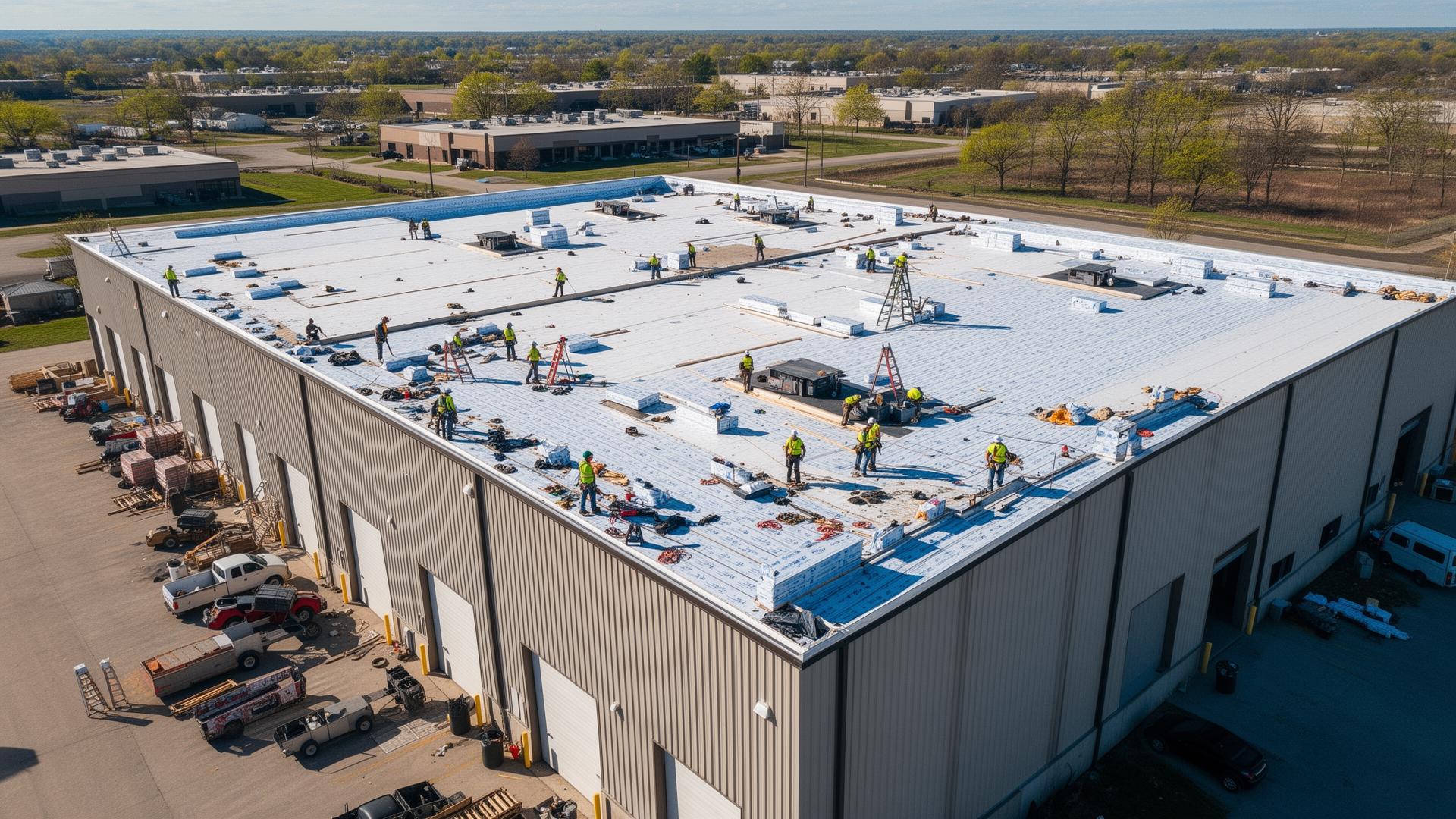
Scale: Commercial roofs cover larger areas, often measured in thousands of square feet. Size affects material choices, installation methods, and maintenance approaches.
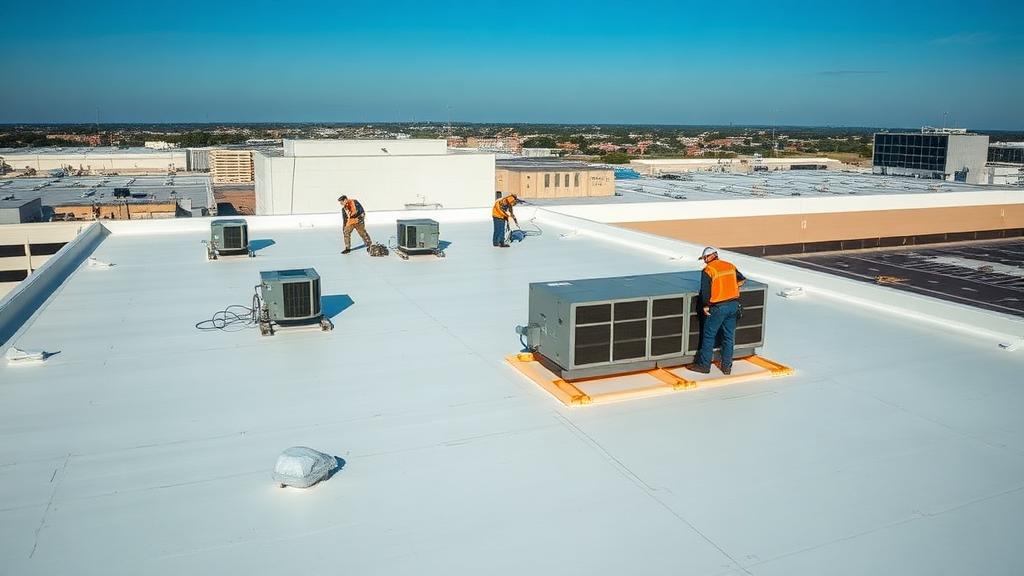
Usage Demands: Commercial roofs often support HVAC equipment, may be accessed regularly for maintenance, and must handle different loading requirements.
Lifecycle Costs: Commercial property economics emphasize total cost of ownership including maintenance, repairs, and energy performance over decades.
Single-Ply Membrane Systems
Modern single-ply membranes dominate commercial roofing.
TPO (Thermoplastic Polyolefin): TPO has become the most popular commercial roofing choice, offering excellent value and performance.
- *Composition*: Polypropylene and ethylene-propylene rubber
- *Installation*: Heat-welded seams or adhesive
- *Colors*: White, tan, gray (white most common for energy efficiency)
- *Lifespan*: 20-30 years
- *Advantages*: Energy efficient (reflects UV), heat-welded seams are very durable, cost-effective, recyclable
- *Considerations*: Quality varies between manufacturers; ensure adequate thickness
EPDM (Ethylene Propylene Diene Monomer): Often called "rubber roofing," EPDM has proven decades of reliable performance.
- *Composition*: Synthetic rubber
- *Installation*: Fully adhered, mechanically attached, or ballasted
- *Colors*: Black or white
- *Lifespan*: 25-30+ years
- *Advantages*: Excellent durability, flexible in cold temperatures, proven long-term performance, easy repairs
- *Considerations*: Black absorbs heat (white available at premium), seams use adhesive rather than welding
PVC (Polyvinyl Chloride): PVC provides superior chemical resistance and durability.
- *Composition*: Polyvinyl chloride with plasticizers
- *Installation*: Heat-welded seams
- *Colors*: Typically white or light gray
- *Lifespan*: 25-30+ years
- *Advantages*: Excellent chemical resistance (ideal for restaurants, factories), fire resistant, strong seam welds, energy efficient
- *Considerations*: Higher cost than TPO, plasticizers can leach over time
Built-Up Roofing (BUR)
Traditional multi-layer roofing remains relevant for specific applications.
Construction: Alternating layers of bitumen (asphalt or coal tar) and reinforcing fabrics, topped with gravel or cap sheet.
Lifespan: 20-30 years with proper maintenance.
Advantages: Proven 100+ year track record, excellent waterproofing, fire resistant with gravel surface, redundant layers provide protection.
Considerations: Heavy weight, labor-intensive installation, fumes during hot-applied installation, not as energy efficient without reflective cap sheet.
Best For: Buildings where weight isn't a concern, applications requiring fire resistance, situations where proven long-term performance is priority.
Modified Bitumen
Evolution of BUR with polymer-modified materials.
Types: APP (atactic polypropylene) or SBS (styrene-butadiene-styrene) modified asphalt sheets.
Installation: Torch-applied, hot-mopped, cold-applied adhesive, or self-adhering.
Lifespan: 20-25 years.
Advantages: Combines BUR reliability with easier installation, better flexibility than traditional BUR, various installation options.
Considerations: Torch application requires fire safety precautions, multiple layers needed for best performance.
Metal Roofing Systems
Metal serves both low-slope and steep-slope commercial applications.
Standing Seam: Concealed fastener systems with raised seams. Excellent longevity (40-60+ years), handles thermal movement well.
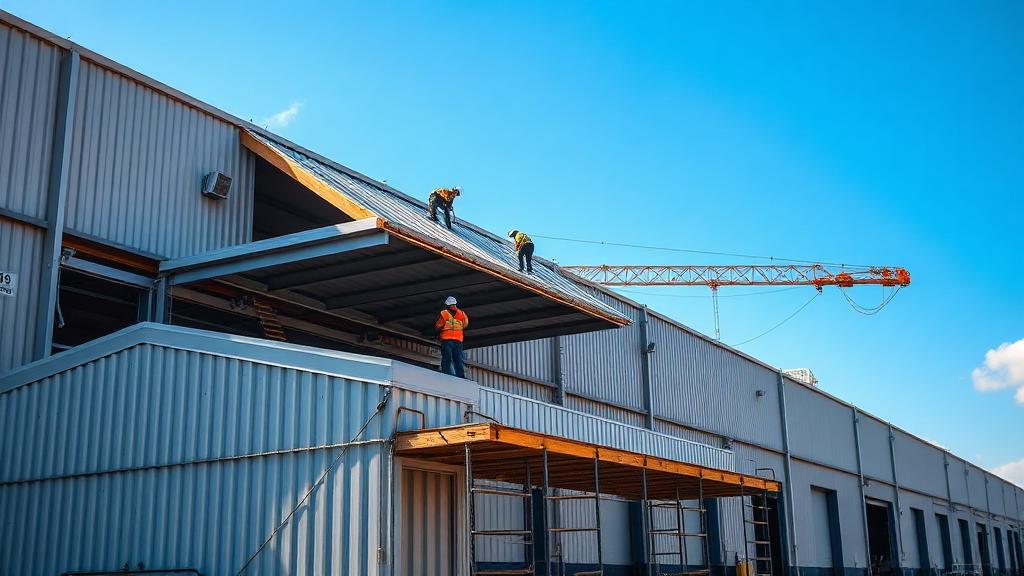
Structural Metal Panels: For large spans without continuous decking. Cost-effective for warehouses and industrial buildings.
Architectural Metal Panels: Various profiles for aesthetic applications.
Advantages: Exceptional longevity, energy efficient with proper coatings, recyclable, handles thermal movement.
Considerations: Higher initial cost, potential for noise (mitigated with insulation), requires specialized installation.
Spray Polyurethane Foam (SPF)
Unique system combining roofing and insulation.
Application: Liquid components sprayed on-site, expanding to form seamless insulating membrane. Protective coating applied over foam.
Lifespan: 30+ years with proper maintenance and recoating.
Advantages: Seamless installation eliminates seam failures, excellent insulation value, self-flashing around penetrations, lightweight.
Considerations: Requires skilled application, UV-protective coating essential, cannot be installed in rain or extreme temperatures.
Selecting the Right System
System selection should consider multiple factors.
Building Use: Manufacturing facilities with chemical exposure need PVC's resistance. Restaurants benefit from PVC's grease resistance. Office buildings may prioritize energy efficiency.
Climate: Cold climates favor flexible materials like EPDM. Hot climates benefit from reflective surfaces.
Existing Conditions: Reroofing may need to work with existing insulation, drainage, or structural limitations.
Budget: Consider lifecycle costs, not just installation costs. Cheaper systems requiring more maintenance may cost more long-term.
Energy Requirements: Cool roofing may be required by code or valued for utility savings.
Maintenance Requirements
Commercial roofs require regular maintenance regardless of system.
Inspection Frequency: Semi-annual inspections plus post-storm checks.
Drain Maintenance: Keeping drains clear prevents ponding, which damages all roof types.
Seam and Flashing Inspection: Catch failures before they cause leaks.
Coating Maintenance: SPF and coated systems need periodic recoating.
Documentation: Maintain records for warranty purposes and to track roof condition over time.
Conclusion
Commercial roofing offers numerous options suited to different applications, budgets, and performance requirements. Understanding system characteristics helps building owners and property managers make informed decisions that protect their investments long-term.
Find commercial roofing contractors for system evaluation and quotes.