Flat Roof Repair: Common Problems and Professional Solutions
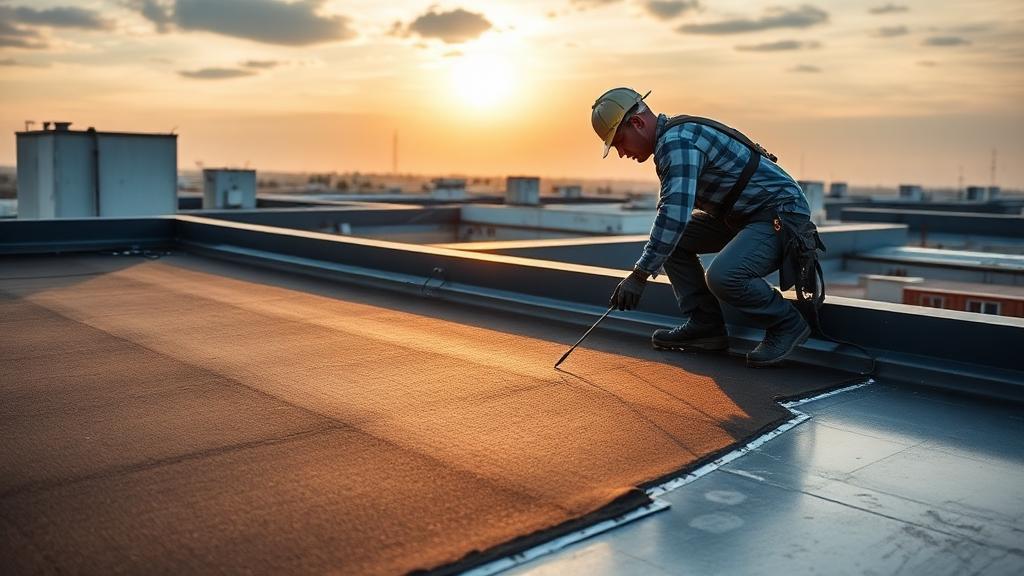
Flat roofs require different repair approaches than sloped roofs. Understanding the unique challenges and appropriate repair techniques helps maintain these roof systems effectively.
Understanding Flat Roof Systems
Flat roofs use different materials and methods than pitched roofs.
Common Flat Roof Types:
| Type | Material | Typical Lifespan | Repair Approach |
|---|---|---|---|
| Built-Up (BUR) | Tar and gravel | 15-30 years | Hot tar, patches |
| Modified Bitumen | Asphalt sheets | 15-25 years | Torch, adhesive |
| EPDM | Rubber membrane | 20-35 years | Adhesive, tape |
| TPO | Thermoplastic | 15-30 years | Heat welding |
| PVC | Vinyl membrane | 15-30 years | Heat welding |
Flat Roof Characteristics:: - Low or no slope (¼" per foot minimum) - Membrane or built-up construction - Relies on watertight surface - Drainage through internal drains or edge scuppers - Different failure modes than pitched roofs
Common Flat Roof Problems
Flat roofs experience specific issues.
Ponding Water:: The most common flat roof problem: - Water remains more than 48 hours after rain - Indicates improper slope or clogged drains - Accelerates membrane deterioration - Can cause structural stress
Causes: - Original design deficiencies - Structural settling - Clogged drains - Compressed insulation - Deflected decking
Membrane Damage:: Various forms of membrane failure: - Punctures from foot traffic or debris - Seam separation - Blistering and bubbling - Cracking from UV and age - Shrinkage pulling away from edges
Flashing Failures:: Flat roofs have extensive flashing: - Parapet wall flashing - Drain flashing - Curb flashing around equipment - Expansion joint flashing - Edge metal
Drain Issues:: Flat roofs depend on drains: - Clogged drains cause ponding - Failed drain flashing causes leaks - Inadequate drainage capacity - Damaged drain bodies
Identifying Flat Roof Problems
Regular inspection is essential for flat roofs.
Interior Signs:: - Water stains on ceiling - Drips during or after rain - Musty odors indicating moisture - Mold growth on surfaces
Roof Surface Signs:: - Standing water visible - Blisters or bubbles in membrane - Cracks or splits - Separated seams - Deteriorated flashings - Debris accumulation
Inspection Schedule:: - Spring: Check for winter damage - Fall: Clear drains before winter - After storms: Look for damage - Annually: Professional inspection
DIY Flat Roof Repairs
Some flat roof repairs are within homeowner capability.
Safety Considerations:: Flat roofs may seem safer but present hazards: - Edges without protection - Tripping hazards from equipment - Membrane can be slippery - Sun exposure causes fatigue
Drain Clearing:: Essential routine maintenance: 1. Remove debris from drain covers 2. Clear strainer of accumulated material 3. Flush with water to verify flow 4. Check for proper seating 5. Replace damaged strainers
Minor Puncture Repair:: For small holes in membrane:
EPDM Repair: 1. Clean area with membrane cleaner 2. Apply EPDM primer 3. Cut patch 4" larger than damage 4. Apply contact adhesive 5. Install patch, roll firmly
Modified Bitumen Repair: 1. Clean area thoroughly 2. Apply roofing cement 3. Press patch into cement 4. Apply more cement over edges 5. Use torch carefully for better bond (professional skill)
Seam Re-Sealing:: For minor seam separation: 1. Clean seam area 2. Apply seam adhesive or tape 3. Roll firmly for adhesion 4. Apply edge sealant
What DIY Cannot Fix:: - Large damaged areas - Widespread blistering - Structural issues - Chronic ponding - Major seam failures
Professional Flat Roof Repairs
Most flat roof repairs require professional expertise.
When Professionals Are Essential:: - Material identification uncertain - Repair technique requires specialized tools - Damage is extensive - Underlying issues exist - Warranty compliance required
Professional Repair Techniques:
Torch-Applied Patches:: For modified bitumen roofs: 1. Clean damaged area 2. Cut out failed section 3. Apply base sheet if needed 4. Torch new material in place 5. Seal all edges
Heat-Welded Repairs:: For TPO and PVC roofs: 1. Clean surfaces thoroughly 2. Use hot-air welder 3. Create new seam bond 4. Test weld quality 5. Seal exposed edges
Flood Coating:: For built-up roofs: 1. Clean surface 2. Apply asphalt or coating 3. Embed reinforcement fabric 4. Apply additional coating layers 5. Add gravel or granule surfacing
Ponding Water Solutions
Addressing ponding requires understanding causes.
Immediate Solutions:: - Clear drains and verify flow - Remove debris dams - Consider temporary pumping
Long-Term Solutions:: - Install additional drains - Build up low areas with tapered insulation - Improve drain sizing - Install crickets to direct water
When Re-Roofing Makes Sense:: If ponding is due to structural issues or widespread depression, re-roofing with tapered insulation may be the only lasting solution.
Flat Roof Repair Costs
Flat roof repairs vary by material and extent.
Repair Cost Ranges:
| Repair Type | Typical Cost |
|---|---|
| Minor patch (DIY) | $20-$100 |
| Professional patch | $200-$500 |
| Seam repair | $300-$700 |
| Drain repair | $200-$500 |
| Ponding correction | $500-$2,000+ |
| Section replacement | $8-$15 per sq ft |
Factors Affecting Cost:: - Material type - Repair complexity - Access difficulty - Extent of damage - Underlying issues - Geographic location
Maintenance and Prevention
Regular maintenance prevents most flat roof problems.
Maintenance Schedule:
| Task | Frequency |
|---|---|
| Drain inspection/clearing | Monthly |
| Surface inspection | Quarterly |
| Professional inspection | Annually |
| Membrane cleaning | Annually |
| Recoating (built-up) | 5-10 years |
Preventive Measures:: - Keep drains clear at all times - Limit foot traffic on membrane - Use walk pads for regular access paths - Trim overhanging vegetation - Remove debris promptly - Address small issues immediately
Learn more about flat roof maintenance.
When to Replace vs. Repair
Flat roofs reach a point where replacement is smarter.
Replace When:: - Chronic leaking despite repairs - Membrane at end of lifespan - Underlying insulation saturated - Structural issues require re-decking - Multiple layers already exist (usually 2 maximum) - Energy efficiency improvement desired
Repair When:: - Damage is localized - Roof is within useful lifespan - No systemic problems exist - Budget is constrained - Repairs address root cause
Cost Comparison:: Full replacement: $4-$12 per square foot Consider replacement when repair costs exceed 30% of replacement.
Working with Flat Roof Contractors
Flat roof work requires specialized expertise.
Contractor Qualifications:: - Experience with your specific roof type - Manufacturer certifications - Commercial roofing experience - Proper insurance coverage - References for similar projects
Questions to Ask:: - What type of membrane is on my roof? - What is causing this problem? - How will you ensure this repair lasts? - What warranty do you provide? - Are you certified by the material manufacturer?
Red Flags:: - Recommending repair for systemic problems - Inability to identify membrane type - No written scope or warranty - Pressure for immediate decision - Price far below market rates
Find qualified flat roof contractors with commercial roofing experience.
Commercial vs. Residential Flat Roofs
Approaches differ between applications.
Residential Flat Roofs:: - Typically smaller areas - Less equipment on roof - DIY repairs more feasible - Simpler drainage systems
Commercial Flat Roofs:: - Larger, more complex - HVAC and equipment penetrations - Stricter code requirements - Professional maintenance common - Different warranty expectations
Learn more about commercial flat roof systems.
Conclusion
Flat roofs require different repair approaches than sloped roofs, with success depending on proper material identification and appropriate techniques. Regular maintenance—especially keeping drains clear—prevents most problems. While some repairs are DIY-appropriate, most benefit from professional expertise to ensure lasting results.
Need professional flat roof repair? Connect with experienced commercial roofing contractors who specialize in flat roof systems.