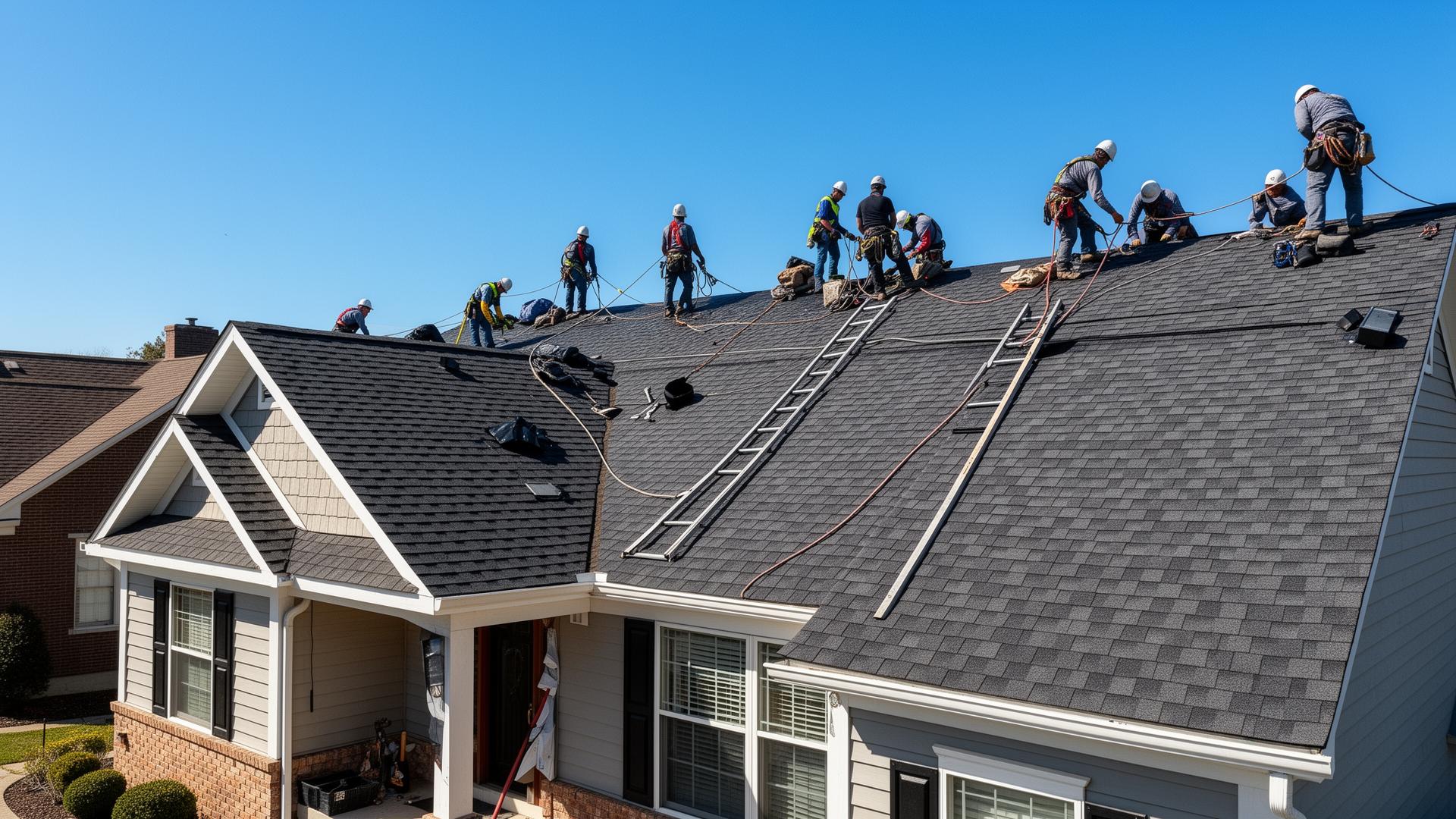
Flat Roof Repair Guide 2026: Solutions for Commercial & Residential Properties
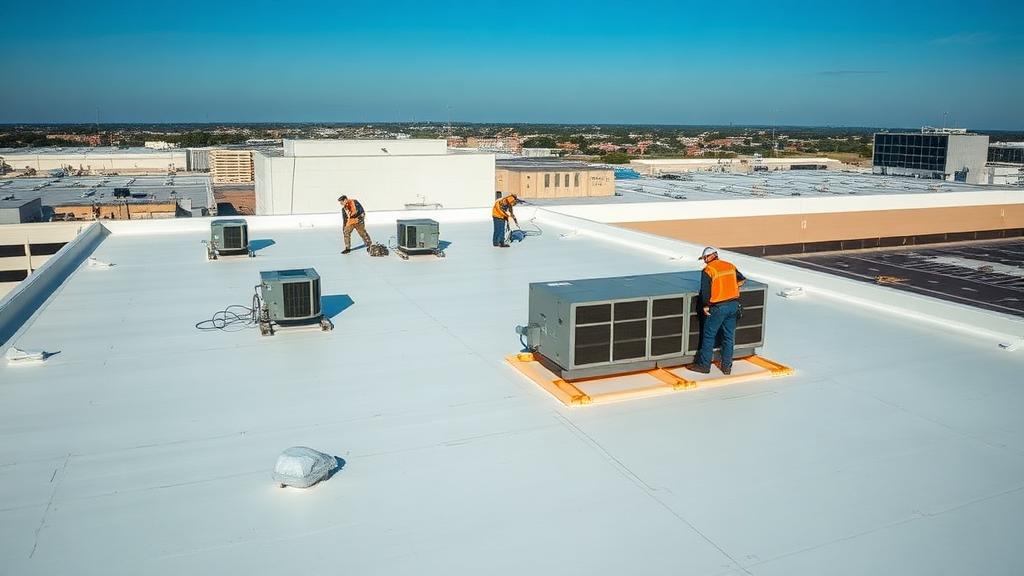
The Complete Guide to Flat Roof Repair in 2026
Flat roofs are the workhorses of the commercial building world and increasingly popular in modern residential architecture. But their low slope and unique construction make them vulnerable to specific problems that pitched roofs rarely face. Whether you manage a commercial property with a 50,000-square-foot membrane roof or own a home with a flat garage extension, understanding flat roof repair is essential for protecting your investment.
This comprehensive guide covers every aspect of flat roof repair in 2026, from identifying problems to understanding costs and making the repair-vs-replace decision.
Common Flat Roof Problems
1. Ponding Water
The Problem:: Water remaining on the roof surface 48+ hours after rainfall. The National Roofing Contractors Association (NRCA) defines ponding as standing water that hasn't evaporated or drained within 48 hours.
Why It Happens:: - Inadequate roof slope (less than 1/4 inch per foot) - Blocked or undersized drains - Structural deflection creating low spots over time - Improper original design or installation
The Damage:: - Accelerated membrane deterioration (UV + standing water = rapid degradation) - Additional structural load (1 inch of water = 5.2 lbs per square foot) - Organic growth promoting membrane breakdown - Increased leak risk as membrane weakens
Repair Solutions:: - Drain improvement: $500–$2,000 per drain - Tapered insulation system: $3–$6 per square foot to create proper drainage slope - Additional drains or scuppers: $800–$2,500 each - Cricket installation: $1,500–$4,000 for a built-up diverter
2. Membrane Blistering and Bubbling
The Problem:: Raised areas in the membrane that feel soft or spongy underfoot, ranging from golf-ball to basketball-sized.
Why It Happens:: - Moisture trapped between membrane layers during installation - Insufficient adhesion allowing air pockets - Thermal cycling expanding trapped gases - Moisture migrating through the roof deck from below
Repair Solutions:: - Small blister repair: Cut, dry, re-adhere, and patch. Cost: $200–$500 per blister - Large area re-adherence: $3–$6 per square foot - Full section replacement: If blistering is widespread, replace the affected membrane section. $5–$10 per square foot
3. Membrane Punctures and Tears
The Problem:: Holes or tears in the membrane from foot traffic, dropped tools, HVAC maintenance, or weather events.
Repair Solutions:: - Patch repair: Clean area, apply primer, heat-weld or adhere patch extending 6+ inches beyond the damage. Cost: $150–$400 per patch - Walk pad installation: Prevent future punctures on high-traffic areas. Cost: $3–$5 per square foot
4. Seam Failures
The Problem:: Separation at seam overlaps where membrane sheets were joined. This is the #1 failure point for single-ply membrane roofs.
Repair Solutions:: - Seam re-welding (TPO/PVC): Clean and re-heat-weld the separated seam. Cost: $8–$15 per linear foot - Seam re-adhesion (EPDM): Apply new seam adhesive and roller pressure. Cost: $10–$20 per linear foot - Seam cover strip: Apply a 6-inch cover strip over the failed seam. Cost: $5–$12 per linear foot
5. Flashing Deterioration
The Problem:: Flashing at walls, curbs, penetrations, and edges pulling away, cracking, or separating.
Repair Solutions:: - Flashing re-attachment: $15–$30 per linear foot - Flashing replacement: $20–$50 per linear foot - Penetration re-flashing: $200–$600 per penetration
Repair Cost Summary Table
| Repair Type | DIY Cost | Professional Cost | Difficulty |
|---|---|---|---|
| Ponding water (drain clearing) | $50–$100 | $200–$500 | Easy |
| Ponding water (tapered insulation) | N/A | $3–$6/sq ft | Professional only |
| Blister repair | $30–$80 | $200–$500 each | Moderate |
| Puncture patch | $20–$60 | $150–$400 each | Moderate |
| Seam repair | $40–$100 | $8–$20/linear ft | Difficult |
| Flashing repair | $50–$150 | $15–$50/linear ft | Difficult |
| Full section replacement | N/A | $5–$12/sq ft | Professional only |
| Complete membrane overlay | N/A | $4–$8/sq ft | Professional only |
When to Repair vs. Replace
Repair Makes Sense When:
- Damage is localized (less than 25% of total roof area)
- The roof system is less than 15 years old
- No widespread moisture infiltration in the insulation
- Structural deck is in good condition
- Repair costs are less than 30% of replacement cost
Replacement Is Better When:
- Multiple recurring leaks across the roof
- Widespread blistering, splitting, or seam failure
- Insulation is saturated (verified by core cuts or infrared scan)
- The roof system has exceeded its expected service life
- Energy efficiency has declined significantly
- Building codes require upgrades that existing system can't accommodate
The 25% Rule
A widely accepted industry guideline: if more than 25% of the roof area needs repair, replacement is typically more cost-effective than continued patching. This accounts for the cascading nature of flat roof failures—if 25% has failed, the remaining 75% is likely approaching failure.
Flat Roof Replacement Costs in 2026
| System Type | Material Cost/sq ft | Installed Cost/sq ft | Expected Life |
|---|---|---|---|
| TPO (60 mil) | $1.50–$3.00 | $5.00–$8.00 | 20–30 years |
| EPDM (60 mil) | $1.25–$2.50 | $4.50–$7.50 | 25–30 years |
| PVC (60 mil) | $2.00–$4.00 | $6.00–$10.00 | 20–30 years |
| Modified Bitumen | $1.50–$3.50 | $4.00–$8.00 | 15–25 years |
| Built-Up (BUR) | $2.00–$4.00 | $5.50–$9.00 | 20–30 years |
| Spray Foam + Coating | $2.00–$5.00 | $4.00–$8.00 | 15–25 years |
Emergency Temporary Repairs
When you discover a flat roof leak and can't get a professional immediately, these temporary measures can minimize damage:
Temporary Patch Kit Method 1. Clean the area thoroughly—remove all debris and standing water 2. Apply roof cement or cold-process adhesive liberally to the damaged area 3. Press a patch of compatible material (EPDM for EPDM, TPO for TPO) over the cement 4. Apply additional cement over the patch edges 5. Weight the patch with bricks or pavers for 24 hours
Tarp Method for Large Areas 1. Lay a heavy-duty tarp (minimum 10 mil) over the affected area extending 3+ feet beyond the damage 2. Secure with sandbags or concrete blocks (never puncture the membrane with fasteners) 3. Ensure the tarp slopes toward a drain—don't create a new ponding area
Emergency Sealant Application 1. For active small leaks, apply polyurethane roof sealant directly to the source 2. Build up multiple thin coats rather than one thick application 3. This can last weeks to months as a temporary solution
Hiring the Right Flat Roof Contractor
Essential Qualifications
- Manufacturer certification for your specific roof system (TPO, EPDM, PVC, etc.)
- Commercial roofing experience (minimum 5 years for complex systems)
- Infrared scanning capability to detect hidden moisture without destructive testing
- Proper insurance: $2M+ general liability and workers' compensation
- Warranty offerings: Both workmanship and material warranties
Questions to Ask
- "What percentage of your work is flat/low-slope roofing?" (Look for 50%+)
- "Can you provide core cut analysis to assess insulation condition?"
- "Do you offer infrared moisture surveys?"
- "What manufacturer warranties can you provide?"
- "What's your emergency response time?"
Preventive Maintenance Schedule
Implementing regular maintenance dramatically reduces repair frequency:
- Monthly: Visual inspection from ground level, check drains are flowing
- Quarterly: Walk the roof, clear debris, check seams and flashings
- Bi-annually: Professional inspection with detailed report
- Annually: Comprehensive inspection including core cuts and/or infrared scan
- After every storm: Walk inspection for damage assessment
Conclusion
Flat roof repair in 2026 requires a systematic approach: identify the problem accurately, understand the repair options, calculate costs against replacement, and choose a qualified contractor. With material and labor costs continuing to rise, the cheapest repair is always the one you prevent through regular maintenance. Invest in your flat roof today, and it will protect your building reliably for decades.
*Need a flat roof specialist? Find verified commercial and residential roofers experienced with flat roof systems in your area.*