The Ultimate Guide to Hiring a Roofing Contractor: Avoid Scams and Find Quality

Hiring a roofing contractor is one of the most significant decisions you'll make as a homeowner. A quality installation or repair protects your home for decades, while poor workmanship can lead to ongoing problems, wasted money, and even structural damage. This comprehensive guide walks you through the entire process of finding and hiring a contractor you can trust.
Why Contractor Selection Matters
The roofing industry, unfortunately, attracts its share of unscrupulous operators. Storm chasers, fly-by-night companies, and unlicensed workers often target homeowners with promises of low prices or quick fixes that ultimately cost far more than hiring a reputable contractor from the start.
Consequences of Hiring the Wrong Contractor:: - Substandard materials that fail prematurely - Improper installation leading to leaks and damage - Voided manufacturer warranties due to uncertified installation - No recourse when problems arise - Safety hazards from code violations - Difficulty selling your home with unpermitted work
Benefits of Hiring a Quality Contractor:: - Proper installation that maximizes roof lifespan - Valid warranties on materials and workmanship - Compliance with local building codes - Professional project management - Clear communication throughout the process - Reliable service for future maintenance needs
Starting Your Contractor Search
Finding good candidates is the first step in the hiring process. Cast a wide net initially, then narrow down based on qualifications.
Where to Find Contractors:
- Online Directories - Use our state-by-state contractor directory to find verified roofing professionals in your area. These listings include reviews, credentials, and contact information.
- Personal Recommendations - Ask friends, family, neighbors, and coworkers about their experiences. First-hand recommendations from people you trust are invaluable.
- Manufacturer Referrals - Major shingle manufacturers like GAF, Owens Corning, and CertainTeed maintain networks of certified installers who receive specialized training.
- Trade Associations - Organizations like the National Roofing Contractors Association (NRCA) can refer you to member companies.
- Home Improvement Stores - Some stores maintain lists of licensed contractors, though always verify credentials independently.
Initial Screening Criteria:: - Located in your area (not just traveling through) - In business for at least 5 years - Positive online reviews and ratings - Professional website and business presence - Responsive to initial inquiries
Verifying Credentials and Qualifications
Once you have a list of candidates, thoroughly verify each one's credentials before inviting them to provide estimates.
Essential Credentials to Check:
Licensing:: Most states require roofing contractors to hold specific licenses. Verify by: - Asking for the license number - Checking with your state's contractor licensing board - Confirming the license is current and in good standing - Ensuring the license covers roofing work specifically
Insurance:: Proper insurance protects you from liability. Require: - General liability insurance ($1 million minimum) - Workers' compensation coverage - Written proof directly from the insurance company, not just a copied certificate - Verification that coverage is current
Bonding:: A contractor's bond provides financial protection if they fail to complete work or pay suppliers.
Manufacturer Certifications:: Certifications from roofing material manufacturers indicate specialized training: - GAF Master Elite (less than 3% of contractors qualify) - Owens Corning Platinum Preferred - CertainTeed SELECT ShingleMaster - These certifications often enable enhanced warranty options
Business Verification:: - Check the Better Business Bureau for complaints - Verify the physical business address exists - Look for a consistent business history - Search for any court judgments or liens
Getting and Comparing Estimates
Obtaining multiple estimates allows you to compare options and identify fair pricing. However, the cheapest quote is rarely the best value.
How Many Estimates:: Get at least three to five written estimates. This provides enough data to understand market pricing and evaluate different approaches.
What Estimates Should Include:: - Detailed scope of work - Specific materials to be used (brand, model, color) - Timeline for completion - Payment schedule - Warranty information (materials and workmanship) - Permit and inspection responsibilities - Cleanup and debris removal - Protection for landscaping and property
Estimate Comparison Tips:
| Factor | What to Compare |
|---|---|
| Materials | Same brand and quality level |
| Scope | Identical work items |
| Removal | Are old materials being removed? |
| Accessories | Flashing, vents, drip edge included? |
| Underlayment | Type and quality specified |
| Warranty | Length and coverage details |
Red Flags in Estimates:: - Vague descriptions of work or materials - No written documentation - Prices significantly below market rate - Demands for large upfront payments - Pressure to sign immediately - Unwillingness to explain details
Essential Questions to Ask Contractors
Interviews with potential contractors reveal their professionalism, experience, and communication style. Prepare a list of questions and note their responses.
Experience and Qualifications:: - How long have you been in business? - What percentage of your work is residential roofing? - Have you worked on homes similar to mine? - What training have your installers received? - Are you certified by any manufacturers?
Project-Specific Questions:: - What approach would you take for my specific situation? - What materials do you recommend and why? - How long will the project take? - Who will supervise the work on-site? - How do you handle unexpected issues or changes?
Business Practices:: - Can you provide references from recent clients? - How do you handle warranty claims? - What's your payment schedule? - Do you pull permits and schedule inspections? - What happens if the project goes over budget or time?
Communication and Service:: - Who is my primary contact during the project? - How often will you provide updates? - What's your availability for questions or concerns? - Do you have a written contract I can review?
Understanding Roofing Contracts
A detailed written contract protects both you and the contractor. Never proceed based solely on verbal agreements.
Essential Contract Elements:
- Project Scope - Detailed description of all work to be performed, including:
- - Removal of existing materials
- - New materials to be installed
- - Areas covered
- - Any excluded work
- Materials Specification - Exact products to be used:
- - Brand and product names
- - Colors and styles
- - Quality grades
- - Quantities
- Timeline - Clear schedule including:
- - Start date
- - Estimated completion date
- - Provisions for weather delays
- - Penalty clauses for excessive delays
- Pricing and Payment - Complete financial terms:
- - Total contract price
- - Payment schedule (avoid large upfront payments)
- - Accepted payment methods
- - Procedures for change orders
- Warranties - Coverage details for:
- - Manufacturer material warranty
- - Contractor workmanship warranty
- - Procedures for filing claims
- - What voids coverage
- Permits and Inspections - Responsibility for:
- - Obtaining necessary permits
- - Scheduling required inspections
- - Costs for permit fees
- Insurance and Liability - Confirmation of:
- - Current insurance coverage
- - Responsibility for damages
- - Workers' compensation coverage
- Dispute Resolution - Procedures for:
- - Handling disagreements
- - Mediation or arbitration clauses
- - Jurisdiction for legal matters
Contract Red Flags:: - Missing or incomplete sections - Vague language about materials or work - Large deposit requirements (more than 10-20%) - Waiver of your legal rights - Automatic renewal clauses - Pressure to sign without review time
Avoiding Roofing Scams
Unfortunately, roofing scams are common, especially after storms when homeowners are vulnerable. Protect yourself by recognizing warning signs.
Common Roofing Scams:
- Storm Chasers - Contractors who follow severe weather, offer quick repairs, and disappear before problems surface. They often:
- - Go door-to-door soliciting work
- - Pressure you to sign immediately
- - Offer to waive insurance deductibles (which is illegal)
- - Have out-of-area addresses or phone numbers
- Bait and Switch - Advertising one price or material, then substituting lower quality after the contract is signed.
- Deposit Theft - Collecting large deposits and never returning to complete work.
- Unnecessary Repairs - Claiming extensive damage or problems that don't actually exist.
- Material Kickback Schemes - Using leftover or substandard materials while charging for premium products.
Protection Strategies:: - Never pay cash or make checks payable to individuals - Avoid contractors who appear immediately after storms - Verify all claims about damage independently - Don't sign anything on the spot - Get everything in writing - Verify credentials before signing contracts - Pay by credit card when possible for added protection - Keep 10-20% of payment until work passes final inspection
The Installation Process: What to Expect
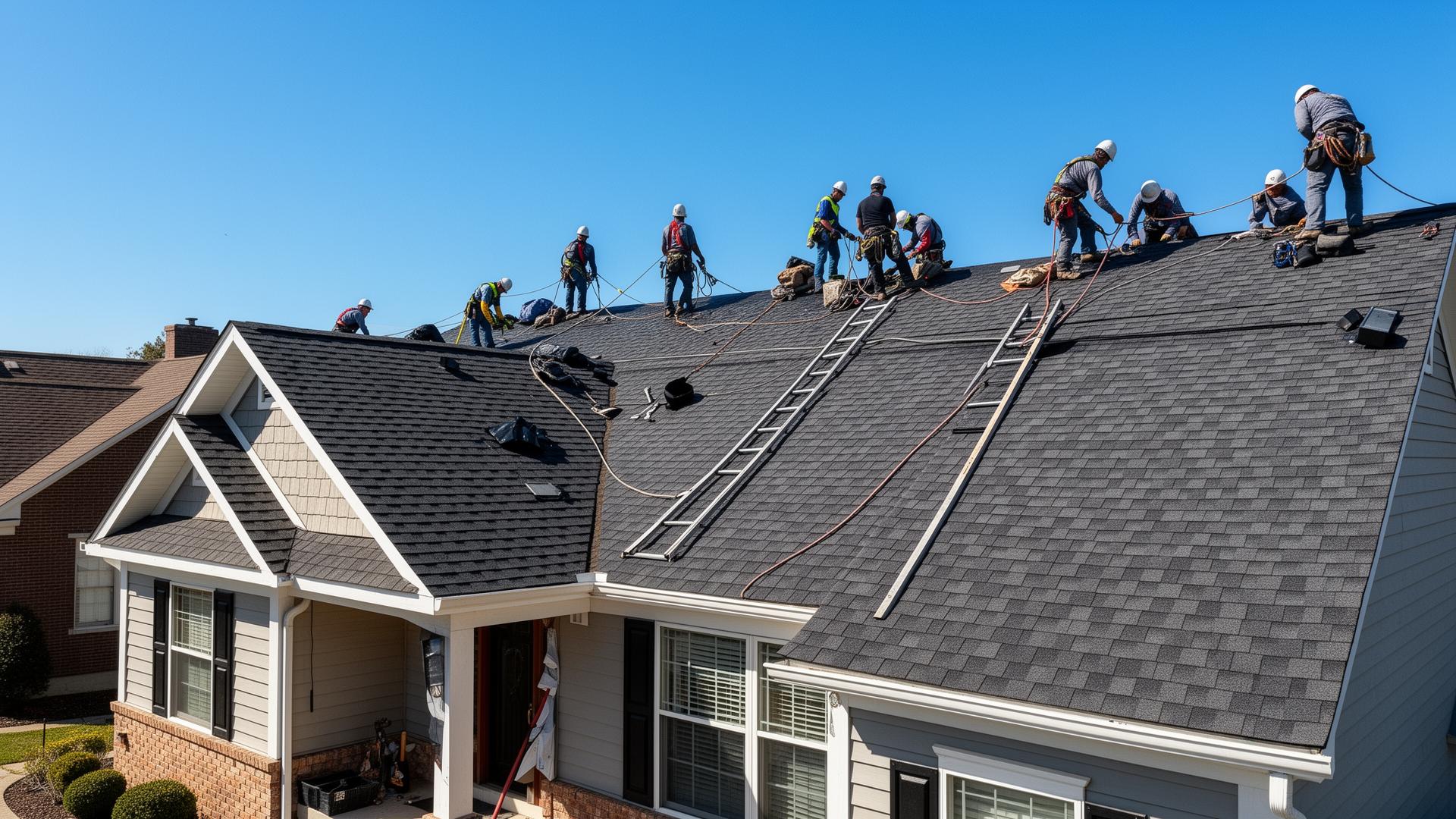
Understanding the typical roofing process helps you monitor progress and identify potential issues.
Pre-Installation:: - Permits obtained (1-7 days depending on jurisdiction) - Materials ordered and delivery scheduled - Property protected (covering landscaping, moving vehicles) - Dumpster or debris container delivered
Day 1: Preparation and Removal - Crew arrival and equipment setup - Protection of property and landscaping - Removal of existing roofing material - Inspection of underlying deck for damage - Repair of any discovered issues
Day 2-3: Installation - Installation of underlayment - Drip edge and flashing installation - Shingle or material installation beginning at eaves - Ridge cap installation - Ventilation component installation - Final flashing and sealant work
Completion:: - Debris cleanup and magnet sweeping for nails - Final walkthrough with homeowner - Municipal inspection (if required) - Final payment upon satisfaction
Your Role During Installation:: - Be available for questions - Monitor for unusual activities - Document progress with photos - Address concerns immediately - Inspect work before final payment
After the Project: Protecting Your Investment
Your responsibilities don't end when the contractor leaves. Proper follow-through protects your investment.
Immediate Post-Installation:: - Review all warranty documentation - File manufacturer warranty cards - Store all contracts and receipts safely - Schedule any required inspections - Make final payment only after satisfaction
Ongoing Maintenance:: - Follow manufacturer maintenance requirements - Schedule regular inspections - Address repairs promptly to maintain warranty - Keep records of all maintenance performed - Maintain a relationship with your contractor for future needs
Conclusion
Hiring the right roofing contractor is a critical decision that affects your home's protection for decades. By thoroughly vetting candidates, requiring proper documentation, and understanding the entire process, you significantly reduce your risk of problems and ensure quality results.
Take your time during the selection process, trust your instincts when something seems wrong, and don't let price be your only deciding factor. Quality roofing work is an investment in your home's future, and choosing the right contractor makes all the difference.
Ready to start your search? Browse our verified contractor directory to find qualified roofing professionals in your area, complete with reviews and credentials.