Intermittent Roof Leaks: How to Plan a Diagnosis and Verify the Repair
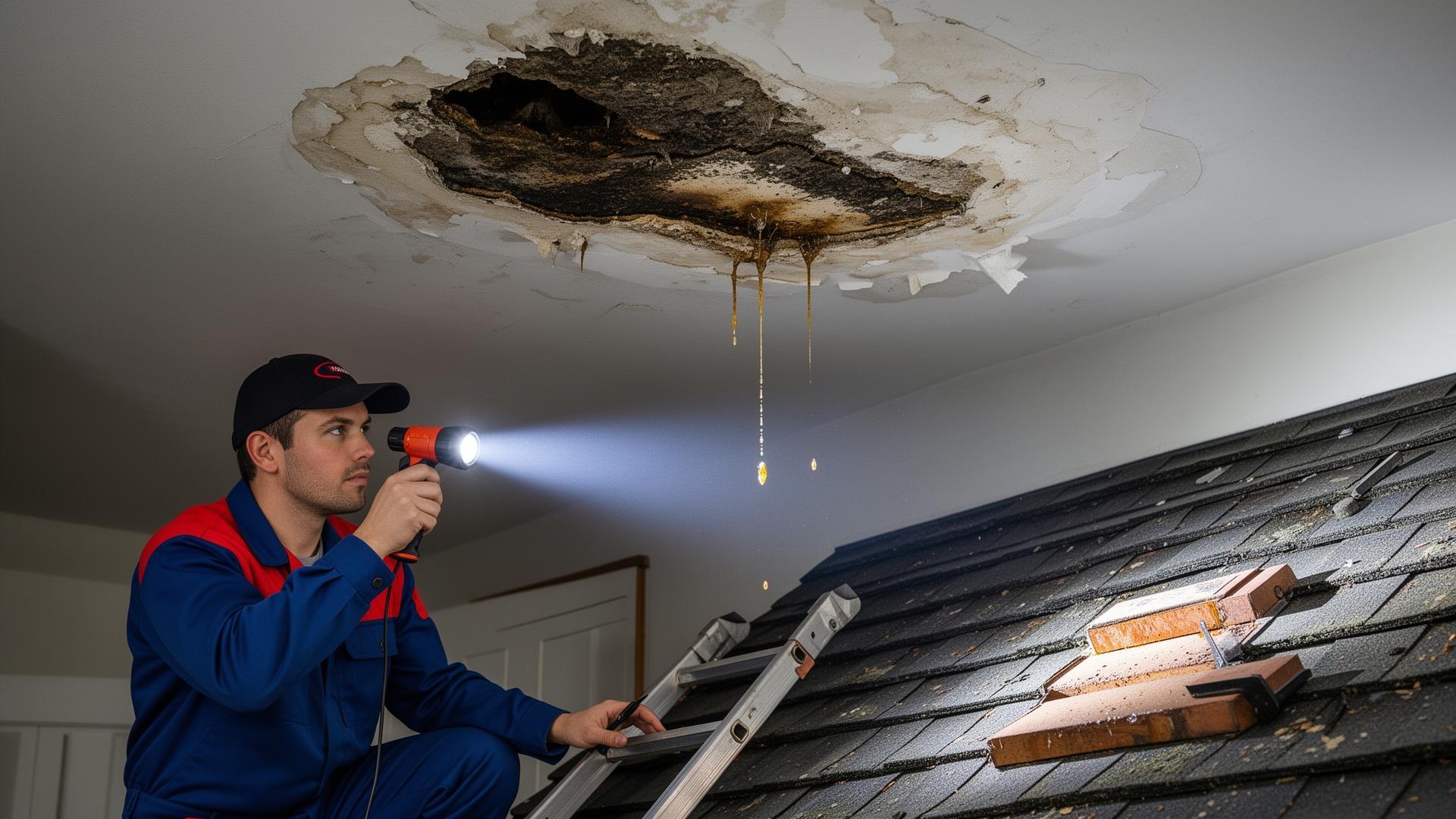
A roof leak that appears during one storm and disappears during the next can lead to an expensive cycle: a service visit, a patch, fresh paint, and another wet ceiling. The problem is not always poor workmanship. Sometimes the original water entry point was never established, or the repair was evaluated under conditions that could not reveal the remaining defect.
For homeowners preparing for late-fall and winter weather, the useful question is not simply, “Where is the leak?” It is, “What investigation will distinguish the likely causes, and what evidence will show that the repair worked?”
This guide focuses on managing that process—not collecting another list of indoor warning signs. It explains how to hire for diagnosis, understand professional testing, authorize a targeted repair, and avoid closing up wet materials prematurely. Keep all homeowner observations at ground level or in safely accessible living spaces. Roof access, water testing, and concealed-cavity investigations belong with qualified, insured professionals.
Why an Intermittent Leak Needs More Than a Patch
An intermittent leak depends on a particular combination of conditions. Wind may push rain against a wall joint that ordinary rainfall never reaches. Snowmelt may encounter backed-up water at an eave. A long storm may saturate an assembly before moisture reaches the interior, while a short downpour leaves no visible trace.
Water also travels. It can follow framing, roof decking, underlayment, pipes, or wiring before becoming visible. The ceiling location identifies where water emerged, not necessarily where it entered.
This creates two common diagnostic mistakes:
- Repairing the nearest roof feature. A vent above the affected room may look suspicious while water actually enters farther upslope or through an adjoining wall.
- Treating a dry inspection as proof of no leak. A dry surface shows its condition at that moment; it does not establish how it behaves during wind-driven rain or thawing snow.
A useful investigation develops competing explanations, examines the relevant assemblies, and narrows the possibilities. A contractor should be able to explain why a proposed repair addresses the suspected pathway rather than merely covering a nearby crack.
Hire for Diagnosis, Not Just a Repair Visit
When scheduling, describe the problem as an unresolved or intermittent water-entry issue. Ask whether the company performs leak investigations or mainly provides repair estimates. Those are related services, but they are not interchangeable.
A repair estimate may identify visible defects and price corrective work. A diagnostic visit may include interior review, roof and wall assessment, moisture mapping, controlled testing, or a recommendation for selective opening. Its purpose is to establish the cause with a stated level of confidence.
Before authorizing the visit, ask:
- Who will perform the investigation, and what experience do they have with your roof type?
- Does the scope include adjacent siding, masonry, skylights, or rooftop equipment when relevant?
- What findings, photographs, and written recommendations will you receive?
- Which tests or access methods require separate approval?
- Is diagnostic work billed separately from repairs?
- What happens if the first visit does not locate the source?
Use licensed roofing professionals where licensing is required, and verify insurance appropriate to the work. Requirements vary across states and local jurisdictions. Our state roofing resources can help frame location-specific questions, while roof inspection guidance can help you prepare for the appointment.
Avoid making a guaranteed same-day answer your main hiring criterion. A careful explanation of uncertainty is more valuable than unjustified certainty.
Give the Investigator a Short, Useful Brief
Provide a concise timeline rather than a theory the contractor must accept. Include when the problem first appeared, whether it followed roof work or equipment installation, and which previous repairs changed its behavior.
Record storm conditions when known: prolonged rain, gusty weather, thawing snow, or a cold period followed by warmer temperatures. Label uncertain details as uncertain. You do not need to reconstruct exact wind speeds or purchase weather instruments.
Also note whether moisture has appeared without precipitation. That can redirect attention toward plumbing, HVAC condensate, bathroom exhaust, or condensation within the roof assembly. A non-roof source can coexist with a roof defect, so finding one issue does not automatically explain every symptom.
Provide previous invoices, repair photographs, roof-system information, and relevant warranty documents. Mark the affected room on a simple floor sketch, including nearby bathrooms, chimneys, exterior walls, and additions. A layout helps the investigator relate interior locations to exterior features.
Do not scrape away evidence, repaint, or discard removed materials before the contractor has documented what matters. However, documentation should never delay urgent protection or necessary drying.
Understand What Each Diagnostic Method Can Establish
No single tool reliably answers every leak question. The best method depends on roof construction, access, weather, and the suspected pathway.
Visual assessment
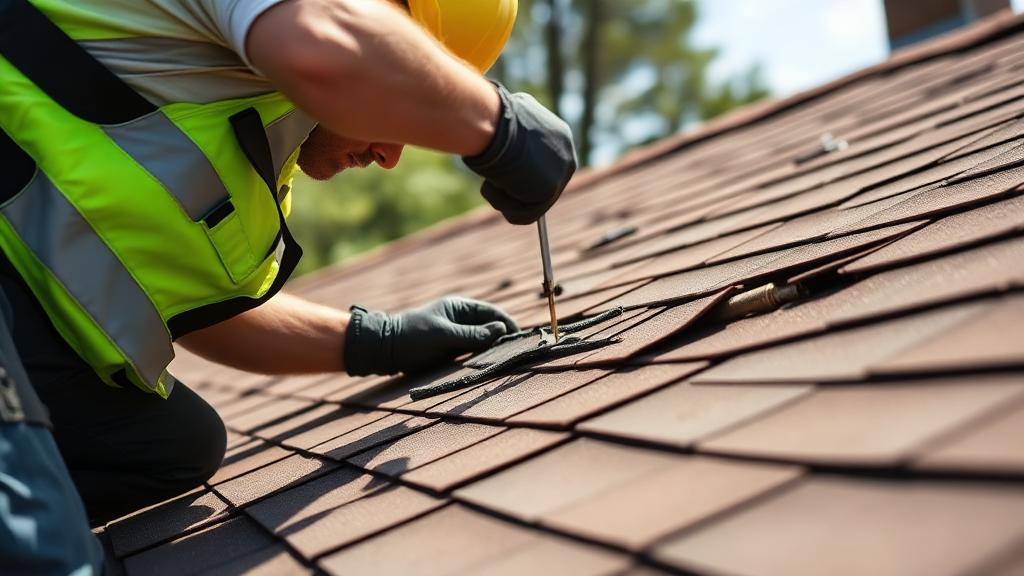
A professional may identify damaged coverings, poorly integrated flashing, open seams, or deteriorated transitions. They should also consider roof-to-wall connections and features uphill from the interior damage.
An obvious defect is a strong lead, but not always a confirmed source. Ask whether the findings explain the timing and location of the moisture. For unfamiliar terminology, consult the roofing glossary.
Moisture measurements
Moisture meters can help compare affected materials with suitable reference areas and track changes. Readings depend on the instrument, material, depth, and nearby metal or other interfering conditions.
A reading is not automatically proof of roof leakage, and a low surface reading does not establish that a concealed cavity is dry. Ask what was measured, how comparisons were made, and what limitations apply.
Infrared imaging
Infrared cameras show surface temperature differences, not water itself. Under suitable conditions, those differences can help identify areas for closer investigation. Insulation gaps, air leakage, sun exposure, and equipment can produce patterns unrelated to a leak.
A useful report treats thermal findings as leads supported by other observations, not as standalone proof.
Selective opening
Sometimes a limited opening in an interior finish or roof assembly is necessary to inspect concealed conditions. Before approving it, clarify the location, purpose, protection measures, documentation, and responsibility for restoration.
For older buildings, disturbing materials may require evaluation for asbestos or lead hazards. The appropriate precautions depend on the materials, building history, and applicable requirements.
Ask for Controlled Testing, Not Indiscriminate Hosing
A professionally managed water test can help reproduce a suspected leak, but only when the building and weather conditions make testing appropriate. It is not a homeowner roof-maintenance task.
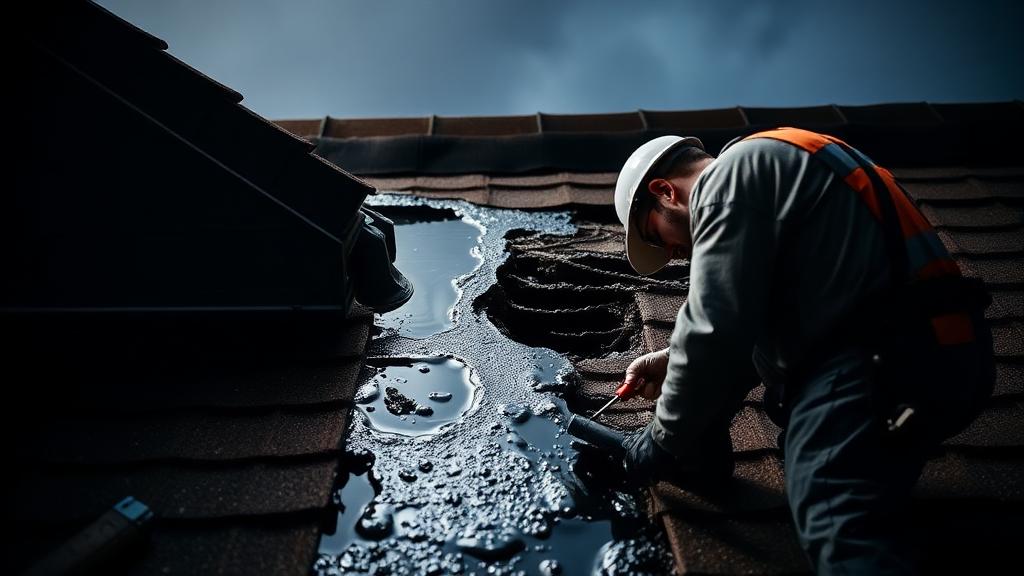
A useful test isolates suspected areas in a planned sequence, with someone monitoring the interior or accessible cavity. The investigator accounts for travel time and avoids wetting multiple unrelated details at once. Otherwise, a reproduced drip may still leave the entry point unclear.
Ask the contractor to explain:
- The hypothesis: Which joint or assembly is being evaluated?
- The isolation plan: How will other possible entry points remain distinguishable?
- The observation plan: Where will water movement or moisture change be monitored?
- The stop conditions: What findings or safety concerns will end the test?
- The limitations: Which real-weather conditions cannot be reproduced?
Testing may be unsuitable during freezing weather, when materials are vulnerable, or where added water could worsen damage or reach electrical components. The professional should decide whether another method is safer.
A negative test does not universally clear the roof. A controlled application may not reproduce wind pressure, prolonged saturation, snow backup, or the exact storm direction. The report should explain what was tested and what remains unresolved.
Separate Roof Work From Wall, Plumbing, and HVAC Work
Some difficult “roof leaks” cross trade boundaries. Water entering a chimney, wall cladding, window assembly, or equipment curb can appear beneath the roof. Condensation on a cold duct can wet the same ceiling area as a roof leak.
Ask the investigator to distinguish among three conclusions:
- A roof-related pathway is supported by the findings.
- Another building system is the more likely source.
- Multiple sources or unresolved possibilities remain.
When another trade is needed, request a clear handoff. “Call a plumber” is less helpful than an explanation identifying the suspected pipe route, observed moisture, and reasons the roof is not currently considered the primary source.
For complex roof-to-wall intersections, a building-envelope specialist may be useful. HVAC technicians, plumbers, or chimney professionals should address systems within their qualifications. Equipment connected to rooftop solar may require coordination with the solar provider.
Do not authorize several unrelated repairs simultaneously merely to cover every possibility. That approach can increase cost and make it difficult to determine which intervention actually worked. Urgent protective work is different: preventing ongoing damage may take priority over diagnostic isolation.
Require a Repair Scope That Addresses the Water Path
Once the evidence supports a cause, the proposal should describe the corrective detail, not simply promise to “seal the leak.”
For example, the scope might explain how flashing will be integrated with adjacent roofing and wall drainage layers, which damaged components will be replaced, and how underlying materials will be inspected. The exact method depends on the roof system and manufacturer requirements.
Sealants have legitimate uses, but exposed sealant alone is not an adequate substitute for a drainage detail where the assembly requires properly integrated flashing. Ask whether the proposed work restores that detail or provides temporary protection.
The written scope should also address:
- Access and protection of landscaping, interiors, and equipment.
- Materials and repair boundaries.
- Handling of concealed damage discovered during work.
- Photographs before concealment.
- Temporary weather protection if work cannot be completed.
- Warranty coverage for the specific repair and any exclusions.
- Follow-up procedures if the same symptom returns.
If investigation and repair are combined in one visit, establish an approval limit and a process for additional work. You should understand what the contractor may do without further permission and what requires a documented change.
Verify the Repair Before Restoring Finishes
A completed repair and a dry building assembly are different milestones. Stopping new water entry does not instantly dry insulation, framing, roof decking, or ceiling materials.
Ask for a closeout package showing the defect, the work performed, and the repaired condition before everything was covered. Where appropriate, request post-repair testing or a monitoring plan. Testing should be professionally selected rather than automatically repeated regardless of risk.
A reasonable verification plan may combine:
- Confirmation that the intended repair detail was installed.
- Follow-up moisture measurements using documented locations and methods.
- Observation during weather similar to the conditions that previously caused leakage.
- Further investigation if moisture increases or symptoms recur.
One dry storm is encouraging, but it may not reproduce the original exposure. Conversely, a residual stain does not prove that a repair failed. Tracking actual moisture and new changes is more informative than judging appearance alone.
Wet porous materials may need removal rather than drying in place. A qualified restoration professional can assess conditions and determine appropriate drying, cleaning, or replacement. Do not close cavities or repaint simply because the surface feels dry. If significant mold is suspected, avoid disturbing it and seek qualified assessment.
Adjust the Plan for Regional Weather and Immediate Hazards
November conditions differ sharply across the United States. Northern and mountain locations may face snow, freezing temperatures, and limited testing windows. In warmer regions, wind-driven rain may remain the principal concern. Some western locations are entering their wetter season.
Weather also affects repair scheduling and material installation requirements. A temporary protective measure may be appropriate until permanent work can be performed under suitable conditions. Ask for a written distinction between temporary stabilization and final repair, including follow-up responsibilities.
Do not wait for the ideal diagnostic storm if the ceiling is sagging, water is near electrical fixtures, or damage is spreading. Keep people away from unstable ceilings and affected electrical areas. Do not touch wet switches or fixtures. Contact appropriate emergency services when there is immediate danger, and arrange professional roofing, electrical, or restoration help as needed.
Never climb onto the roof, walk on wet or icy surfaces, or attempt to puncture a bulging ceiling. Collect information only where you can do so safely.
Practical Checklist: From First Call to Closeout
Use this checklist alongside our broader homeowner roofing checklist:
- [ ] Protect people first; isolate areas with sagging finishes or electrical concerns.
- [ ] Schedule a diagnostic service rather than assuming a standard estimate includes testing.
- [ ] Verify applicable licensing and insurance.
- [ ] Prepare a brief timeline, floor sketch, and previous repair records.
- [ ] Agree on access, testing, opening, and restoration responsibilities.
- [ ] Request findings that distinguish confirmed defects from suspected causes.
- [ ] Approve a repair scope tied to the identified water pathway.
- [ ] Document concealed conditions and completed work.
- [ ] Establish drying and repair-verification steps before restoring finishes.
- [ ] Keep one file containing reports, invoices, photographs, and follow-up observations.
FAQ
Should I wait until it rains to schedule an inspection?
No. A dry-weather visit can identify defects, review previous work, and establish a testing plan. Tell the contractor which weather conditions have triggered the problem. If a storm-time observation would be useful, let the professional determine a safe arrangement rather than delaying urgent repairs.
Does a leak returning mean the contractor repaired the wrong spot?
Not necessarily. There may be multiple entry points, a concealed defect beyond the original scope, or a separate plumbing or condensation problem. Request comparison of the new findings with the original diagnosis and repair documentation. The explanation should be specific enough to support the next step.
Can a drone find a hidden roof leak?
Drone photographs can help document visible roof conditions and hard-to-access features. They generally cannot establish concealed water paths or confirm that an interior cavity is dry. Treat aerial imaging as one inspection tool, not a substitute for a complete investigation.
Will homeowners insurance pay for leak investigation and drying?
Coverage depends on the policy, cause of loss, exclusions, and circumstances. Do not assume investigation, maintenance repairs, or resulting damage are automatically covered. Contact your insurer promptly when appropriate, preserve documentation, and take reasonable steps to limit additional damage without delaying safety measures.
When should I seek a second opinion?
Consider one when repeated patches fail, a major replacement is recommended without a clear explanation, or the proposed scope does not address the documented pathway. Provide the second professional with the existing records and ask for an independent assessment of both the likely cause and the proposed verification plan.