Roof Deck Replacement: When Your Sheathing Needs Attention
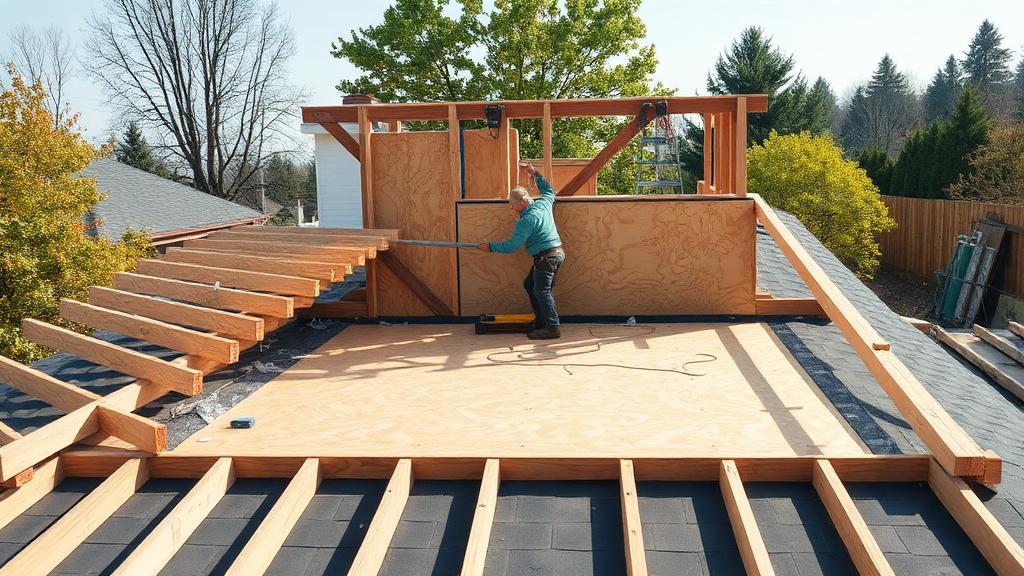
Roof decking—the structural sheathing beneath your shingles—provides the foundation for your entire roofing system. Understanding when decking needs replacement, what the process involves, and how it affects project costs helps you make informed decisions and avoid surprises during your roof replacement.
What Is Roof Decking?
Roof decking is the structural layer that supports all roofing materials.
Common Decking Materials:: - Plywood (CDX grade common) - Oriented Strand Board (OSB) - Tongue-and-groove planks (older homes) - Skip sheathing (for specific applications)
Standard Dimensions:: - Thickness: 7/16" to 3/4" - Sheet size: 4' x 8' typical - Attached directly to roof rafters - Provides nailing surface for roofing
Functions of Decking:: - Structural support for all roofing layers - Nailing base for underlayment and shingles - Distribution of load across rafters - Weather barrier foundation
Signs Your Decking Needs Replacement
Several indicators suggest decking problems.
Visible from Attic:: - Daylight showing through boards - Water staining on underside - Mold or mildew growth - Visible rot or deterioration - Sagging between rafters
Visible During Inspection:: - Soft spots when walking on roof - Bouncy or spongy areas - Visible decay at edges - Warped or uneven surfaces - Failed previous repairs
Associated Problems:: - Persistent roof leaks - Shingles not laying flat - Ice dam damage history - Poor ventilation effects - Age-related deterioration
For comprehensive inspection guidance, see our roof inspection guide.
Common Causes of Decking Damage
Understanding causes helps prevent future problems.
Water Damage Sources:: - Prolonged roof leaks - Ice dam backup - Condensation from poor ventilation - Flashing failures - Valley or penetration leaks
Structural Issues:: - Inadequate original material - Overloading (heavy snow, equipment) - Improper installation - Age-related deterioration - Poor attic ventilation
Environmental Factors:: - High humidity environments - Lack of vapor barriers - Extreme temperature cycling - Pest damage (carpenter ants, termites) - Previous fire or smoke damage
The Decking Inspection Process
Professional inspection reveals decking condition.
Pre-Installation Inspection:: - Visual assessment from attic - Exterior condition evaluation - Problem area identification - Preliminary scope estimation
During Tear-Off Inspection:: - Complete decking exposure - Hands-on condition testing - Damage extent mapping - Repair/replacement decisions
Testing Methods:: - Visual inspection for staining/rot - Physical probing for soft spots - Moisture meter readings - Structural deflection assessment
Types of Decking Replacement
Replacement scope varies by damage extent.
Spot Replacement:: - Individual damaged sheets replaced - Cut out affected area precisely - New sheet installed flush - Most common approach
Section Replacement:: - Multiple connected sheets replaced - Addresses larger damage areas - May include rafter inspection - More comprehensive solution
Complete Replacement:: - All decking removed and replaced - Rare for most projects - Required for severe damage - Most expensive option
Decking Replacement Costs
Budget appropriately for potential decking work.
Cost Factors:: - Material (OSB vs. plywood) - Labor for removal and installation - Extent of damage discovered - Accessibility challenges - Disposal requirements
Typical Cost Ranges:
| Scope | Material | Labor | Total per Sheet |
|---|---|---|---|
| OSB Replacement | $15-25 | $30-50 | $45-75 |
| Plywood Replacement | $25-45 | $30-50 | $55-95 |
| Complex Areas | +20-30% | +20-50% | Varies |
Budgeting Recommendations:: - Include 5-10% contingency for decking - Ask contractors about their decking pricing - Understand when decisions will be made - Get change order procedures in writing
OSB vs. Plywood for Replacement
Material choice affects performance and cost.
Oriented Strand Board (OSB):: - Lower cost option - Adequate for most applications - Less moisture tolerant - Widely available
Plywood (CDX Grade):: - Higher cost but more durable - Better moisture performance - Slightly easier to work with - Preferred in high-moisture areas
Recommendation:: For most residential applications, OSB provides adequate performance. Plywood offers advantages in moisture-prone areas or when budget allows.
Preventing Future Decking Problems
Protect your investment with proper prevention.
Ventilation Importance:: - Balanced intake and exhaust ventilation - Prevents moisture accumulation - Reduces temperature extremes - Extends decking life significantly
For ventilation details, see our attic ventilation guide.
Maintenance Practices:: - Address leaks immediately - Keep gutters clear and functional - Ensure proper attic insulation - Monitor for signs of problems - Schedule regular inspections
How Decking Affects Your Roofing Warranty
Decking condition impacts warranty coverage.
Warranty Requirements:: - Sound decking required for valid warranty - Proper thickness specifications - Adequate nailing surface - No pre-existing damage
Documentation Importance:: - Photograph decking condition during installation - Document any repairs made - Keep records of material used - Maintain for warranty claims
Questions to Ask Your Contractor
Address decking concerns before work begins.
Essential Questions:: - How do you price decking replacement? - When will you inspect the decking? - What triggers replacement vs. repair? - How will you communicate findings? - What materials do you use?
Process Questions:: - How long do decking repairs add? - Will you photograph problem areas? - Who approves additional work? - How are change orders handled?
What Happens When Decking Issues Are Found
Understanding the process reduces stress.
Typical Discovery Process:: 1. Tear-off reveals problem areas 2. Contractor assesses extent 3. You're notified and consulted 4. Approval for additional work obtained 5. Replacement completed 6. Documentation provided
Communication Expectations:: - Photos of problem areas - Clear explanation of issues - Cost estimate for repairs - Timeline impact discussion - Your approval before proceeding
DIY Decking Assessment
Some assessment is possible before contractors arrive.
Attic Inspection Steps:: 1. Access attic safely with proper lighting 2. Look for daylight through boards 3. Check for water stains 4. Note any mold or mildew 5. Feel for soft or spongy areas 6. Document findings with photos
Exterior Indicators:: - Sagging rooflines - Wavy shingle patterns - Soft spots felt from ladder - Previous patch repairs visible
Limitations:: Full assessment requires tear-off to expose complete decking surface.
Conclusion
Roof decking replacement adds cost to roofing projects but ensures your new roof has a sound foundation. Understanding when replacement is necessary, what it costs, and how to prevent future problems helps you plan appropriately and maintain your roof's structural integrity. Always address decking issues discovered during replacement—covering compromised decking leads to premature roofing failure.
Ready for a comprehensive roof assessment? Find qualified local contractors who thoroughly inspect and address decking concerns.