Signs Your Roof Needs Emergency Repair After a Storm in Kansas City (2026)
Signs Your Roof Needs Emergency Repair After a Storm in Kansas City
Kansas City sits at the convergence of weather patterns that produce some of the most violent storms in the United States. From devastating hailstorms to powerful straight-line winds and tornadoes, KC-area homeowners face roofing emergencies that demand immediate attention.
This guide helps Kansas City homeowners quickly identify when storm damage requires emergency repair, what to do while waiting for help, and how to navigate the insurance claim process.
Kansas City's Storm Risk Profile
The Kansas City metro area experiences a uniquely challenging storm environment:
Hail frequency:: KC averages 3–5 significant hail events per year, with hailstones frequently reaching 1 inch or larger. The area has experienced baseball-sized hail (2.75 inches) multiple times in recent years.
Severe thunderstorms:: The region averages 50+ severe thunderstorm warnings annually, often producing wind gusts exceeding 70 mph.
Tornado risk:: Kansas City lies within Tornado Alley. While direct hits are relatively rare, nearby tornado activity creates extreme wind conditions.
Heavy rainfall:: Summer storms can dump 2–4 inches of rain in less than an hour, overwhelming drainage systems and exposing any roofing weakness.
Immediate Signs of Emergency Roof Damage
Category 1: Call a Roofer Immediately
These signs indicate your roof's waterproofing has been compromised:
Active water leaking into your home:: - Water dripping from ceiling, walls, or light fixtures - New water stains appearing or expanding on ceilings - Water running down interior walls - Bubbling or peeling paint on ceilings (water trapped behind surface)
Action:: Place containers under drips, move valuables away from affected areas, turn off electricity to rooms with active leaks near light fixtures.
Visible structural damage:: - Portion of roof visibly collapsed, sagging, or displaced - Roof deck exposed (you can see wood or plywood from outside) - Ridge line shifted or broken - Tree or large branch has penetrated the roof
Action:: Evacuate the area directly below the damage. Do NOT enter your attic if structural damage is suspected.
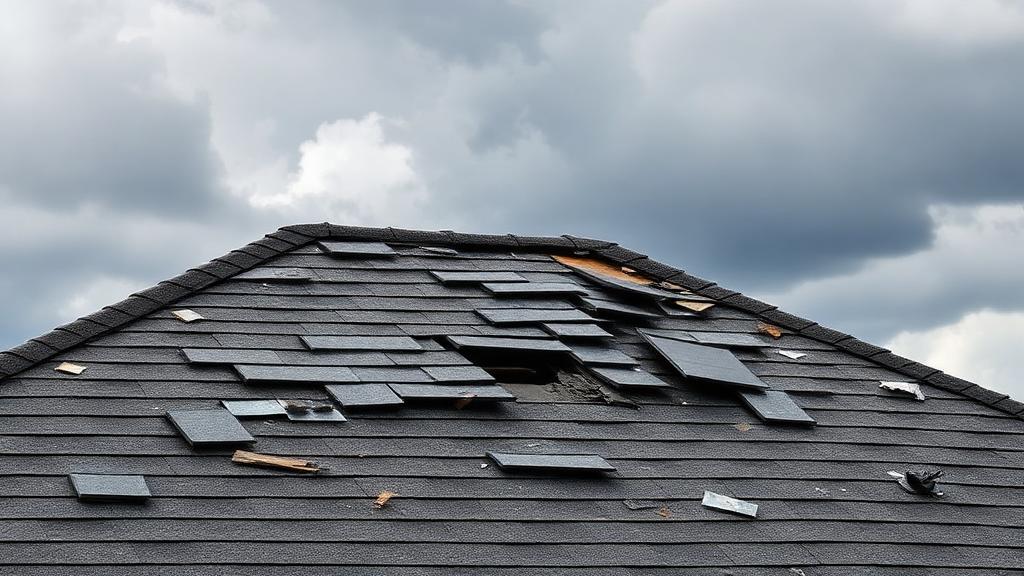
Missing large sections of roofing material:: - Multiple sheets of shingles or rows of tiles missing - Underlayment (felt paper) exposed to weather - Plywood roof deck visible from ground level
Category 2: Schedule Repair Within 24–48 Hours
Scattered missing shingles:: - Several individual shingles torn away by wind - Exposed nail heads and underlayment in small areas - Shingle tabs lifted or creased (likely to tear in next wind event)
Damaged flashing:: - Metal flashing around chimney, vents, or skylights visibly bent or displaced - Flashing separation from roof surface - Cap flashing on parapets or walls lifted or missing
Gutter damage:: - Gutters torn from fascia board - Downspouts disconnected from gutter system - Gutter sections crushed by fallen branches
Category 3: Schedule Inspection Within One Week
Suspected hail damage:: - Dented gutters, downspouts, or vent covers - Marks on exterior AC unit, mailbox, or car - Granule accumulation in gutters or at downspout outlets - Visible shingle bruising from ground level (dark spots)
Minor wind damage:: - A few shingle corners lifted but not missing - Ridge cap shingles slightly displaced - Minor sealant separation around penetrations
How to Assess Hail Damage on Your Kansas City Roof
Hail damage is often difficult to see from the ground. Here's what to look for:
On the roof (if safe to access):: - Asphalt shingles: Look for circular dents, bruises (soft spots when pressed), or exposed black substrate where granules have been knocked off - Metal surfaces: Visible dents on flashings, vent covers, and gutters - Wood components: Dents or splits in exposed fascia or trim
From the ground:: - Check soft metals first—aluminum gutters, downspouts, and window trim show hail damage clearly - Examine outdoor AC units, mailbox, and car for impact marks - Look at deck railings and fence tops for hail marks - Check window screens for dents or holes
Documentation (critical for insurance):: - Photograph damage from multiple angles - Include close-up shots showing individual impact marks - Photograph surrounding property damage (cars, AC units, etc.) - Note the date, time, and size of hail reported by local weather services
Emergency Tarping and Temporary Repairs
While waiting for professional repair, protect your home from further water damage:
Emergency tarp installation:: 1. Use a heavy-duty tarp (minimum 6 mil thickness) that extends at least 4 feet beyond the damaged area on all sides 2. Secure with 2x4 boards screwed through the tarp into the roof deck (NOT just weighted with rocks or sandbags) 3. Extend the tarp over the ridge if possible for best water shedding 4. Ensure tarp edges are sealed against the roof surface
Temporary sealant application:: - Use roofing cement or elastomeric sealant for small holes or gaps - Apply only to dry surfaces for best adhesion - This is temporary—professional repair is still needed
Interior protection:: - Move furniture and valuables away from leak areas - Place plastic sheeting over items that can't be moved - Set up dehumidifiers to prevent mold growth in wet areas - Document all interior damage with photos before cleanup
Navigating Insurance Claims in Kansas City
Kansas City homeowners deal with storm damage claims regularly. Here's the process:
Step 1: Document Everything - Take extensive photos and video before any cleanup - Note the date and time of the storm - Record weather data (hail size, wind speeds reported) - Keep receipts for any emergency materials purchased
Step 2: File Your Claim Promptly - Most policies require claims within 1 year of the event (some within 6 months) - Call your insurance company's claims line, not your agent - Provide basic information—don't speculate about costs
Step 3: Get Independent Estimates - Obtain at least two estimates from licensed Kansas City roofing contractors - Do NOT sign any contracts before your insurance adjuster inspects - Never let a contractor convince you to sign over your insurance claim
Step 4: Meet with the Insurance Adjuster - Be present during the adjuster's inspection - Have your contractor present if possible (they can point out damage the adjuster might miss) - Provide your documentation and contractor estimates - Request a copy of the adjuster's report
Step 5: Review and Negotiate - Compare the adjuster's estimate with your contractor quotes - If the amounts differ significantly, request a re-inspection - You have the right to hire a public adjuster (typically 10–15% of claim amount) - Consider supplemental claims if additional damage is discovered during repair
Kansas City Emergency Roofing Costs
| Service | Estimated Cost |
|---|---|
| Emergency tarp installation | $200–$800 |
| Emergency leak repair | $300–$1,500 |
| Shingle replacement (small area) | $200–$600 |
| Flashing repair | $300–$1,000 |
| Full storm damage assessment | $200–$400 |
| Temporary board-up (large opening) | $500–$2,000 |
| Full roof replacement (storm damage) | $8,000–$25,000 |
Avoiding Storm Chaser Scams in Kansas City
After every major storm, Kansas City sees an influx of out-of-town contractors. Protect yourself:
- Never sign a contract on the spot — legitimate contractors give you time to decide
- Verify Missouri contractor registration before signing anything
- Be wary of "free roof" promises — no one can guarantee your insurance claim outcome
- Never pay large deposits — reputable contractors work on insurance-funded timelines
- Check for local references — storm chasers won't have Kansas City project history
- Avoid door-knockers who appear within hours of a storm
Finding Emergency Roofers in Kansas City
When you need emergency roof repair, contact contractors who: - Are locally established in the Kansas City metro - Offer 24/7 emergency response service - Have experience with insurance restoration work - Hold Missouri and/or Kansas contractor licenses - Can provide immediate tarping services
Find emergency roofing contractors in Kansas City available for immediate response.
Conclusion
Storm damage is stressful, but knowing what to look for and how to respond makes a tremendous difference in protecting your home and maximizing your insurance recovery. Act quickly to prevent secondary damage, document everything, and work with established local professionals who know the Kansas City roofing market.
Connect with trusted Kansas City roofers before the next storm hits—having a contractor relationship established makes emergency response much faster.