Skylight Repair: Fixing Leaks and Maintaining Your Skylights
Skylights bring natural light into homes but are also common leak sources. Understanding skylight problems and repair options helps you maintain these valuable features.
Understanding Skylight Systems
Skylights integrate with roofing in complex ways.
Skylight Components:: - Frame (typically aluminum) - Glazing (glass or plastic) - Gaskets and seals - Flashing kit (factory or site-built) - Curb (elevates skylight above roof) - Interior trim
Skylight Types:
| Type | Characteristics | Common Issues |
|---|---|---|
| Fixed | Doesn't open | Seal failure, flashing leaks |
| Vented | Opens for ventilation | Hinge wear, operator failure, seals |
| Tubular | Light tube, no direct glazing | Dome damage, flashing |
| Custom | Non-standard sizes | Flashing complexity |
How Skylights Leak:: Water entry points: 1. Flashing failure at roof integration 2. Seal deterioration around frame 3. Condensation from temperature differences 4. Cracked or failed glazing 5. Frame corrosion or damage
Diagnosing Skylight Problems
Accurate diagnosis guides proper repair.
Is It Really a Leak? Condensation is often mistaken for leaking:
Signs of condensation: - Water only appears in humid conditions - Moisture on inside of glass - Water on interior surfaces, not coming through - Occurs with temperature differences
Signs of actual leak: - Water during or after rain only - Water on frame exterior - Staining on drywall around skylight - Drips from same location
Leak Source Identification:: During rain, carefully observe: - Where does water first appear? - Does it follow a path before dripping? - Is water entering at edge or center? - Does wind direction affect appearance?
Flashing Inspection:: Check exterior flashing: - Visible gaps or separation - Rust or corrosion on metal - Missing sealant - Shingles lifted around skylight - Debris accumulation
Common Skylight Repairs
Many skylight problems are repairable.
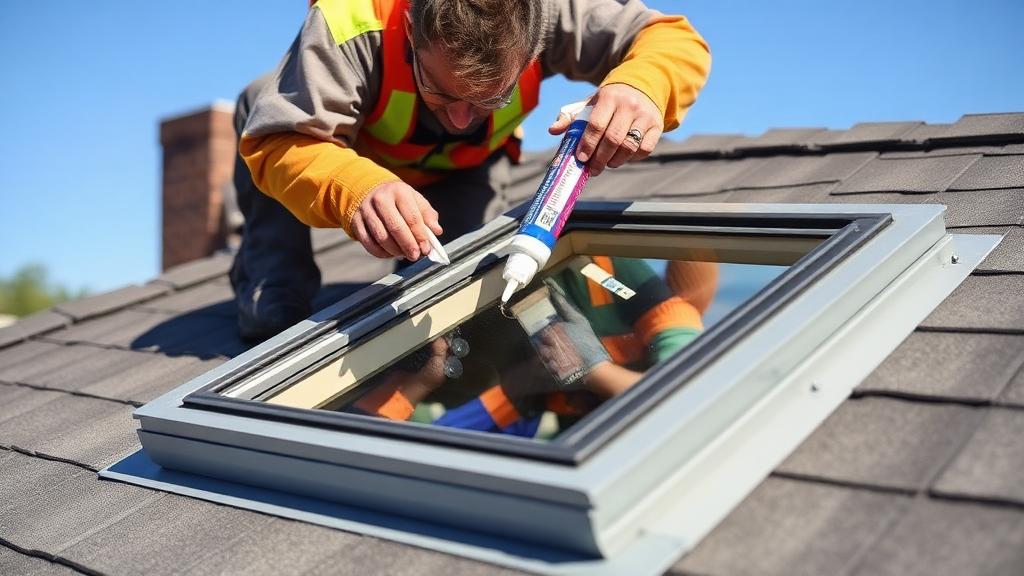
Seal Replacement:: For deteriorated perimeter seals:
Process: 1. Remove old sealant completely 2. Clean surfaces thoroughly 3. Apply primer if specified 4. Install backer rod if gaps are deep 5. Apply appropriate sealant 6. Tool smooth for water shedding
Sealant selection: - Silicone for most applications - Polyurethane for movement areas - Avoid latex/acrylic outdoors
Gasket Replacement:: Many skylights have replaceable gaskets: 1. Identify gasket type and source 2. Remove old gasket carefully 3. Clean gasket channel 4. Install new gasket 5. Verify proper seating
Gasket sources: - Skylight manufacturer - Specialty weatherstripping suppliers - Home improvement stores (standard sizes)
Flashing Repair:: For minor flashing issues: 1. Clean area thoroughly 2. Apply roofing cement to gaps 3. Press flashing into cement 4. Apply additional cement over edges 5. Maintain water-shedding contours
Weep Hole Clearing:: Skylights have weep holes for condensation drainage: 1. Locate weep holes (usually bottom of frame) 2. Clear any blockages with thin wire 3. Verify water can exit 4. Clean debris from around openings
Professional Skylight Repairs
Some repairs require professional expertise.
When Professionals Are Needed:: - Complete flashing replacement - Shingle integration work - Glazing replacement - Curb reconstruction - Significant roof work required
Professional Repair Costs:
| Repair | Typical Cost |
|---|---|
| Reseal perimeter | $200-$400 |
| Flashing repair | $300-$600 |
| Complete reflashing | $500-$1,200 |
| Glazing replacement | $300-$800 |
| Full skylight replacement | $1,000-$3,000+ |
Flashing Replacement:: When flashing fails completely: 1. Remove shingles around skylight 2. Remove old flashing 3. Install new step and counter flashing 4. Integrate with ice and water shield 5. Reinstall shingles properly 6. Seal all critical points
Condensation Solutions
If condensation is the issue, different approaches apply.
Reducing Condensation:: - Improve ventilation in room below - Reduce indoor humidity levels - Upgrade to insulated glazing - Consider condensation channels
Ventilation Improvements:: - Install bathroom fans if applicable - Use dehumidifier in problem areas - Improve HVAC circulation - Consider vented skylight replacement
When Condensation Indicates Problems:: Excessive condensation may indicate: - Failed insulated glazing - Poor attic ventilation - Inadequate skylight insulation - HVAC imbalance issues
Skylight Maintenance
Regular maintenance prevents most problems.
Maintenance Schedule:
| Task | Frequency |
|---|---|
| Clean glazing | Quarterly |
| Inspect seals | Bi-annually |
| Clear debris | Seasonally |
| Check flashing | Annually |
| Professional inspection | Every 3-5 years |
Cleaning Tips:: - Use mild soap and water - Avoid abrasive cleaners on plastic - Clean exterior when safely accessible - Check for damage while cleaning - Don't pressure wash directly
Seasonal Care:: - Spring: Check for winter damage - Summer: Clean and inspect - Fall: Clear debris before winter - Winter: Monitor for ice dam effects
When to Replace vs. Repair
Skylights have finite lifespans.
Replace When:: - Frame is corroded or warped - Glazing is cracked or failed - Flashing problems are chronic - Seal failure is widespread - Energy efficiency is poor - Skylight is 20+ years old
Repair When:: - Problem is localized - Skylight is relatively new - Component replacement is possible - Flashing can be repaired - Frame is sound
Upgrade Considerations:: When replacing, consider: - Better glazing (low-E, insulated) - Improved flashing systems - Vented options for ventilation - Solar-powered operation - Larger or different configuration
Skylight Installation Issues
Sometimes problems stem from original installation.
Common Installation Deficiencies:: - Inadequate curb height - Improper flashing integration - Missing ice and water shield - Sealant instead of proper flashing - Shingles not properly integrated
Correcting Installation Problems:: Often requires: - Complete reflashing - Curb reconstruction - Proper underlayment installation - Sometimes skylight replacement
Safety Considerations
Skylight work involves specific risks.
Working Around Skylights:: - Never step on skylight glazing - Use proper roof safety equipment - Be cautious near edges - Consider working from inside when possible
Professional Access:: For difficult or dangerous access: - Hire professionals with proper equipment - Consider boom lift for high skylights - Don't take unnecessary risks
Multiple Skylights
Homes with multiple skylights need coordinated approach.
Common Issues:: - If one leaks, others may be aging similarly - Repair techniques should be consistent - Consider addressing all simultaneously - Group replacement may be economical
Evaluation Approach:: 1. Assess each skylight individually 2. Note age and condition 3. Identify common problems 4. Plan coordinated repairs or replacement 5. Consider budget for comprehensive solution
Working with Contractors
Skylight work requires specific expertise.
Finding Qualified Help:: - Roofing contractors with skylight experience - Skylight installation specialists - Manufacturer-certified installers
Questions to Ask:: - Have you repaired this brand/type before? - What warranty do you provide? - Will you address both flashing and seals? - What if the repair doesn't work?
Red Flags:: - Recommending replacement for minor issues - Not examining flashing system - Quick fixes without proper diagnosis - No written warranty
Find contractors experienced in skylight repair and installation.
Conclusion
Skylights require attention to maintain their benefits without water problems. Accurate diagnosis distinguishes leaks from condensation and identifies the actual failure point. Many repairs are straightforward, but complex flashing or replacement work requires professional expertise. Regular maintenance prevents most problems and extends skylight life.
Need professional skylight repair? Connect with qualified roofing contractors who specialize in skylight work.