TPO vs. EPDM Roofing in Indianapolis: Commercial Membrane Comparison (2026)
TPO vs. EPDM Roofing in Indianapolis
For commercial and flat-roof residential properties in Indianapolis, choosing between TPO (Thermoplastic Polyolefin) and EPDM (Ethylene Propylene Diene Monomer) roofing membranes is one of the most important decisions property owners face. Both are excellent flat roofing systems, but they perform differently in Indianapolis's challenging Midwest climate.
This 2026 comparison provides Indianapolis property owners with the detailed information needed to make the right choice.
Understanding the Two Technologies
TPO (Thermoplastic Polyolefin)
TPO is a single-ply roofing membrane that has become the fastest-growing commercial roofing material in North America. It combines the durability of EPDM with the reflective properties and heat-weldable seams of PVC.
Key characteristics:: - White or light-colored reflective surface - Heat-welded seams (strongest seam method available) - Thermoplastic—can be re-welded and reshaped with heat - Available in 45, 60, and 80 mil thicknesses - Chemical resistance to grease, oils, and many industrial chemicals
EPDM (Ethylene Propylene Diene Monomer)
EPDM is a synthetic rubber membrane that has been a commercial roofing staple for over 50 years. Its proven track record and flexibility make it a reliable choice for Midwest buildings.
Key characteristics:: - Black or white rubber membrane - Adhesive or tape-bonded seams - Thermoset—once cured, cannot be re-melted or reshaped - Available in 45, 60, and 90 mil thicknesses - Excellent UV and ozone resistance
Performance in Indianapolis Climate
Cold Weather Performance
Indianapolis winters bring temperatures below 0°F and significant snow loads. Cold weather flexibility is critical:
EPDM advantage:: EPDM rubber maintains flexibility at temperatures as low as -40°F. It naturally resists cracking and splitting in extreme cold, making it exceptionally well-suited for Indianapolis winters.
TPO consideration:: While modern TPO formulations have improved cold-weather performance, some early TPO products experienced cracking and seam failures in extreme cold. Current generation TPO products are significantly better, but EPDM still holds an edge in the coldest conditions.
Heat and UV Resistance
Indianapolis summers bring temperatures above 90°F with significant humidity:
TPO advantage:: White TPO membranes reflect up to 85% of solar radiation, keeping building interiors significantly cooler. This reflectivity translates to measurable energy savings on cooling costs.
EPDM consideration:: Traditional black EPDM absorbs solar heat, increasing roof surface temperatures and cooling loads. White EPDM options are available but cost more and don't reflect as efficiently as TPO.
Storm and Hail Resistance
Central Indiana experiences frequent severe thunderstorms with hail:
Both perform well:: Both TPO and EPDM have good impact resistance at standard thicknesses. For areas with heavy hail exposure, 60 or 80 mil membranes provide better protection regardless of material choice.
Ponding Water
Flat roofs in Indianapolis must handle standing water:
EPDM advantage:: EPDM's rubber composition handles ponding water with no degradation. TPO can also handle ponding but some formulations may experience accelerated aging in areas of persistent water pooling.
Cost Comparison for Indianapolis
| Factor | TPO | EPDM |
|---|---|---|
| Material cost (per sq ft) | $1.50–$3.50 | $1.00–$2.50 |
| Installation cost (per sq ft) | $4.00–$8.00 | $3.50–$7.00 |
| Total installed (10,000 sq ft roof) | $40,000–$80,000 | $35,000–$70,000 |
| Expected lifespan | 20–30 years | 25–35 years |
| Annual maintenance cost | $500–$1,500 | $500–$1,500 |
| Energy savings (annual) | $1,000–$3,000 | $0–$1,000 (black) |
Lifecycle Cost Analysis (10,000 sq ft roof over 30 years)
TPO total cost of ownership: - Installation: $60,000 (average) - Maintenance (30 years): $30,000 - Energy savings (30 years): -$45,000 - Net 30-year cost: $45,000
EPDM total cost of ownership: - Installation: $50,000 (average) - Maintenance (30 years): $30,000 - Energy savings (30 years): -$15,000 (white EPDM) - Net 30-year cost: $65,000
Winner on lifecycle cost: TPO (due to superior energy savings)
Seam Technology Comparison
Seam integrity is the most critical factor in flat roof performance:
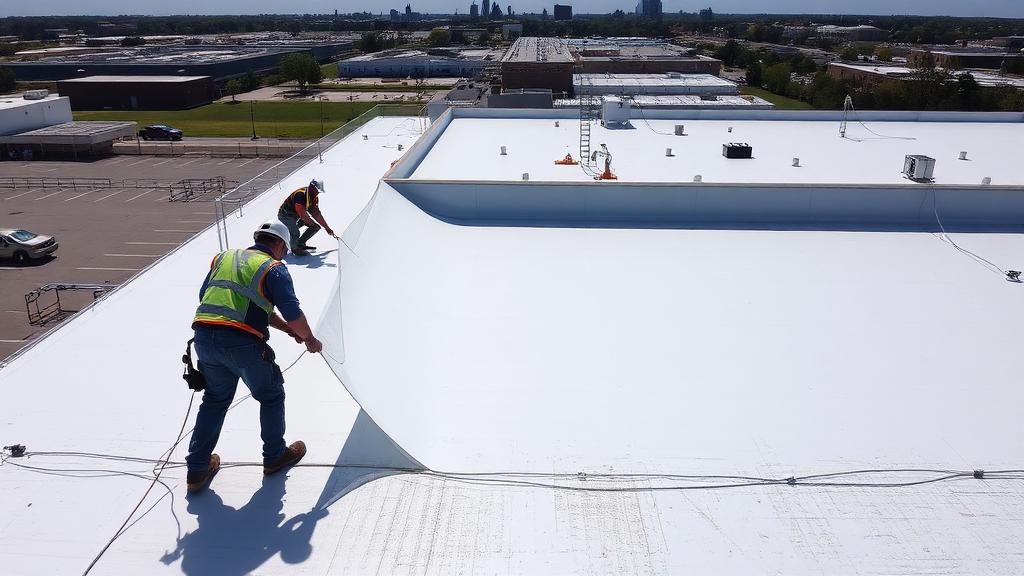
TPO: Heat-Welded Seams - Seams are fused together using hot air, creating a bond that's actually stronger than the membrane itself - Heat-welded seams are permanent and don't degrade over time - Can be tested immediately after welding to verify bond strength - Require specialized equipment and trained installers
EPDM: Adhesive/Tape Seams - Seams are bonded using adhesive or specialized tape - Adhesive strength can diminish over decades, especially with thermal cycling - Seam failures are the most common source of EPDM roof leaks - Easier to install but require precise preparation for maximum adhesion
Winner: TPO (heat-welded seams are objectively superior in long-term reliability)
Repair and Maintenance Comparison
TPO Repairs - Small punctures can be patched with TPO membrane scraps and a heat welder - Seam repairs are straightforward with heat welding - Requires equipment and training for proper repair - Finding compatible repair materials is easy (widely available)
EPDM Repairs - Patches applied with adhesive or tape—simpler process - No specialized equipment needed for basic repairs - Self-adhesive repair patches available at hardware stores - Easier for building maintenance staff to handle minor repairs
Winner: EPDM (easier repairs, especially for building owners who handle their own maintenance)
Indianapolis Building Code Requirements
Both TPO and EPDM installations in Indianapolis must comply with:
- Indiana Building Code: All commercial roofing projects require building permits from the Indianapolis Department of Business and Neighborhood Services
- Energy code compliance: Commercial buildings must meet ASHRAE 90.1 energy standards, which may favor reflective TPO in certain applications
- Fire rating: Both materials are available in Class A fire-rated configurations
- Wind uplift: FM Global or UL ratings must meet local wind design requirements
- Insulation requirements: Minimum R-values must be maintained regardless of membrane choice
Making the Decision for Indianapolis Properties
Choose TPO if: - Energy efficiency and cooling costs are a priority - You want the strongest possible seam technology - The building has significant sun exposure - You're looking for maximum long-term value - Your building houses temperature-sensitive operations
Choose EPDM if: - Budget is the primary consideration - The roof has complex geometry requiring flexible material - Ease of future repairs is important - The building is in a heavily shaded area (where reflectivity matters less) - You prefer the longest proven track record in cold climates
Finding Qualified Indianapolis Commercial Roofers
Commercial flat roofing requires specialized expertise. Look for: - Indiana commercial roofing contractor license - Manufacturer certification for your chosen membrane (GAF, Carlisle, Firestone, Johns Manville) - Minimum 10 years of flat roof experience in the Indianapolis market - Portfolio of completed commercial projects - Workers' compensation and commercial liability insurance
Find certified commercial roofing contractors in Indianapolis with expertise in both TPO and EPDM installations.
Conclusion
Both TPO and EPDM are excellent choices for Indianapolis commercial and flat-roof properties. TPO offers superior energy efficiency and seam technology, while EPDM provides proven cold-weather performance and easier maintenance. Your choice should depend on your specific building needs, budget, and long-term priorities.
Get free commercial roofing estimates from Indianapolis contractors to compare options for your property.