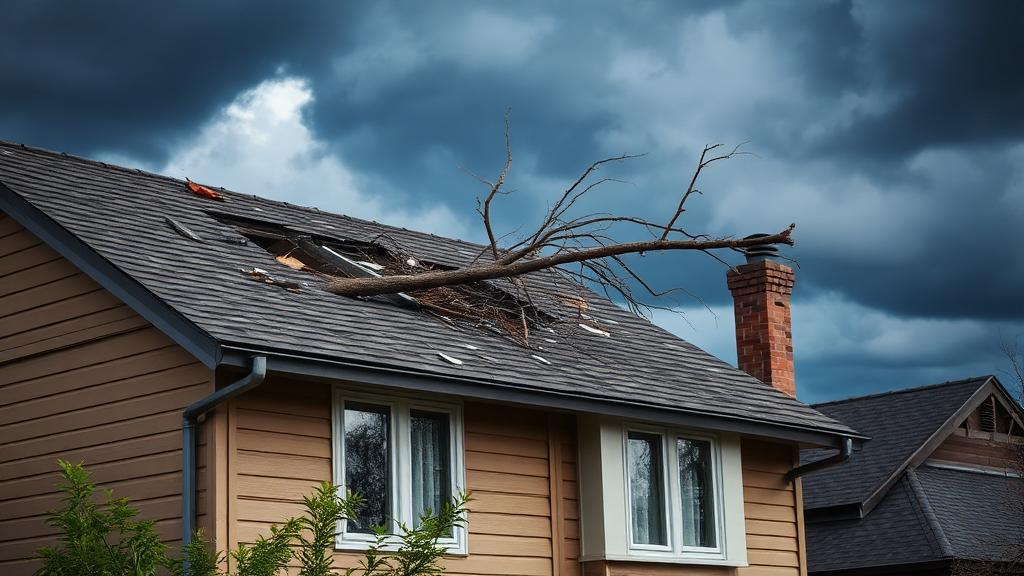
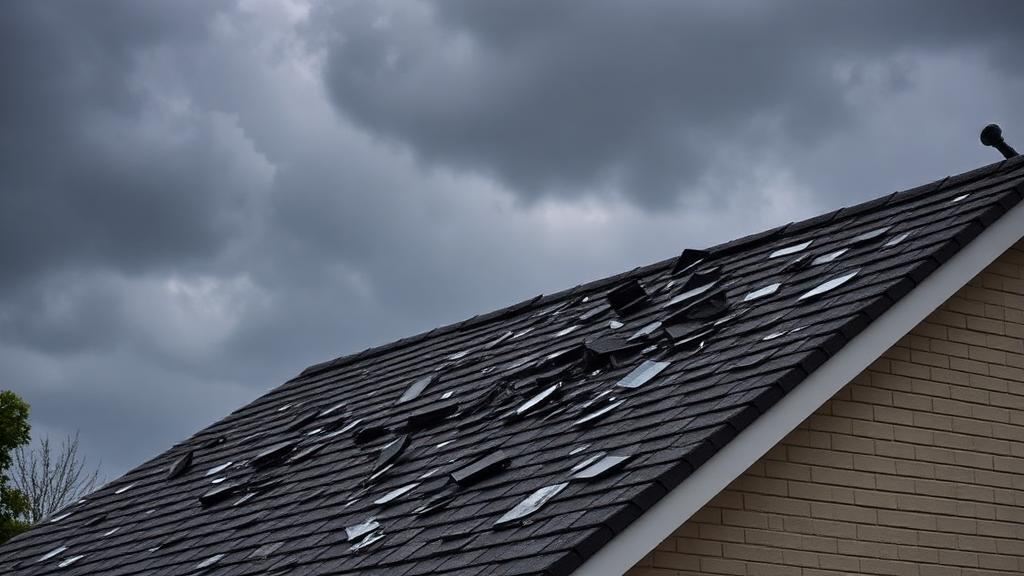
Wind Damage vs. Hail Damage: How to Identify and Differentiate Roof Storm Damage
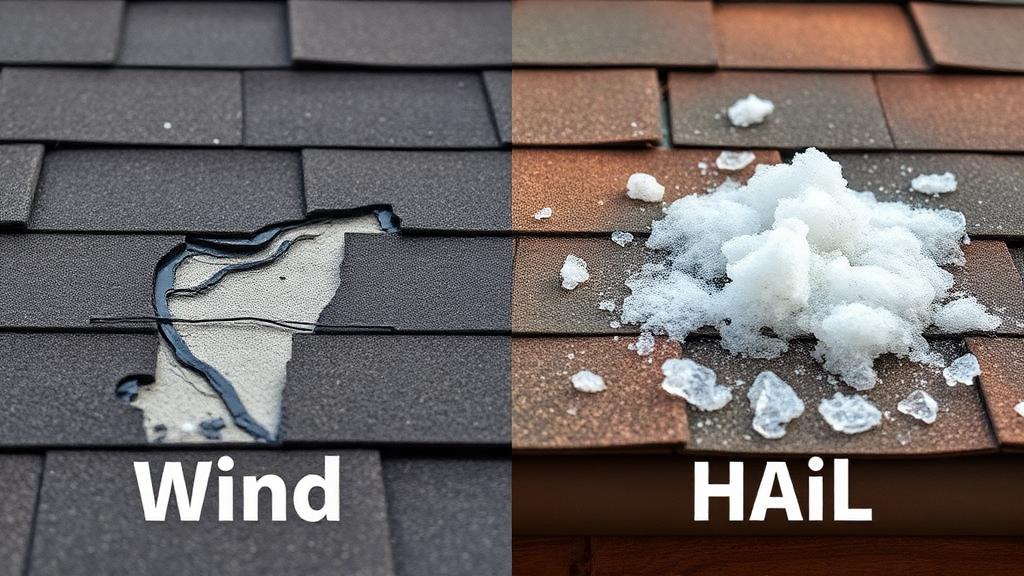
After a severe storm, homeowners often wonder whether their roof sustained wind damage, hail damage, or both. Correctly identifying the type of storm damage matters significantly—it affects your insurance claim filing, the repair approach needed, and even your policy coverage. This comprehensive guide teaches you how to recognize and differentiate between wind and hail damage to your roof.
Why Identification Matters
Insurance policies often treat wind and hail damage differently. Some policies have separate deductibles for each, while others may have different coverage limits. Accurate identification ensures you:
- File claims under the correct coverage category
- Receive appropriate compensation for actual damage
- Understand the repair or replacement needs
- Avoid claim denials due to misidentification
Coverage Implications:
| Policy Element | Wind Damage | Hail Damage |
|---|---|---|
| Deductible type | Often percentage-based | May be separate or standard |
| Coverage limits | Generally full dwelling | Varies by policy |
| Documentation needs | Damage pattern evidence | Impact evidence |
| Dispute frequency | Lower | Higher due to subtle damage |
Understanding your specific policy provisions before filing helps you document appropriately for your coverage type.
Characteristics of Wind Damage
Wind damage results from the aerodynamic forces that storms generate. Understanding how wind affects roofing materials helps you recognize the damage patterns it creates.
How Wind Damages Roofs:
Wind doesn't apply uniform pressure across a roof. Instead, it creates:
- Uplift forces - Especially at edges and corners
- Pressure differentials - Between exterior and interior surfaces
- Vortices - Spinning wind patterns at roof edges
- Flying debris - Branches, furniture, and other projectiles
These forces affect roofs differently depending on wind speed, direction, and duration.
Visual Signs of Wind Damage:
Lifted or Missing Shingles:: Wind catches shingle edges, especially where seal strips have weakened. Look for: - Shingles completely torn away - Shingles flipped over or folded back - Visible nail heads where shingles released - Exposed underlayment or roof deck
Creased or Curved Shingles:: Wind stress creates distinctive bending patterns: - Horizontal crease lines across shingle faces - Curved or cupped shingle edges - Shingles that no longer lie flat - Visible stress marks from repeated flexing
Edge and Corner Damage:: Wind forces are strongest at roof edges: - Hip and ridge caps blown off - Perimeter shingles more damaged than center - Starter strip failure at eaves - Flashing pulled away from edges
Debris Impact Damage:: Wind-driven debris creates distinct damage: - Punctures or tears from branch impact - Directional damage patterns - Damage concentrated on windward side - Scattered damage rather than uniform patterns
Characteristics of Hail Damage
Hail damage results from ice striking roofing materials at high velocity. The appearance differs significantly from wind damage.
How Hail Damages Roofs:
Hail damage severity depends on: - Stone size (from pea-sized to softball-sized) - Impact velocity (terminal velocity varies by size) - Roofing material type - Roof slope and hail approach angle - Whether hail hit directly or glancing
Visual Signs of Hail Damage on Asphalt Shingles:
Granule Loss:: The most common hail damage indicator: - Random pattern of exposed black asphalt spots - Dark or shiny areas where granules dislodged - Accumulation of granules in gutters and downspouts - Soft spots where mat is damaged beneath
Impact Marks:: Distinct bruising from hail strikes: - Circular or irregular depressions - Random pattern across roof surface - Similar size impacts scattered throughout - Damaged areas feel soft when pressed
Fractured Shingles:: Larger hail creates visible breaks: - Star-shaped or circular cracks - Exposed fiberglass mat - Splits that follow impact perimeters - Multiple fractures in concentrated areas
Collateral Damage Indicators:
| Surface Type | Hail Damage Appearance |
|---|---|
| Metal vents/flashing | Dents and dings |
| Gutters | Dented channels |
| Siding | Chipped paint, dents |
| AC condenser | Bent fins, dents |
| Vehicles | Random denting pattern |
| Soft metals | Pockmarked surface |
Comparing Wind and Hail Damage Patterns
Side-by-side comparison helps distinguish between damage types when both may be present.
Pattern Differences:
| Characteristic | Wind Damage | Hail Damage |
|---|---|---|
| Distribution | Often edge-concentrated | Random across surface |
| Direction | Aligned with wind direction | Multi-directional |
| Damage type | Tearing, lifting, folding | Impact, bruising, cracking |
| Location on shingle | Edges, tabs | Random on face |
| Surrounding damage | Directional debris patterns | Similar damage on all exposures |
| Repetition | Similar damage areas | Similar size impacts |
Material-Specific Differences:
Different roofing materials show distinct wind versus hail damage patterns.
Asphalt Shingles:: - Wind: Lifted edges, torn tabs, missing sections - Hail: Granule loss circles, soft spots, fractures
Metal Roofing:: - Wind: Lifted panels, pulled fasteners, seam separation - Hail: Surface dents, cosmetic dimpling, functional damage rare
Tile Roofing:: - Wind: Broken tiles, lifted edges, underlayment exposure - Hail: Cracked or broken tiles, impact fractures
Wood Shakes:: - Wind: Splits along grain, lifted edges, missing shakes - Hail: Dents, orange-colored impact marks, splits
Damage Assessment Techniques
Professional inspectors use specific techniques to accurately identify damage types.
Testing Methods for Hail Damage:
The Press Test:: Gently pressing on suspected hail damage areas reveals subsurface damage: - Hail-damaged areas feel soft or spongy - The underlying mat is compromised - Undamaged areas remain firm
The Visual Circle Test:: Hail damage creates roughly circular impact marks: - Look for uniform size impacts - Check for random distribution - Confirm pattern consistency across roof
Distinguishing from Other Damage:
Not all roof damage comes from storms. Recognize these differences:
Manufacturing Defects vs. Hail:: - Defects follow patterns in production runs - Hail creates random distribution - Defects usually uniform in appearance - Hail varies slightly in impact intensity
Foot Traffic Damage vs. Hail:: - Foot traffic concentrates in paths - Hail is randomly distributed - Walking creates directional damage - Hail creates multi-directional impacts
Normal Wear vs. Wind Damage:: - Wear is gradual and uniform - Wind damage shows sudden onset patterns - Wear affects entire roof surface - Wind damage concentrates at vulnerable points
Documentation for Each Damage Type
Proper documentation differs based on damage type.
Documenting Wind Damage:
Focus on: - Direction of damage patterns - Relationship to roof edges and corners - Debris that caused additional damage - Weather reports confirming wind event - Photos showing shingle lifting or displacement
Documenting Hail Damage:
Focus on: - Random impact pattern across roof - Consistent size of damage marks - Collateral damage to other surfaces - Weather service hail reports - Preserved hailstones if possible
Evidence That Supports Both Claims:
- Timestamped photos before and after
- Professional inspection reports
- Weather service storm data
- Damage to surrounding properties
- News coverage of storm event
Insurance Claim Considerations
Understanding how insurers evaluate each damage type helps you prepare stronger claims.
How Adjusters Assess Wind Damage:
Insurance adjusters evaluating wind damage typically: - Confirm storm occurrence through weather data - Look for directional damage patterns - Assess pre-existing vs. storm-caused damage - Evaluate repair vs. replacement needs - Check for previous repairs or maintenance issues
How Adjusters Assess Hail Damage:
Hail damage assessment includes: - Verification of hail event in your area - Random sampling across roof surface - Measurement of impact size and density - Determination of functional vs. cosmetic damage - Evaluation of remaining useful life
Common Claim Disputes:
| Dispute Type | Wind Damage | Hail Damage |
|---|---|---|
| Pre-existing damage | Was shingle already loose? | Was granule loss from aging? |
| Cause of damage | Wind vs. installation failure | Hail vs. manufacturing defect |
| Repair scope | Replace section vs. full roof | Functional vs. cosmetic criteria |
| Settlement amount | Labor and material costs | Depreciation considerations |
Professional Assessment Importance
For accurate damage identification, professional inspection is essential.
What Professionals Identify:
Trained inspectors recognize: - Subtle damage invisible to untrained eyes - Differences between storm and pre-existing damage - Damage that may worsen over time - Code compliance requirements for repairs - Industry standards for assessment
Choosing an Inspector:
For storm damage assessment, look for: - Licensed roofing contractors with insurance - Certifications in storm damage assessment (HAAG certification) - Experience with your roofing material type - Knowledge of local building codes - Willingness to provide detailed written reports
Red Flags in Assessments:
Be wary of inspectors who: - Identify only one damage type when both occurred - Exaggerate damage for higher claims - Minimize damage to avoid repairs - Provide verbal-only assessments - Push immediate contract signing
Repair Approaches by Damage Type
Different damage types require different repair strategies.
Wind Damage Repairs:
Typical wind damage repairs include: - Replacing missing shingles with matching materials - Re-sealing lifted shingles - Replacing damaged flashing - Reinforcing edge and corner installations - Addressing underlayment exposure
Hail Damage Repairs:
Hail damage may require: - Full roof replacement if damage is extensive - Section replacement for concentrated damage - Metal component repair or replacement - Gutter and downspout replacement - Assessment of hidden structural damage
When Both Types Are Present:
Many storms produce both wind and hail. In these cases: - Document each damage type separately - Understand how your policy addresses combined damage - Get repair estimates for complete damage scope - Ensure repairs address all damage types
Preventive Measures
Understanding damage types helps you prepare for future storms.
Reducing Wind Damage Risk:
- Install wind-rated shingles (Class D or higher ratings)
- Use proper nailing patterns per manufacturer specs
- Maintain seal strip integrity
- Keep trees trimmed away from roof
- Consider hurricane straps in high-wind regions
Reducing Hail Damage Risk:
- Choose impact-resistant roofing materials (Class 4)
- Consider metal roofing in hail-prone areas
- Install protective screens over skylights
- Maintain good roof condition for resilience
- Review insurance for hail-specific coverage
[Choosing the right roofing materials](/blog/choosing-roofing-materials-for-your-climate) for your region significantly reduces storm damage risk.
Conclusion
Accurately identifying whether your roof sustained wind damage, hail damage, or both is essential for proper insurance claims, appropriate repairs, and future protection. Understanding the distinct characteristics of each damage type empowers you to:
- Document appropriately - Focus on evidence that supports your specific damage type
- File correctly - Ensure claims match your policy coverage
- Verify assessments - Confirm professional findings align with damage characteristics
- Repair completely - Address all damage types present
- Prepare better - Make informed decisions about materials and maintenance
When in doubt, professional assessment by certified storm damage inspectors provides definitive identification. The investment in proper evaluation protects your claim outcome and ensures your roof receives the repairs it needs. Find qualified roofing professionals in your area who specialize in storm damage assessment and repair.