Solar Roofing for Commercial Buildings: Integration, Benefits, and ROI Analysis
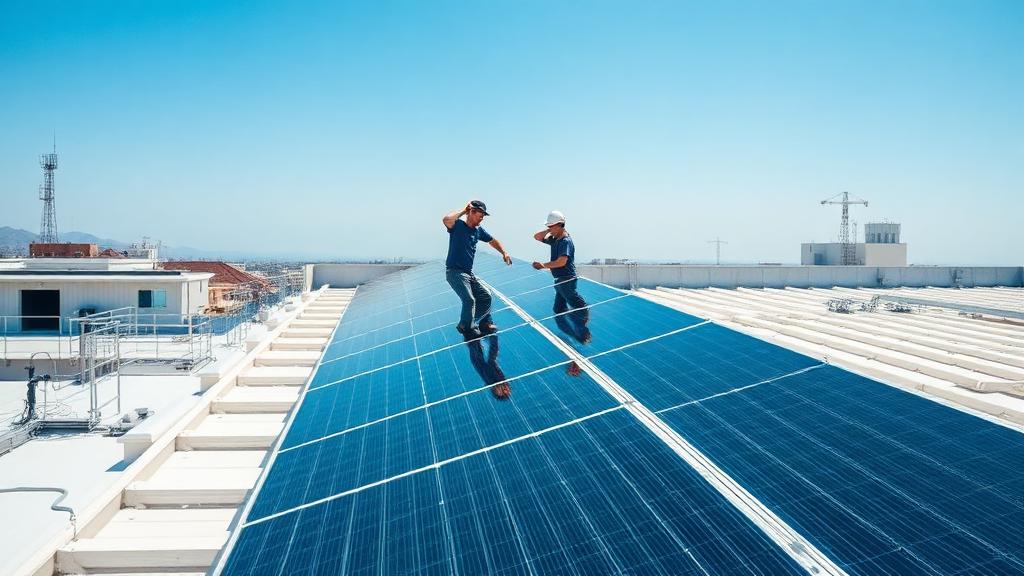
Solar energy integration on commercial rooftops represents one of the most significant opportunities for building owners to reduce operating costs while demonstrating environmental responsibility. Commercial roofs offer ideal platforms for solar installations with large, unshaded surface areas and proximity to electrical demand. This comprehensive guide explores commercial solar roofing integration from planning through implementation and ongoing management.
The Commercial Solar Opportunity
Commercial buildings consume approximately 35% of electricity in the United States, representing both significant cost and substantial opportunity. Rooftop solar can offset meaningful portions of this consumption while providing additional benefits beyond direct energy savings.
Solar Benefits for Commercial Buildings:
Energy Cost Reduction:: Direct electricity generation reduces utility purchases. Depending on system size, building consumption, and utility rates, commercial solar can offset 20-100% of building electricity needs.
Demand Charge Reduction:: Solar production during peak daytime hours reduces demand charges that comprise significant portions of commercial electric bills. This benefit often exceeds energy charge savings.
Energy Price Stability:: Solar provides predictable energy costs for the system lifespan (typically 25-30 years), hedging against utility rate increases. This stability improves financial planning accuracy.
Sustainability Credentials:: Solar demonstrates environmental commitment to employees, customers, and stakeholders. This visibility supports marketing efforts and employee recruitment.
Property Value Enhancement:: Solar installations typically increase property values. Buildings with solar command premium sale prices and lease rates in many markets.
Roof Compatibility Assessment
Not every commercial roof is suitable for solar installation. Understanding compatibility factors helps identify good candidates and avoid problematic installations.
Structural Capacity
Solar panels, mounting systems, and associated equipment add weight that structures must support.
Weight Considerations:: - Solar panels: 2.5-4 lbs per square foot - Mounting systems: 1-3 lbs per square foot - Ballast (if used): 5-15 lbs per square foot - Snow loads: Additional weight in cold climates
Many commercial buildings have sufficient capacity for solar without reinforcement. Buildings designed to minimal standards may require structural evaluation and possible upgrades.
Roof Condition and Age
Installing solar on roofs nearing replacement creates complications when the underlying roof eventually needs attention.
Roof Condition Guidelines:: - New or recently replaced: Ideal solar candidates - Mid-life with good condition: Acceptable with careful planning - Nearing end of life: Replace roof before solar installation - Damaged or leaking: Address roof issues first
Installing solar on aging roofs often leads to expensive complications. When roof replacement becomes necessary, solar systems must be removed and reinstalled at significant cost.
Roof Type Compatibility
Different commercial roofing systems present varying solar installation challenges and opportunities.
Flat Roofs (TPO, EPDM, PVC, BUR):: Flat roof systems are the most common commercial solar platforms. Mounting options include: - Ballasted systems: No roof penetrations; relies on weight - Attached systems: Fastened through membrane to deck - Hybrid systems: Limited attachment with reduced ballast
Metal Roofs:: Commercial metal roofs offer excellent solar mounting options: - Standing seam: Clamps attach to seams without penetrations - Corrugated/R-panel: S-5 and similar clamps attach to ribs - Direct attach: Fastens through metal with appropriate sealants
Built-Up and Modified Bitumen:: BUR systems can support solar but require careful flashing at any penetrations. Ballasted systems avoid penetration concerns.
Orientation and Shading
Solar production depends on sun exposure. Roof characteristics affect energy generation potential.
Orientation Factors:: - South-facing sections maximize production - East/west orientations produce 15-20% less than south - Flat roofs can position panels toward any direction - Rooftop equipment may create shading
Shading Evaluation:: - Adjacent buildings can create seasonal shading - Rooftop equipment shadows reduce production - Parapet walls may shade morning/afternoon hours - Trees that grow can create future shading
Solar installers use sophisticated modeling to predict production based on site-specific conditions. Accurate production estimates are essential for financial projections.
Solar Mounting Systems
Mounting systems secure panels to roofs while maintaining waterproofing integrity.
Ballasted Systems
Ballasted mounting uses weight to hold panels in place without roof penetrations. This approach protects roof warranties and simplifies installation.
Ballasted System Features:: - No penetrations through roofing membrane - Weight holds system in place - Easy to remove for roof maintenance - Higher weight requirements (15-25 lbs/sf total)
Ballasted systems work best on flat roofs with adequate structural capacity. Wind engineering determines required weight based on building location and height.
Attached Systems
Attached mounting fastens directly to the roof deck through the roofing membrane. Proper flashing maintains waterproofing.
Attached System Features:: - Lower total weight than ballasted - More secure in high-wind areas - Requires proper flashing at each attachment - May affect roof warranty
Attached systems are necessary for sloped roofs and may be preferred for high-wind locations. Coordinate with roofing manufacturers to maintain warranty coverage.
Integrated Systems
Integrated solar replaces conventional roofing materials, serving as both roof covering and power generator.
Integrated Options:: - Building-integrated photovoltaics (BIPV) - Solar metal roofing panels - Solar membrane systems
Integrated systems are most practical for new construction where they can be designed into the project from inception.
Financial Analysis
Commercial solar financial analysis requires understanding multiple value streams and incentive programs.
Energy Value
Direct energy production creates the primary value stream for commercial solar.
Energy Calculation:: - Annual production: kWh generated based on system size and location - Energy value: Production multiplied by utility rate - Demand reduction: Peak shaving value often significant - Rate escalation: Future rate increases compound savings
Financial Incentives
Government incentives significantly improve commercial solar economics.
Federal Investment Tax Credit (ITC):: The federal ITC provides tax credits equal to a percentage of solar installation costs. Current rates and future phase-downs affect project timing decisions.
Depreciation Benefits:: Commercial solar qualifies for accelerated depreciation under MACRS, providing tax benefits in early years. Bonus depreciation may allow first-year writeoff of additional amounts.
State and Local Incentives:: Many states offer additional incentives including: - State tax credits - Production incentives - Renewable energy certificates - Property tax exemptions - Expedited permitting
Utility Incentives:: Some utilities offer solar incentives or favorable rate structures for solar customers. Net metering allows excess production to offset consumption in other periods.
Ownership Options
Commercial solar can be owned outright or acquired through various financing arrangements.
Direct Ownership:: - Building owner purchases system outright - Captures all incentives and savings - Requires capital investment - Highest long-term returns
Solar Lease:: - Third party owns and maintains system - Building owner pays monthly lease - Lower or no upfront cost - Savings from day one, but reduced long-term benefit
Power Purchase Agreement (PPA):: - Third party owns system - Building owner purchases power at agreed rate - No upfront cost - Locked-in power price (typically below utility rate)
ROI Analysis
Commercial solar typically delivers 10-25% internal rates of return depending on utility rates, incentives, and system costs.
Analysis Factors:: - System cost after incentives - Annual energy production value - Demand charge reduction value - Incentive values - Financing costs (if applicable) - Maintenance costs - System degradation over time
Professional solar analysis provides detailed projections based on site-specific factors. Compare multiple proposals to ensure competitive pricing.
Installation Process
Commercial solar installation requires coordination between solar installers, roofing professionals, and electrical contractors.
Pre-Installation
Planning Steps:: 1. Site assessment and production modeling 2. Structural evaluation 3. Electrical infrastructure evaluation 4. Utility interconnection application 5. Permit application 6. Final design and engineering
Installation
Installation Sequence:: 1. Mobilize equipment and materials 2. Install mounting system 3. Install panels on mounting 4. Install electrical systems (inverters, wiring, disconnects) 5. Complete utility interconnection 6. Inspection and commissioning 7. System activation
Installation duration varies with system size. Small systems may complete in days; large installations require weeks.
Roof Protection
Protecting the roof during installation is essential.
Protection Measures:: - Limit rooftop traffic - Use walkway protection - Avoid material staging on membrane - Coordinate with roofing professionals - Inspect roof before and after installation
Document roof condition before solar installation. This documentation protects building owners if questions arise about damage responsibility.
Ongoing Management
Solar systems require minimal maintenance but do need attention for optimal performance.
Monitoring
Modern solar systems include monitoring that tracks production and identifies problems.
Monitoring Benefits:: - Verify actual vs. projected production - Identify underperforming components - Detect failures requiring repair - Document production for reporting
Maintenance
Regular maintenance ensures continued production.
Maintenance Tasks:: - Panel cleaning (frequency depends on location) - Inverter inspection and firmware updates - Mounting system inspection - Electrical connection inspection - Roof coordination for roof maintenance
Roof Coordination
Solar installations complicate roof maintenance and eventual replacement.
Coordination Requirements:: - Access for roof inspections - Panel removal for roof repairs - Planning for roof replacement - Documentation of responsibilities
Establish clear protocols for roof-solar coordination during installation. Written agreements prevent disputes later.
Working with Solar Professionals
Solar installation requires specialized expertise.
Contractor Selection:: - Commercial solar experience - Relevant licenses and certifications - Insurance coverage - References from commercial projects - Understanding of roofing coordination
Find qualified commercial contractors experienced in solar-roof integration. Proper coordination protects both investments.
Conclusion
Commercial solar integration offers compelling financial returns while demonstrating environmental responsibility. Success requires careful evaluation of roof compatibility, accurate financial analysis, quality installation, and ongoing management. For buildings with suitable characteristics, solar represents one of the best investments available to commercial building owners.