Tree Damage to Your Roof: Complete Assessment and Repair Guide
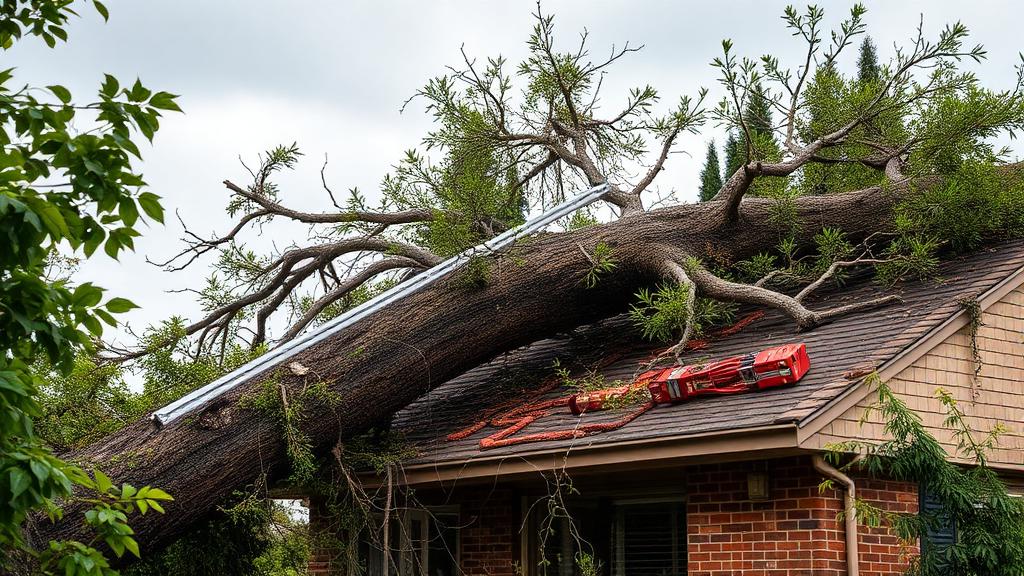
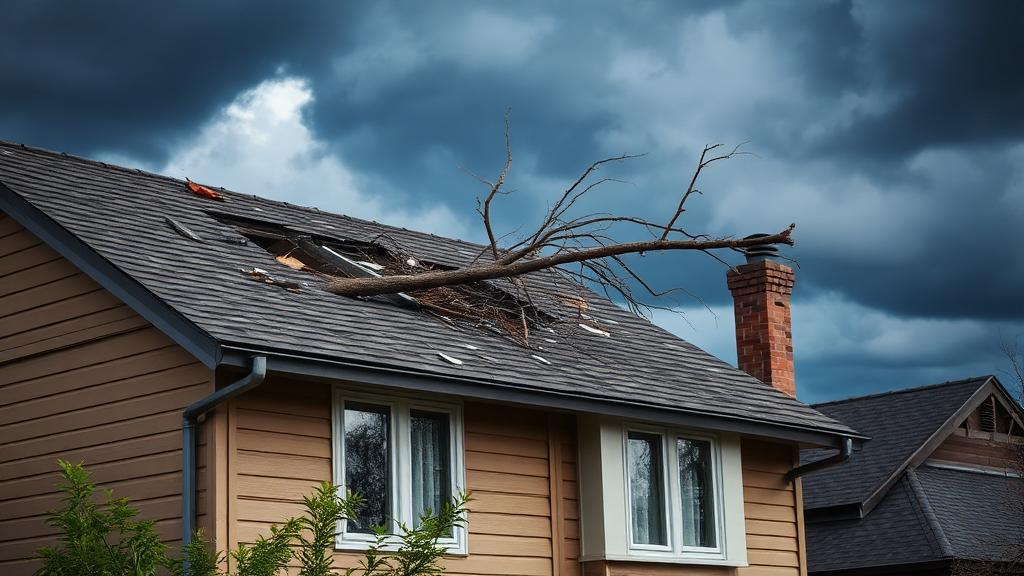
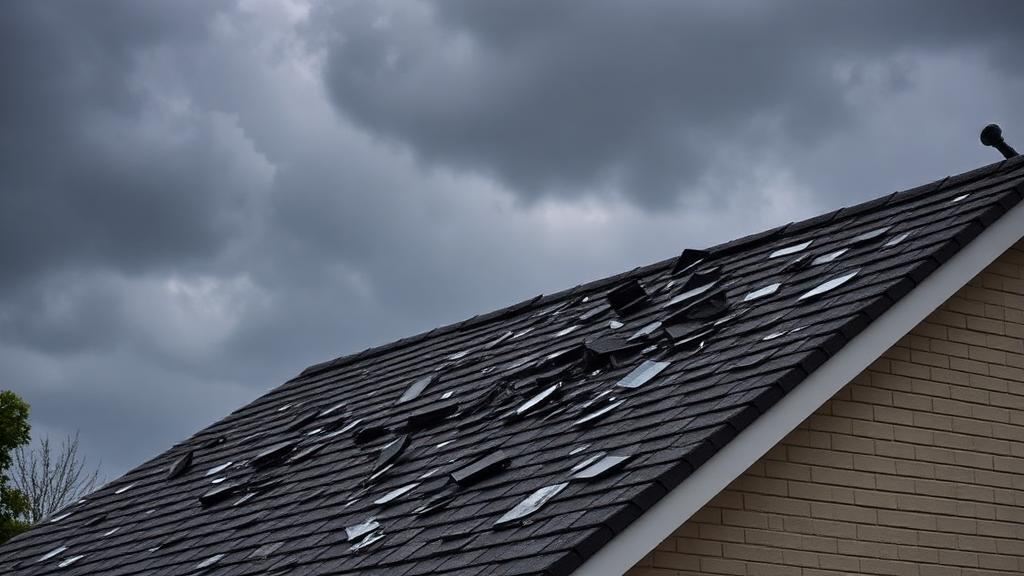
Fallen trees and large branches represent one of the most dramatic and potentially dangerous forms of roof damage. Whether from hurricane-force winds, ice storms, or unexpected tree failure, the aftermath of tree damage requires immediate action to ensure safety, prevent additional damage, and begin the recovery process. This comprehensive guide walks you through every step from initial assessment to complete restoration.
Immediate Safety Response
When a tree strikes your home, safety takes absolute priority over all other considerations.
Emergency Actions:
- Evacuate if necessary - If significant structural damage is visible or you hear creaking/settling sounds, leave immediately
- Call 911 - If anyone is injured or if power lines are involved
- Contact utilities - Report downed power lines, gas leaks, or water main damage
- Establish safe perimeter - Keep family, pets, and neighbors away from the damage zone
Power Line Hazards:
Trees often bring down power lines. Critical safety rules: - Assume ALL downed wires are live and deadly - Stay at least 35 feet away from downed lines - Don't touch anything in contact with lines (tree, fence, car) - Wait for utility company confirmation before approaching
Structural Stability Assessment:
Before entering or approaching the structure, look for: - Visible roof sagging or collapse - Wall cracks or separation - Doors/windows out of square - Foundation stress indicators - Ongoing movement or settling sounds
When to Call Emergency Services:
| Situation | Response |
|---|---|
| Any injuries | 911 immediately |
| Power lines down | Electric utility emergency line |
| Gas odor | Gas company emergency, evacuate |
| Major structural damage | Building inspector required |
| Tree still falling/shifting | Professional removal required |
Understanding Tree Damage Severity
Tree damage varies dramatically based on tree size, impact location, and existing roof condition.
Damage Categories:
Minor Damage:: - Small branches (<4" diameter) - Shingle and gutter damage only - No structural penetration - Cosmetic damage to fascia/soffits
Moderate Damage:: - Medium branches (4-12" diameter) - Localized penetration of roof deck - Damage to multiple roofing components - Some interior water damage
Major Damage:: - Large limbs or tree trunk impact - Significant structural penetration - Multiple rooms affected - Possible wall/ceiling collapse
Catastrophic Damage:: - Full tree on structure - Major structural failure - Significant portion of roof destroyed - House may be uninhabitable
Factors Affecting Damage Extent:
| Factor | Impact on Damage |
|---|---|
| Tree species | Hardwoods cause more damage than softwoods |
| Impact location | Ridges stronger than mid-spans |
| Roof age | Newer roofs may withstand impact better |
| Fall angle | Direct impact worse than glancing |
| Roof pitch | Steeper roofs may deflect some force |
Documentation for Insurance Claims
Before any cleanup or repairs, thorough documentation protects your insurance claim.
Immediate Photography:
Capture comprehensive images of: - Overall scene from multiple angles - The tree and its apparent failure point (stump/break) - All visible roof damage - Damage to other structures (vehicles, fencing, landscape) - Interior damage visible from safe locations - Any identifying information about the tree
Video Documentation:
Walk-around video provides context: - Narrate what you're seeing - Include date and time verbally - Show relationship of tree to damage - Document active leaks or ongoing issues
Written Records:
Create contemporaneous notes about: - Date and time of incident - Weather conditions - When you discovered the damage - All emergency services contacted - Neighbor witnesses - Any prior concerns about the tree
Evidence Preservation:
Do not remove or dispose of: - The tree or branches (until adjuster inspects) - Damaged roofing materials - Damaged personal property - Any items that show cause or extent of damage
Emergency Protective Measures
Once safety is established and documentation complete, preventing additional damage becomes priority.
Immediate Tarping:
Emergency tarping prevents water intrusion: - Cover exposed areas before rain - Use heavy-duty tarps secured to solid roof areas - Ensure water sheds away from damage - Document tarping as mitigation effort
Tree Stabilization vs. Removal:
Depending on the situation:
Leave tree in place if:: - Removal might cause additional damage - Professional equipment is required - Insurance adjuster hasn't inspected - Tree is providing some weather protection
Remove carefully if:: - Ongoing movement threatens additional damage - Emergency services require access - Immediate safety hazards exist - Professional arborist is available
Interior Protection:
Protect interior spaces by: - Moving belongings from affected areas - Placing containers under active leaks - Covering floors with plastic sheeting - Cutting power to affected areas if wet - Running dehumidifiers if safe to do so
Professional Assessments Required
Tree damage typically requires multiple professional evaluations.
Structural Engineer:
Major damage often needs structural assessment: - Evaluates load-bearing member integrity - Assesses foundation impact - Determines if structure is safe to occupy - Provides documentation for insurance - May be required for permits
Roofing Contractor:
Professional roofers assess: - Full extent of roofing system damage - Deck integrity beyond visible damage - Flashing and ventilation component damage - Repair vs. replacement recommendations - Code compliance requirements
Arborist/Tree Service:
Professional tree evaluation provides: - Safe tree removal planning - Assessment of remaining trees' health - Risk evaluation for other trees - Expertise for complex removals - Heavy equipment for large trees
Insurance Adjuster:
Your insurance company will send an adjuster to: - Evaluate damage extent - Determine coverage applicability - Create repair estimates - Identify any policy limitations - Process your claim
Insurance Claim Process
Tree damage claims have specific considerations.
Coverage Basics:
Standard homeowner's policies typically cover: - Damage to the dwelling from fallen trees - Removal of trees that damage covered structures - Additional living expenses if displaced
Common Coverage Limits:
| Coverage Element | Typical Provision |
|---|---|
| Dwelling damage | Full coverage to policy limits |
| Tree removal (from structure) | Usually covered up to limit |
| Tree removal (from yard only) | Often limited ($500-1,000) |
| Debris cleanup | Usually included |
| Temporary repairs | Covered as mitigation |
Questions to Ask Your Insurer:
Before repairs begin, clarify: - Total coverage limits applicable - Deductible amount - Tree removal coverage specifics - Temporary housing coverage if needed - Repair vs. replacement criteria - Contractor payment procedures
Documentation to Submit:
Prepare comprehensive claim documentation: - Completed claim forms - All photos and videos - Written damage inventory - Contractor estimates (multiple if possible) - Receipts for emergency expenses - Professional assessment reports
Repair Process and Timeline
Tree damage repairs follow a logical sequence.
Phase 1: Emergency Stabilization (Days 1-7)
- Secure the structure from further damage
- Professional tree removal
- Initial tarping and water mitigation
- Utility restoration if interrupted
- Structural stabilization if needed
Phase 2: Assessment and Planning (Weeks 1-3)
- Complete damage assessment
- Structural engineer report (if needed)
- Insurance adjuster inspection
- Contractor estimates and selection
- Permit applications submitted
Phase 3: Structural Repairs (Weeks 3-8)
- Remove damaged structural members
- Install new rafters, trusses, decking
- Repair any wall or ceiling framing
- Electrical and HVAC repairs
- Framing inspection
Phase 4: Exterior Restoration (Weeks 6-12)
- Install new roof decking and underlayment
- Apply new roofing materials
- Replace flashing and accessories
- Gutter and fascia installation
- Exterior finish work
Phase 5: Interior Restoration (Weeks 8-16)
- Insulation replacement
- Drywall installation and finishing
- Painting and trim work
- Flooring restoration
- Final inspections and punch list
Timeline Variables:
Actual repair timelines depend on: - Damage extent - Material availability - Contractor scheduling - Permit processing - Weather conditions - Insurance approval timing
Contractor Selection
Choose contractors carefully for tree damage repairs.
Qualifications to Verify:
- Proper licensing for your state/locality
- Adequate liability insurance
- Workers' compensation coverage
- Roofing manufacturer certifications
- References from similar projects
- Experience with insurance claims
Warning Signs to Avoid:
- Storm chasers appearing immediately after damage
- Pressure to sign contracts quickly
- Requests for large upfront payments
- Unwillingness to provide written estimates
- No local business address
- Offers to pay your deductible
Contract Essentials:
Your repair contract should include: - Detailed scope of work - Materials specifications - Timeline with milestones - Payment schedule tied to progress - Warranty information - Permit responsibility clarification - Insurance claim coordination details
Preventing Future Tree Damage
After repairs, take steps to reduce future risk.
Tree Assessment:
Have remaining trees professionally evaluated: - Structural integrity - Root health - Disease or pest issues - Lean or balance problems - Proximity to structures
Mitigation Strategies:
| Risk Factor | Mitigation Action |
|---|---|
| Overhanging branches | Trim to safe distance (10+ feet) |
| Dead or dying trees | Remove before failure |
| Diseased trees | Treat or remove |
| Leaning trees | Professional assessment |
| Shallow root systems | Consider removal in storm paths |
Ongoing Maintenance:
Regular tree care reduces storm damage risk: - Annual inspection by certified arborist - Prompt removal of dead branches - Professional pruning for structure - Storm preparation trimming - Health treatments as needed
Special Considerations
Certain situations require additional attention.
Historic Properties:
Older homes may need: - Historic preservation compliance - Specialized restoration contractors - Custom material matching - Additional permitting requirements
HOA Properties:
Homeowner associations may have: - Specific contractor requirements - Approval processes for repairs - Standards for replacement materials - Shared cost considerations for common trees
Neighbor's Trees:
When a neighbor's tree damages your property: - Your insurance typically covers your damage - Negligence claims are possible but difficult - Document any prior concerns about the tree - Local laws vary on liability
Multiple Property Damage:
If one tree damages multiple properties: - Each owner files with their own insurance - Tree removal costs may be shared - Coordinate with neighbors on timing - Consider joint contractor hiring for efficiency
Conclusion
Tree damage to your roof creates a challenging situation requiring careful attention to safety, documentation, and professional repair. Key principles to remember:
- Safety first - Never compromise personal safety for property concerns
- Document thoroughly - Comprehensive records protect your insurance claim
- Act promptly - Quick mitigation prevents additional damage
- Choose professionals carefully - Quality repairs require qualified contractors
- Think prevention - Address tree risks before the next storm
By following this guide, you can navigate the recovery process effectively, restore your home properly, and reduce the risk of future tree damage incidents. Connect with qualified local contractors who have experience with storm damage repair to ensure your home receives the expert attention it needs.