Understanding Roof Warranties: A Complete Guide to Coverage and Claims
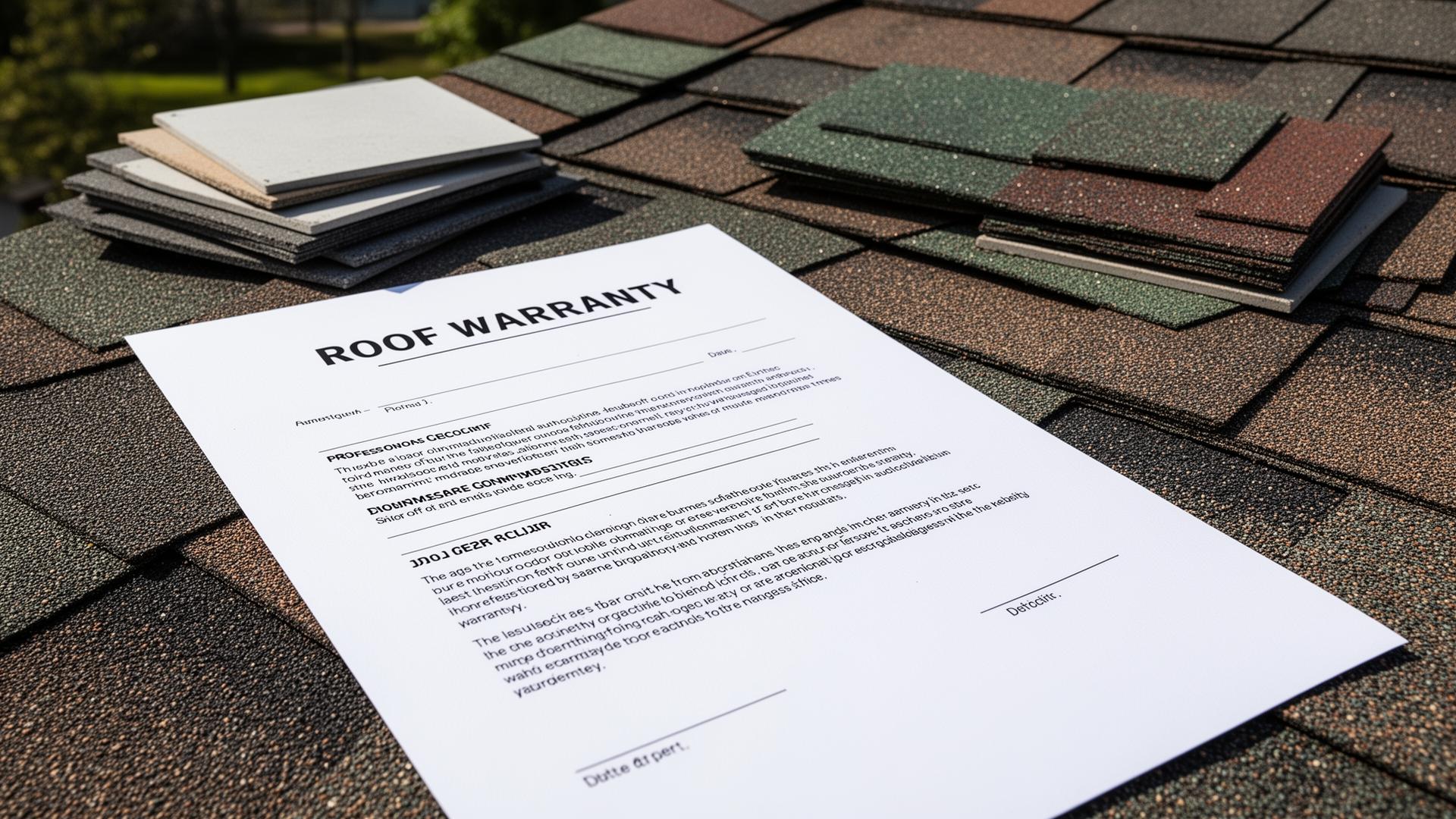
A new roof is a significant investment, and understanding the warranties that protect it is essential for every homeowner. Roof warranties can be complex, with different types of coverage, varying terms, and specific requirements. This guide demystifies roof warranties, helping you maximize your protection and successfully navigate claims when needed.
Types of Roof Warranties
Roofing warranties generally fall into two main categories, each covering different aspects of your roof.
Manufacturer's Material Warranty:: This warranty covers defects in the roofing materials themselves. If shingles deteriorate prematurely, develop manufacturing defects, or fail to perform as specified, the manufacturer provides remedy through repair, replacement, or refund.
Key Characteristics:: - Provided by the material manufacturer (GAF, Owens Corning, CertainTeed, etc.) - Covers material defects, not installation errors - Length varies from 20 years to "lifetime" - Coverage may be prorated (decreasing over time) or non-prorated - Often requires registration and specific installation methods
Workmanship Warranty (Contractor's Warranty):: This warranty covers the quality of installation work. If leaks or problems arise from improper installation—rather than material defects—the installing contractor's warranty provides coverage.
Key Characteristics:: - Provided by the roofing contractor - Covers installation-related issues - Typically 2-10 years, though some offer longer - Only valid if the contractor remains in business - Terms vary significantly between contractors
Understanding Warranty Terms and Limitations
Reading warranty fine print is essential. Terms that sound similar can mean very different things.
Coverage Levels:
- Basic Material Warranty - Entry-level coverage for material defects only. Typically covers materials but not labor for replacement. Common with builder-grade products.
- Standard Warranty - Better coverage including some labor costs. May require certified installer for full benefits.
- Extended or Enhanced Warranty - Premium coverage often including:
- - Non-prorated coverage for longer periods
- - Full labor coverage
- - Transferability to new owners
- - Additional protection features
- System Warranties - Cover multiple roofing components installed together (shingles, underlayment, ventilation, etc.) as a complete system.
Prorated vs. Non-Prorated:
Prorated Warranties:: Coverage decreases over time. For example, a 30-year prorated warranty might cover: - Years 1-10: 100% of material cost - Years 11-20: 50% of material cost - Years 21-30: 25% of material cost
Non-Prorated Warranties:: Full coverage remains constant throughout the warranty period. More valuable but typically more expensive or requiring specific conditions.
What "Lifetime" Really Means:: The term "lifetime" varies by manufacturer: - May mean the expected product lifespan (often 40-50 years) - May mean your lifetime as the original homeowner - May have different terms for original vs. subsequent owners - Always check the specific definition in warranty documents
What Warranties Cover and Exclude
Understanding coverage limitations prevents disappointment when filing claims.
Typically Covered:: - Manufacturing defects in materials - Premature material failure under normal conditions - Specifically listed installation components (if system warranty) - Labor costs (enhanced warranties only)
Common Exclusions:
| Exclusion | Explanation |
|---|---|
| Acts of nature | Hurricanes, tornadoes, hail, wind beyond rated speed |
| Improper installation | Unless contractor warranty covers it |
| Lack of maintenance | Failure to maintain [proper ventilation](/blog/roof-ventilation-guide-homeowners), etc. |
| Roof traffic damage | Foot traffic, equipment, falling objects |
| Structural movement | Settlement, building shifts |
| Unauthorized modifications | Solar panels, HVAC equipment, etc. |
| Environmental factors | Pollution, acid rain, chemical exposure |
| Normal wear | General aging and weathering |
Requirements for Valid Warranty Coverage
Warranties come with strings attached. Failing to meet requirements can void coverage.
Common Requirements:
- Proper Installation - Most manufacturer warranties require installation according to specifications. Shortcuts or deviations can void coverage.
- Certified Installer - Enhanced warranties often require installation by manufacturer-certified contractors. Check certification before hiring.
- Proper Ventilation - Inadequate attic ventilation is one of the most common warranty-voiding conditions.
- Registration - Some warranties require registration within a specific timeframe to activate coverage.
- Maintenance - Regular maintenance, including professional inspections, is often required.
- Prompt Repair - Failing to address known problems can void coverage for resulting damage.
- Documentation - Keep records of installation, maintenance, and inspections.
Protecting Your Warranty:: - Register your warranty promptly if required - Use certified contractors for installation - Document everything with dated photographs - Schedule and document regular maintenance - Address repairs promptly - Keep all paperwork in a safe place
Manufacturer Certification Programs
Major manufacturers offer certification programs for contractors that unlock enhanced warranty options.
GAF Master Elite:: Only 3% of roofers qualify for this top certification. Benefits include: - Golden Pledge Limited Warranty (50 years non-prorated) - WindProven Limited Warranty (up to 130 mph wind coverage) - Extended coverage on workmanship
Owens Corning Platinum Preferred:: Top-tier contractor designation offering: - Platinum Protection Limited Warranty - Lifetime limited warranty on materials - Enhanced workmanship coverage - Labor coverage for specified period
CertainTeed SELECT ShingleMaster:: Premium contractor level providing: - 5-Star Coverage (50-year non-prorated) - SureStart Plus protection - Enhanced workmanship warranty
Why Certification Matters:: - Contractors receive specialized training - They have committed to quality standards - Access to best warranty options available - Accountability through manufacturer relationship
Filing Warranty Claims
When problems occur, following proper procedures ensures smooth claim resolution.
Before Filing:
- Identify the Issue - Determine whether the problem is material-related (manufacturer warranty) or installation-related (contractor warranty).
- Review Your Warranty - Check coverage terms, exclusions, and claim procedures specific to your warranty.
- Document the Problem - Take dated photographs and videos showing the issue clearly.
- Check Maintenance Records - Verify you've met all warranty requirements regarding maintenance.
Filing with the Manufacturer:
- Contact customer service through the warranty documentation
- Provide required information:
- - Proof of purchase/installation
- - Warranty registration number
- - Description and photos of the problem
- - Maintenance records
- Schedule inspection (manufacturer may send representative)
- Await claim decision
- Coordinate repair or replacement if approved
Filing with the Contractor:
- Contact the contractor directly
- Provide documentation of the problem
- Reference your contract and warranty terms
- Allow opportunity for inspection
- Negotiate repair timeline
If Claims Are Denied:
- Request written explanation of denial
- Review warranty terms against their reasoning
- Consider independent inspection for second opinion
- Contact consumer protection agencies if appropriate
- Consult with attorney for significant claims
Transferring Warranties
Warranty transferability adds value when selling your home.
Manufacturer Warranty Transfers:: Most manufacturer warranties are transferable, but terms may change: - Transfer registration often required within 60-90 days of sale - Coverage may reduce for subsequent owners - Transfer fees may apply - Some warranties offer one-time transfer only
Contractor Warranty Transfers:: - Policies vary widely between contractors - Some warranties are original-owner-only - Others transfer automatically or with registration - Get transfer terms in writing before installation
Documentation for Transfer:: Provide new owners with: - Original warranty documents - Proof of installation (contract, permits) - Maintenance records - Any claim history - Transfer instructions and deadlines
Extended Warranties and Roof Protection Plans
Beyond standard warranties, additional protection options exist.
Extended Manufacturer Warranties:: Premium upgrade options from manufacturers providing: - Longer coverage periods - Better non-prorated terms - Additional protections - May require higher-quality installation components
Home Warranty Coverage:: Some home warranty companies include roof coverage: - Usually applies to repairs, not replacement - Often has caps on coverage amounts - May require specific maintenance - Read terms carefully before relying on this coverage
Roof Protection Plans:: Some contractors or third parties offer: - Annual inspection programs - Preferred pricing on repairs - Extended workmanship coverage - Emergency repair priority
Evaluating Additional Protection:: - Calculate total cost over the protection period - Compare to average repair costs - Check claim history and reviews of the provider - Understand exactly what is and isn't covered
Warranty Considerations for Different Roofing Materials
Different materials have different typical warranty structures.
Asphalt Shingles:: Most common warranty type. Look for: - Minimum 30-year coverage for quality shingles - Algae resistance warranty (10-15 years) - Wind coverage (varies by product) - Non-prorated period of at least 10 years
Metal Roofing:: Often has longer warranty periods: - Paint/finish warranty (20-40 years) - Substrate/material warranty (40+ years) - Waterproofing warranty - Specific care requirements for coating
Tile Roofing:: Very long material life with warranties to match: - 50+ years common - May not include freeze-thaw damage in cold climates - Installation warranty critical for tile
Flat Roofing:: Commercial-style warranties: - Full system warranties (NDL - No Dollar Limit) - Often 10-30 years - Usually require manufacturer-approved installation
Protecting Your Investment
Beyond warranties, additional steps protect your roofing investment.
Document Everything:: - Keep installation contract and invoices - Photograph the installation process - Save warranty registration confirmation - Record all maintenance and repairs - Store documents securely (digital backup recommended)
Regular Maintenance:: Following recommended maintenance protects warranty coverage and extends roof life.
Prompt Repairs:: Address issues quickly. Waiting can: - Allow damage to spread - Result in warranty exclusion - Increase repair costs
Professional Inspections:: Regular inspections identify issues while under warranty and document proper maintenance.
Conclusion
Understanding your roof warranty empowers you to protect your investment and successfully obtain coverage when problems occur. Take time to read and understand warranty terms before installation, meet all requirements to maintain coverage, and keep thorough documentation throughout your roof's life.
When selecting a new roof, consider warranty options as a significant factor in your decision. Enhanced warranties from certified contractors provide valuable protection that can save thousands of dollars if problems arise. Your roof protects your home—make sure your warranty protects your roof.