Can You Put Solar Panels on a Metal Roof? Complete Installation Guide (2026)
Yes, you absolutely can put solar panels on a metal roof — and in fact, metal roofs are considered the ideal roofing material for solar panel installations. The combination of metal roofing and solar panels creates a durable, efficient energy system that can last 40+ years with minimal maintenance. This guide covers everything you need to know about installing solar on a metal roof.
Why Metal Roofs Are Ideal for Solar Panels
Metal roofing and solar panels are a perfect match for several compelling reasons:
No Penetrations Required
The most significant advantage of installing solar panels on standing seam metal roofs is that no holes need to be drilled through the roofing material. Instead, solar panels attach using specialized clamps that grip the raised seams of the metal panels.
This "non-penetrating" mounting approach means: - Zero risk of leaks at mounting points - Faster and simpler installation - The roof warranty remains intact - Panels can be easily repositioned or removed if needed
Unmatched Lifespan Compatibility
One of the biggest challenges with solar installations on asphalt shingle roofs is the lifespan mismatch — shingles last 20-30 years while solar panels produce energy for 25-30+ years. Metal roofs eliminate this problem:
| Component | Expected Lifespan |
|---|---|
| Solar panels | 25-30+ years |
| Standing seam metal roof | 40-70 years |
| Asphalt shingle roof | 20-30 years |
With a metal roof, you'll never need to remove your solar panels for a roof replacement during their productive life. This alone can save $2,000-$5,000 in panel removal and reinstallation costs.
Lower Installation Costs
The clamp-based mounting system used on standing seam metal roofs is simpler and faster to install than traditional rail-mounted systems that require roof penetrations:
- Fewer components: No flashing, sealant, or lag bolts needed for each mounting point
- Faster installation: Clamps can be positioned and secured in seconds
- Less skilled labor: The simplified process reduces labor time by 15-25%
- Typical savings: 10-20% lower installation costs compared to asphalt shingle roofs
Energy Efficiency Synergy
Metal roofs are naturally more energy-efficient than asphalt shingles: - Metal reflects more solar radiation, reducing cooling loads - Solar panels shade the metal surface, further reducing heat absorption - The combination can reduce cooling costs by 20-40% compared to an unshaded asphalt roof - Metal roofs don't retain heat the way asphalt does, which can actually improve solar panel efficiency (panels perform slightly better at lower temperatures)
Types of Metal Roofs and Solar Compatibility
Not all metal roofs are created equal when it comes to solar panel installation. Here's how different metal roof profiles compare:
Standing Seam Metal Roofs
Solar Compatibility: Excellent (Best Option)
Standing seam roofs have raised seams that run vertically from the ridge to the eave, creating a perfect attachment point for solar clamps.
Mounting Method:: S-5! clamps, EcoFasten, and similar products grip the raised seam without any drilling or puncturing. The clamps are rated for significant wind uplift loads and are tested to meet building code requirements.
Advantages:: - Zero roof penetrations - Easiest installation process - Roof warranty unaffected - Panels can be adjusted or removed easily
Corrugated Metal Roofs
Solar Compatibility: Good
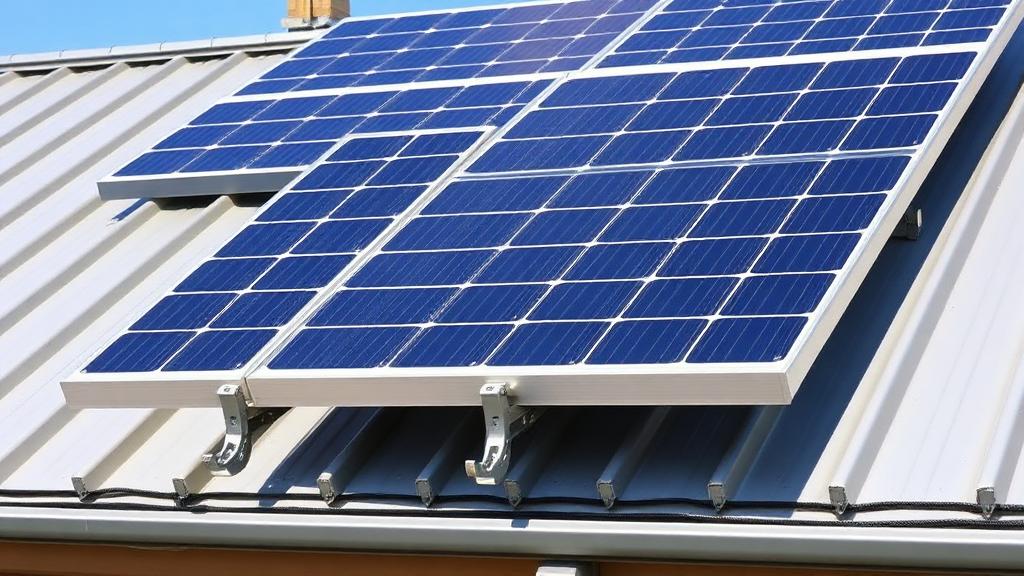
Corrugated metal roofs (with wavy or ribbed profiles) can accommodate solar panels, but the mounting approach is different:
Mounting Method:: Brackets are typically attached through the raised ridges of the corrugation using lag bolts with weatherproof seals. While this does involve roof penetrations, the raised ridges provide natural water shedding away from the bolt holes.
Considerations:: - Requires roof penetrations (though well-sealed) - Slightly more complex installation than standing seam - Structural attachment is very secure - Common on agricultural and commercial buildings
Metal Shingle/Shake Roofs
Solar Compatibility: Good
Metal shingles and shakes that mimic the appearance of traditional roofing materials can work with solar panels:
Mounting Method:: Standard rail-mounted solar systems with flashed lag bolt connections, similar to asphalt shingle installations.
Considerations:: - Installation process similar to asphalt shingle roofs - Requires careful flashing to maintain waterproofing - May cost slightly more than standing seam installations - The textured surface can make walking and working on the roof more challenging
Installation Process: Step by Step
Step 1: Roof Assessment
Before installation, a thorough roof inspection should verify: - Structural capacity to support panels (3-5 lbs per square foot additional load) - Metal gauge and condition (thicker gauge = better mounting) - Seam height and profile (for standing seam clamp selection) - Roof orientation and pitch for optimal solar production - Any shading from trees, chimneys, or neighboring structures
Step 2: System Design
The solar installer designs the array layout considering: - Available roof area and orientation - Optimal panel placement for maximum production - Electrical routing and inverter placement - Building code setbacks and fire access pathways - Aesthetic preferences
Step 3: Clamp Installation (Standing Seam)
For standing seam metal roofs: 1. Clamps are positioned on the raised seams at specified intervals 2. Set screws are tightened to grip the seam (torque specifications must be followed) 3. Rails are attached to the clamps 4. Panels are mounted on the rails and secured
The entire mechanical installation can often be completed in a single day for a typical residential system.
Step 4: Electrical Connection
- Panels are wired in series/parallel strings
- Wiring runs to inverter location (roof or ground-mounted)
- Inverter connects to the electrical panel
- Monitoring system is configured
- System is inspected by the local building department
- Utility connects the net meter
Cost Breakdown
Solar Installation on Metal Roof vs. Asphalt Shingles
| Cost Component | Metal Roof | Asphalt Shingle Roof |
|---|---|---|
| Solar panels (6kW system) | $10,000-$14,000 | $10,000-$14,000 |
| Mounting hardware | $800-$1,500 | $1,000-$2,000 |
| Installation labor | $2,000-$3,500 | $2,500-$4,500 |
| Total before incentives | $12,800-$19,000 | $13,500-$20,500 |
| Federal tax credit (30%) | -$3,840 to -$5,700 | -$4,050 to -$6,150 |
| Net cost | $8,960-$13,300 | $9,450-$14,350 |
Over the 25-30 year life of the system, metal roof installations save an additional $2,000-$5,000 by avoiding panel removal for reroofing.
Total Investment: Metal Roof + Solar
If you're considering a new roof plus solar panels, the combined investment makes compelling financial sense:
Asphalt roof + solar:: $18,000-$35,000 (plus future reroofing cost of $8,000-$15,000 while panels are still producing)
Metal roof + solar:: $25,000-$45,000 (no reroofing needed during solar panel life)
When you factor in the avoided reroofing cost, insurance savings from impact-resistant metal roofing, reduced energy costs from metal's reflectivity, and the longer lifespan of both systems, the premium for metal + solar often pays for itself.
Maintenance and Longevity
Metal Roof + Solar: A Low-Maintenance Combination
One of the greatest benefits of this combination is minimal maintenance requirements:
Metal Roof Maintenance:: - Annual visual inspection - Occasional debris removal (metal naturally resists moss and algae) - Check for loose fasteners every few years - Touch up any scratched paint to prevent corrosion
Solar Panel Maintenance:: - Annual cleaning (rain handles most of this naturally) - Visual inspection of mounting clamps and wiring - Monitor system production for unexpected drops - Professional inspection every 5 years
Combined System Check:: - Verify clamp tightness annually - Ensure panels aren't creating water dams on the metal surface - Check that thermal expansion/contraction isn't loosening connections
Common Concerns Addressed
Will Solar Panels Damage My Metal Roof?
No — when properly installed with appropriate clamps, solar panels don't damage metal roofs. The non-penetrating clamp systems used on standing seam roofs leave the metal completely intact.
Will My Roof Warranty Be Voided?
With clamp-based installation on standing seam roofs, most manufacturers' warranties remain valid because no penetrations are made. Always verify with your specific roof manufacturer before installation.
What About Wind Uplift?
Solar panel mounting systems on metal roofs are engineered to withstand significant wind loads. Clamp manufacturers provide engineering certifications for various wind speed ratings. In hurricane-prone areas like Florida and the Gulf Coast, enhanced mounting specifications ensure panels stay secure during extreme weather.
Can Existing Metal Roofs Support Solar?
Most metal roofs can support solar panels. The panels add only 3-5 pounds per square foot, well within the structural capacity of virtually all metal roof systems. However, older or damaged metal roofs should be evaluated by a professional before installation.
Conclusion
Installing solar panels on a metal roof is not only possible — it's the optimal combination for homeowners seeking maximum long-term value from both investments. The non-penetrating mounting systems, matched lifespans, lower installation costs, and energy efficiency synergies make metal + solar a winning pair.
If you're considering this combination, start by having your metal roof professionally inspected to assess its condition and compatibility. Then work with a solar installer experienced in metal roof mounting to design a system that maximizes your energy production and savings.
Find qualified roofing and solar professionals in your area to explore your options.