How to Negotiate Roof Replacement with Insurance: Expert Strategies (2026)

Getting your insurance company to fully cover a roof replacement can feel like an uphill battle. Insurance adjusters are trained to minimize payouts, and homeowners often don't know how to effectively advocate for themselves. This guide provides proven negotiation strategies that can help you receive fair compensation for your roof replacement, potentially saving you thousands of dollars.
Why Negotiation Is Often Necessary
Insurance companies are businesses designed to generate profit, and one way they do this is by controlling claims payouts. While most adjusters are fair and professional, their estimates frequently fall short of actual replacement costs. Common reasons for underpayment include:
- Adjusters using lower-than-market labor and material rates
- Missing line items for necessary work
- Underestimating the scope of damage
- Applying excessive depreciation on older roofs
- Not accounting for code upgrades required by current building standards
- Misclassifying damage as maintenance rather than storm-related
Understanding these tendencies puts you in a stronger negotiating position.
Step 1: Prepare Before the Adjuster Visits
Get an Independent Roof Inspection
Before the insurance adjuster visits your property, hire a licensed roofing contractor to perform a thorough inspection. This inspection should:
- Document all damage with detailed photographs
- Identify the cause of each damage element (storm vs. age)
- Provide a line-item estimate for full replacement
- Note any code upgrade requirements
- Include measurements of all affected areas
Having this professional assessment gives you a benchmark to compare against the adjuster's findings.
Know Your Policy
Read your policy thoroughly before the adjuster arrives. Key provisions to understand:
Coverage Type:: Know whether you have Replacement Cost Value (RCV) or Actual Cash Value (ACV) coverage. This dramatically affects your payout. Understand the difference.
Deductible:: Know your exact deductible, including any separate wind/hail deductible.
Code Upgrade Coverage:: Many policies include "Ordinance or Law" coverage that pays for code-required upgrades during replacement. This can add thousands to your legitimate claim.
Recoverable Depreciation:: With RCV policies, the initial payment reflects depreciation, but you can claim the remaining amount (recoverable depreciation) after completing repairs.
Document the Storm Event
Strengthen your case by documenting the storm that caused the damage: - Check weather service records for storm reports - Note wind speeds, hail size, and storm duration - Photograph damage to other properties in your neighborhood - Collect news coverage of the storm event
Step 2: During the Adjuster's Inspection
Be Present
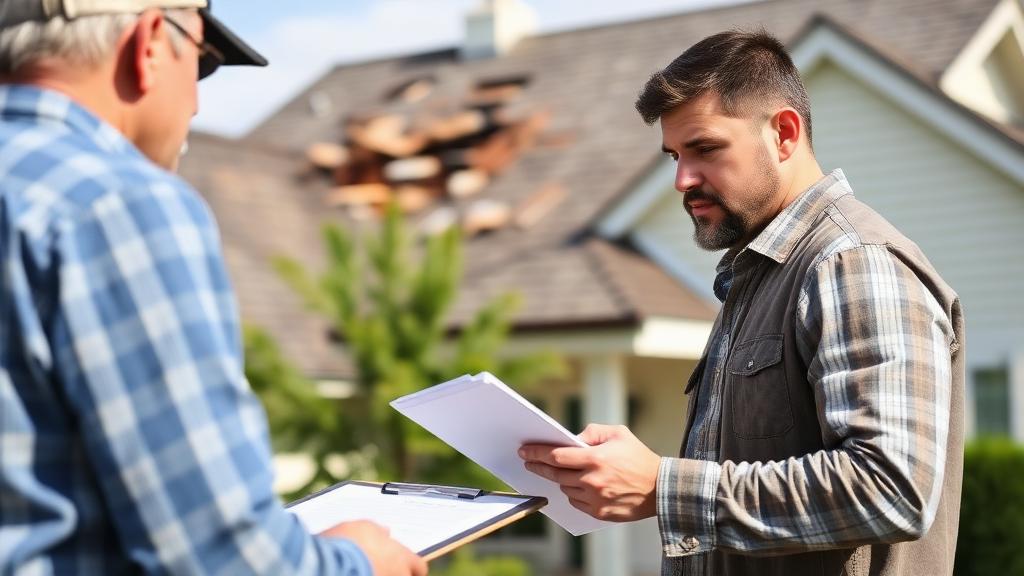
Always be present during the adjuster's inspection. This allows you to: - Point out all areas of damage - Ask questions about their assessment methodology - Understand what they're documenting - Ensure they don't miss anything - Present your contractor's findings
Bring Your Contractor
If possible, have your roofing contractor present during the adjuster's visit. Your contractor can: - Point out damage the adjuster might miss - Explain why certain repairs are necessary - Discuss material and labor pricing - Provide professional context for the damage assessment
Stay Professional and Cooperative
While you should advocate firmly for yourself, maintain a professional demeanor: - Be polite and respectful - Ask questions rather than making accusations - Present facts and documentation - Avoid emotional arguments - Keep detailed notes of the conversation
Know What to Look For
Common areas adjusters may underestimate or miss: - Wind damage on less visible slopes - Hail damage that requires close inspection - Flashing damage around chimneys, vents, and skylights - Gutter and downspout damage - Damage to soffit and fascia - Interior water damage - Pipe boots and roof penetration seals
Step 3: Review the Insurance Estimate
When you receive the adjuster's estimate (called a "scope of loss" or "scope"):
Compare Line by Line
Go through the estimate line by line and compare it against your contractor's estimate. Look for:
Missing Items:: Components that need replacement but aren't included. Common omissions include drip edge, ice and water shield, pipe boots, ridge vent, and starter strip shingles.
Quantity Discrepancies:: Different measurements for roof area, ridge length, or other quantities. The adjuster's measurements should be close to your contractor's — significant differences indicate a measurement error.
Price Differences:: Compare unit prices for materials and labor. If the adjuster's prices are significantly below market rates in your area, this is negotiable.
Code Upgrades:: If current building codes require upgrades (ice and water shield, enhanced ventilation, thicker decking), these should be included if your policy has Ordinance or Law coverage.
Create a Detailed Comparison Document
Organize discrepancies in a clear, professional format: - Item description - Adjuster's allowance - Contractor's estimate - Difference - Supporting documentation
This document becomes your negotiation roadmap.
Step 4: Negotiate Effectively
Contact the Adjuster
Reach out to the adjuster (or their supervisor) with your comparison document. Key negotiation tactics:
Be Specific:: "Your estimate doesn't include ice and water shield installation, which is required by current building code in our area. Here's the code reference and the additional cost."
Provide Evidence:: Attach supporting documentation for each disputed item — contractor estimates, code references, material specifications, and photographs.
Use Industry Standards:: Reference Xactimate (the software most adjusters use) pricing and industry-standard practices to support your position.
Be Persistent but Professional:: If your first contact doesn't resolve the discrepancies, escalate to a supervisor. Insurance companies expect some level of negotiation.
Common Negotiation Points
Labor Rates:: If the adjuster's labor rates are below local market rates, provide quotes from multiple contractors showing prevailing rates in your area.
Overhead and Profit:: Legitimate contractors include overhead (typically 10%) and profit (typically 10%) in their pricing. If the adjuster excludes these, push back — contractors cannot operate without covering these costs.
Material Matching:: If your existing roofing materials have been discontinued and exact matches aren't available, argue for replacement of the entire affected surface rather than a patchwork of mismatched materials.
Debris Removal:: Complete tear-off and disposal costs are legitimate expenses that should be fully covered.
Temporary Repairs:: All emergency tarping, temporary patching, and mitigation costs should be reimbursed separately from the permanent repair estimate.
Step 5: When to Escalate
If direct negotiation doesn't resolve the discrepancies, you have several options:
Request a Re-Inspection
Ask the insurance company to send a different adjuster for a second inspection. Present any new evidence or documentation that wasn't available during the first visit.
File a Formal Complaint
If you believe your claim is being unfairly handled, file a complaint with your state's Department of Insurance. This regulatory body oversees insurance practices and can intervene in disputes.
Hire a Public Adjuster
A public adjuster works exclusively for you — not the insurance company. They: - Prepare detailed claim documentation - Negotiate directly with the insurance company - Typically recover significantly more than homeowners negotiating alone - Charge 10-15% of the final settlement
Public adjusters are especially valuable for complex claims, high-value roofs, and situations where the initial offer is significantly below the actual cost.
Invoke Appraisal Clause
Most policies include an "appraisal" provision for disputed claims. Under this process: 1. You and the insurer each hire an independent appraiser 2. The two appraisers select an umpire 3. If the appraisers disagree, the umpire makes the final decision 4. The result is binding on both parties
Consult an Attorney
For particularly large claims or situations involving bad faith by the insurer, consulting an insurance attorney may be worthwhile. Many work on contingency (no upfront cost), especially for bad faith claims.
Tips for Success
- Start Strong: Your initial documentation and professional inspection set the tone for the entire negotiation. Invest in a thorough contractor assessment upfront.
- Know the Numbers: Understanding roofing squares, material costs, and labor rates in your area gives you credibility in negotiations.
- Be Patient: Insurance negotiations take time. Don't accept an inadequate offer out of frustration — the extra effort usually pays off.
- Keep Everything in Writing: Follow up phone conversations with emails summarizing what was discussed and agreed upon. This creates a paper trail.
- Don't Sign Too Quickly: Read all documents carefully before signing. Once you accept a settlement and sign a release, it's very difficult to reopen the claim.
- Consider the Big Picture: Factor in all related costs — roof repair, interior damage, personal property, and temporary living expenses. Don't settle the roof portion without accounting for the total damage.
Conclusion
Negotiating a roof replacement with your insurance company is a process that rewards preparation, documentation, and persistence. The difference between accepting the initial offer and negotiating effectively can be thousands — sometimes tens of thousands — of dollars.
Start by getting a thorough professional inspection, understand your policy thoroughly, document everything meticulously, and don't be afraid to push back when the offer doesn't cover the actual cost of proper replacement. When needed, bring in professional help through public adjusters or attorneys who specialize in insurance claims.
Find experienced roofing contractors in your area who can help with both the repair process and insurance claim negotiation.